Showing posts with label GAR. Show all posts

Wednesday, October 19, 2022

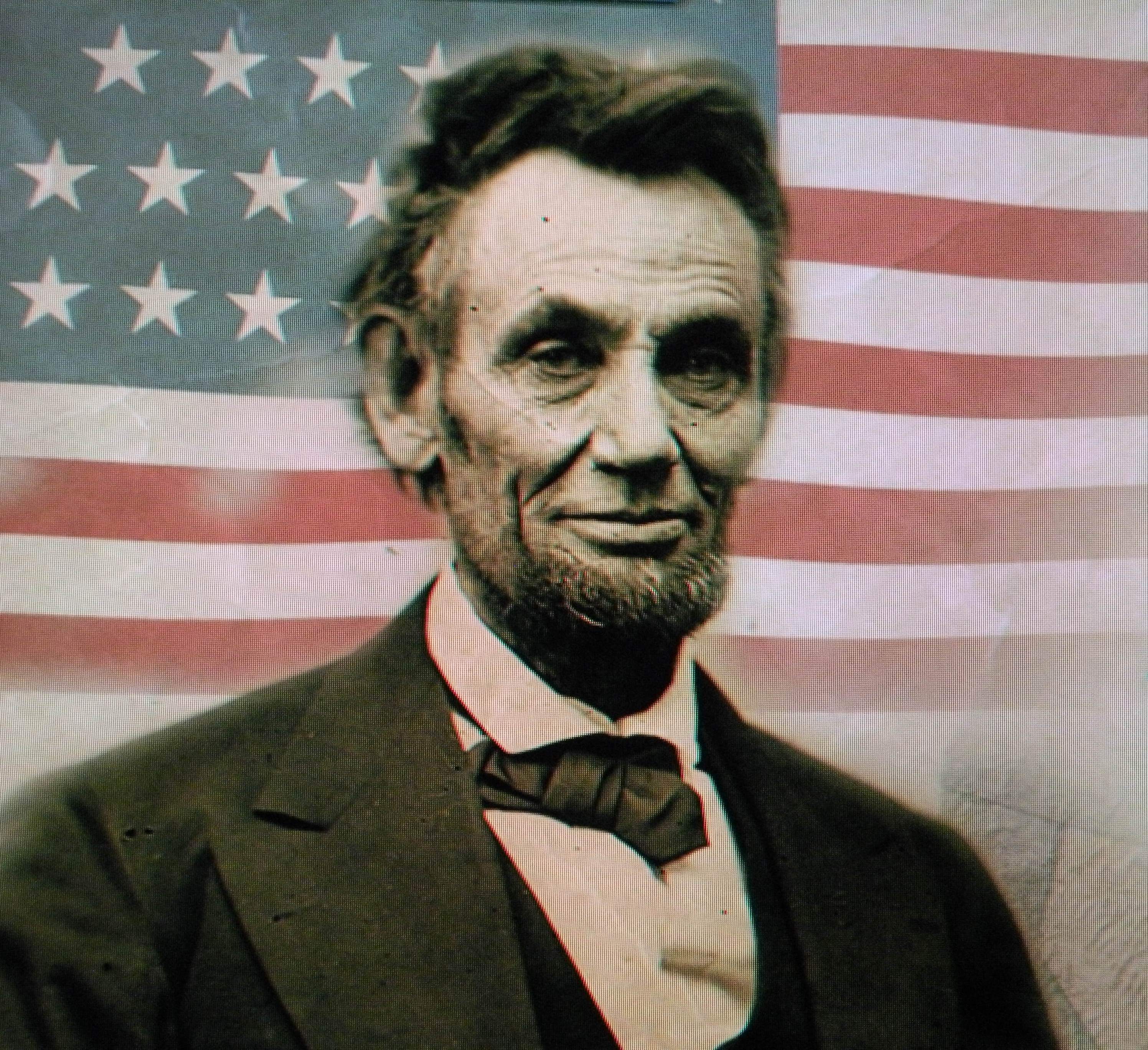
The Grand Army of the Republic


If your male ancestor came to Kansas in the late 19th Century, he was likely a Union Veteran.  Over half of the 30,000 eligible men in the young state of Kansas volunteered for the Union Army, one of the highest volunteer rates in the nation.  After the war, many from other states took advantage of the Homestead Act, which gave Union Veterans one year's credit toward the required five years necessary to prove up a homestead claim for each year of Union service.

Many of those Union Veterans joined the GAR, the Grand Army of the Republic.  Founded in 1866, it was a nation-wide fraternal organization with over 500 posts registered in Kansas by the turn of the century, the combined number of members in Kansas totaling more than 20,000.

They promoted parades, patriotic education, and lobbied for veterans' pensions.  In our local communities we can see many GAR markers on the cemetery graves on Memorial Day.  As years passed, membership in the GAR declined, and the last Kansas GAR post disbanded in 1943.

Perhaps because the Civil War was fought in the South, the tradition of remembering the Civil War has remained stronger there.  Movies, like "Gone With the Wind," have depicted heroic soldiers in Gray.  The 150th Anniversary of the Civil War in 2011 was far more celebrated in the South, with remembrances of all kinds, than in the North.

Yet, it was the North and the Union Army that preserved the United States of America.  Soldiers serve at the command of their officers, and in response to decisions made by the leaders who took them into war.  It is only natural that families honor their own soldiers for the role they were required by others to play.  But, it is important that we remember that Lincoln's Army saved the Union.

P.S.  I am teaching an Osher class on November 1st.  The title of my class is "Three Powerful Women of the Populist Movement," and the class is virtual, from 10 o'clock to 11:30.  I know that some of you have taken my classes in the past, and I hope to see some familiar and some new faces for this class.  With the background of  all the things that were happening in the late 1800s, I focus on three important women!  You can visit University of Kansas Osher classes to learn more.


Sunday, May 11, 2014

Isaac's Neighbor Joseph

Stone in Neelands Cemetery of Harriet Tousley
 Sometimes the adventure of documenting facts while researching Isaac B. Werner and his neighbors is a story in itself!  The serendipity of a discovery may seem too implausible to be believed, but here is one of those stories.

During some recent construction, my husband and I were at Lowe's for supplies.  As Larry was loading our purchases in the bed of our pickup, a gentleman noticed our Stafford County tag and struck up a conversation.  Since the man's interest dealt with history, my husband suggested that he speak with me, where I was waiting inside the store out of the cold.  We had a brief conversation and exchanged business cards, and I promised to check my list of surnames mentioned in Isaac's journal to see if his family surname might be among them.

It wasn't, and after e-mailing him that information I expected nothing further.  He did, however, forward my blog address to his cousin in Idaho because he thought she might find my blog about the suffragettes interesting.

Four days later he received a reply from his cousin, reminding him that a common ancestor named Tousley had lived in Stafford County.  She asked him to relay her interest in Stafford County history to me and to inquire whether I could add her name to my weekly reminder list.  He forwarded her request to me, along with her comment about their ancestral link to the Tousley settlers in Stafford County.  I immediate recognized the names she mentioned as familiar from Isaac's journal.

Harriet Gerst Tousley
Many surnames appear in Isaac's journal, with neighbors arriving in the community and struggling to survive on the prairie for a year or so before giving up their claims and moving on.  Joseph Tousley's name first appeared in the journal in 1885, and although there was no mention the following year, the Tousley name appeared frequently from 1887 through 1891 when the journal ends.

One name stood out for me because during my search for Isaac's grave (See "Finding Isaac's Grave, at 1-13-2012 in the blog archives) I had noticed a stone nearly identical to Isaac's gravestone, with the following engraving:  "Harriet G. Tousley, wife of J.C. Tousley, Died April 17, 1883, Aged 38 Years."

The 1880 Federal Census identified Joseph G. Tousley, his wife Harriet, and their three children, George (age 11), Carl (age 7), and Alice (age 4), and I knew from the gravestone that those young children had lost their mother only three years later.  Eager to learn what the descendant in Idaho might share with me about her ancestors (just as she was eager to learn what I knew about them), I began corresponding with her, and now I have a photograph of Harriet, believed to have been taken near the time of her marriage to Joseph.

Joseph Tousley
Joseph Tousley and Isaac were friends through their involvement in the Populist Movement, and they shared a curiosity about the co-operative farming colony in Sineola, Topolobampo, Mexico.  I had found a Passenger Manifest for Joseph Tousley from 1907 showing his arrival in Tampico, Mexico, and the 1900 Federal Census showed George and Carl, by then in their mid-twenties, living in Oklahoma.  Since I knew the family had left Kansas, I wondered if Joseph had finally visited the farming colony in Mexico that he and Isaac had discussed so many times.  I had also discovered that by 1893 Alice had married in Lawton, OK.

Some of the information I had gleaned from these records was confirmed by my Idaho correspondent, who shared what she knew from family records and oral history.  Joseph and his family did go to Oklahoma, where he had a newspaper for a while and continued his activity in politics.  I learned that Alice and her husband raised a family, and my correspondent was a descendant of the little girl I had worried about being raised in a male household after her mother's death.  My correspondent confirmed that Joseph had gone to Mexico, her understanding being that he had some sort of contract to sell government horses there.  I had found a Joseph Tousley living in a Soldiers' Home in Idaho in the 1910 Federal Census, and she confirmed that in the early 1900s he was in Idaho, very active in the GAR as an Ohio veteran of the Civil War.

George Tousley
I was particularly curious about the older son, George Tousley, since he had worked as a hired hand for Isaac in his late teens.  Now, because of a chance conversation with a stranger in a Lowe's parking lot, I have photographs of Isaac's close friend, the woman whose grave I had visited, and the young man who worked on Isaac's farm, planted a small plot of ground there to raise his own crop, and borrowed Isaac's horses not only to hire out as a laborer but also to travel to social engagements.

As I have mentioned in other blogs, (See "Isaac as Photographer" at 6-27-2012 in the blog archives) I know that neighbors came to Isaac's prosperous farm to have their pictures taken when their own farms were too impoverished to use as a background.  I know that pictures of Isaac's neighbors working their cooperative potato field on his land were taken.  I believe many photographs of early settlers who lived near Isaac Werner in Stafford County, KS and northern Pratt County near the Byers community must exist--if only their descendants knew how much I would love to locate those photographs!

I cannot give up hope that if a stranger in a different city managed by happenstance to lead me to these images of the Tousley family, perhaps others will appear to provide a path to more neighbors' stories and photographs!

(Please go to "Did Your Ancestor Know Isaac?" at 4-26-2012 in the blog archives if you had an ancestor living in the south part of Stafford County or the north part of Pratt County.  That blog contains a partial list of Isaac's neighbors.  If you find a family surname or know that your ancestor lived in the area during the late 1800s, and you have a photograph or story to share with me, contact me at txfen@msn.com or leave a comment at the end of this blog.)
Thursday, September 6, 2012

Confronting the Dalton Gang

One of my problems with history is organizing various historical events in my mind in relation to each other.  When I picture the wealthy women of the Gilded Age arriving for a party at one of the mansions along 5th Avenue wearing their long strands of pearls and exotic feathers artfully arranged in their hair, it is hard for me to place them chronologically alongside prairie women raising their children in a dugout.  Yet, they shared the same period in history.  One of the interesting experiences in researching and writing the book about Isaac B. Werner was putting the events of Isaac's time together like pieces of a puzzle.
 
When I told my husband that I was writing this blog about the Dalton Gang, he asked, "Were they robbing banks in Isaac's time?"  The answer is, "Yes, they were."  The County Capital, to which Isaac subscribed, reported the Coffyville bank robbery on the front page of its October 7, 1892 issue.

The days of the notorious outlaws of the American West had nearly ended by the time the Dalton brothers began robbing trains.  However, they were continuing a sort of family tradition, since the Younger brothers who rode with Jesse James had been their first cousins.  Jesse James was known for robbing banks, and it was said that Bob Dalton decided to cement his outlaw reputation by doing something Jesse James never did--robbing two banks at once in broad daylight.

The bodies of the Dalton Gang
Perhaps they chose their hometown for the site of the dual robbery because of its familiarity to them, but whatever the reason, it was a bad idea.  They had hardly entered Coffeyville the morning of October 5, 1892 when they were recognized, despite the false beards they wore.  The gang consisted of Bob, Grat, and Emmett Dalton, and two other outlaws named Dick Broadwell and Bill Power.  Three of them went to the C. M. Condon Bank and two entered the First National Bank on what proved to be the last day of their lives for all but Emmett.
 
Oldest brother Frank Dalton
However, this is not a post about these bank robbers.  Instead, it is a story of two lawmen.  Ironically, the oldest of the Dalton brothers was a Deputy US Marshal who served honorably and was killed when he attempted to arrest a horse thief in the Oklahoma Territory on November 27, 1888.  His brothers chose to follow in their older brother's footsteps, but their service was not so honorable, and they traded their badges for the outlaw life that killed all but one of them.
 
The rest of this story is about Town Marshal Charles T. Connelly, who rushed to defend  his town when the Dalton Gang rode into Coffeyville.  The members of the gang tried to make their get-away, but getting to their horses that were tied in an alley complicated their escape.  Grat did reach the alley, although he was mortally wounded, and when Marshal Connelly ran into the alley from the south end, Grat let him pass and then shot him in the back at close range. 
 
Charles T. Connelly was only 47 years old, but he had lived an admirable life, beginning when he enlisted in the Ninth Indiana at the age of 17 to serve as a Union soldier in the Civil War.  As a civilian after the war, he had been a teacher, and according to an interview his son gave the Kansas City Star, Marshal Connelly had accepted the position of high school principal and would have left his office as town marshal in a matter of days.  His son told the newspaper that his father had served for about five months, agreeing to accept the position during the summer when school was not in session.  He was approached by citizens who wanted more law and order enforced in their town, and he and the citizens thought he was a man who could get that job done quickly.
 
Grave stone of C. T. Connelly
Charles T. Connelly had two children with his first wife, and after her death he married again and had two more children, only one of those two still living when he was killed.  The memoriam in the Coffeyville newspaper said:  "As city marshal he discharged his duty with great courage, and absolute fidelity to the best interests of the city.  He gave his life freely in defense of the lives and property of our citizens and his faithfulness to duty will ever be held in grateful remembrance by the people of Coffeyville."
 
The public schools were dismissed, and students and teachers marched to the depot to met the train bearing his body, and honor guards from the GAR, the Ancient Order of United Workmen, and the Modern Woodmen marched in front of the hearse.  Charles T. Connelly was a respected man whose life was cut short by the famous Dalton Gang, whose name is remembered, while the name of the honorable marshal they shot in the back is largely forgotten.
 
At www.odmp.org/officer/3343-marshal-charles-t-connelly on the Officer Down Memorial page, Marshal Connelly is honored.  (All of the Dalton brothers were killed except Emmett, who was sentenced to life but pardoned after 14 years.  Three men who had ridden with the gang, Newcomb, Pierce, and Doolin, were not part of the Coffeyville robbery, although rumors persisted that Doolin had been there.  The reference on the Officer Down page to a shootout by the Dalton Gang a year later is unclear, as no Dalton could have been a participant. 
 
For an eye-witness account of the attempted bank robberies, you may visit "The Dalton Gang's Last Raid, 1892," at http://www.eyewitnesstohistory.com .
 
Visit http://skyways.lib.ks.us/genweb/civilwar/Charles%20T.%20Connelly.htm for the newspaper obituary, interview of his son, and funeral accounts (also the source for the image of Connelly's grave stone).