Showing posts with label solar eclipse of August 21 (2017). Show all posts

Thursday, August 31, 2017

Where Did You Watch?


2017 edited view of solar eclipse

Last week I invited those who follow this blog to share their own experiences watching the eclipse of August 21, 2017.  First, thanks to so many of you who expressed your appreciation for a vicarious experience of being with us in Broken Bow.  C.R. wrote:  "I felt like I was standing right beside you watching the magic."  B.P. said, "Your vivid descriptions took me straight to Broken Bow.  Thank you for allowing me to see [the] world through your eyes."  E.R. felt as if he were  there with us:  "I can also see you two...made me smile."  Many more of you shared equally kind compliments about the blog.  It makes the weekly research and writing worth it!

2017
However, it sounds too much like bragging to share more of those replies, especially when there are comments  to share about readers' own experiences.  LMN traveled to Madras, OR to a friend's ranch and avoided the crowds, enjoying a 3-day visit around the eclipse.  She wrote:  "The eclipse was other worldly and awesome in the true sense of the word.  I do agree with you that I wish it had lasted longer so that I could have savored the experience.  I did walk away from the twenty or so other people who were there so that I could quietly try to take it all in."  She and a few others mentioned the opportunity to experience a total solar eclipse in Texas in 2024.  

Our dear niece made a very special event of the eclipse by traveling to a mountainside  location to camp with her son.  She wrote, "I agree with you.  It went too quickly.  Now we have to wait a long time for the next one."

For some of you there was disappointment.  G.C. wrote, "I thoroughly enjoyed the blog and the great description of your eclipse experience.  We were totally fogged in...had to watch it on TV."  D.K., watching with her husband on St. Simons Island, "awoke that Monday to rain but watched the happenings across the country on the weather channel.  After two P.M. we went outdoors to see if it felt darker and looked skyward.  Weren't we surprised to see a patch of blue light where the sun peeped out.  As we had no official glass, D.K. put on three pair of sun glasses and took looks at the partial eclipse.  Not the awe of a total eclipse but exciting nevertheless."  (Obviously, not the recommended safety protection for viewing!)

My husband even shared the blog with the AOPA website, where it was posted.  From postings there and the many individuals who visited from face book and direct reminders, it was the most visited of any blog since I began posting.
2015 Total Solar Eclipse

Thank you to everyone who shared their eclipse experiences!  I appreciated every one of them!!

AML, a regular and longtime follower of the blog, shared a special discovery with me.  A Professor at Amherst College Observatory named Todd David Peck (1855-1939) wrote "Instructions for Observing the Total Eclipse of the Sun, January 1, 1889," to inform viewers how to sketch what they saw to help scientists learn more about the sun!  Of course, you will recognize that his "Instructions" were for the eclipse that Isaac Werner mentioned in his journal!  I want to share excerpts from those instructions.

"Much assistance will be rendered to astronomers who are studying the corona, if outline drawings of the whole, or any part of it, are made...

Four or five minutes before the eclipse becomes total, close the eyes and turn them from the sun, so that they will become very sensitive to faint light."

An attendant should watch the crescent of the sunlight, and announce when the last ray has vanished.  The observer then turns toward the sun and begins the drawing.  If no one is present who can do this, the observer can himself look at the diminishing crescent through a piece of smoked glass, taking great care that no direct sunlight shall strike the eye.  This would be so dazzling as to make it impossible to see the faint details of the corona immediately afterward.
2017

This [the smoked glass] can be made of a small pane of window-glass by holding it over the flame of a lamp or candle until a black film is deposited on it.  If possible, it should be smoked so that the lint will be so dense at one end that the full light of the sun seen through it will not dazzle the eye, while at the other the film should be so thin that objects in an ordinary lighted room may be seen distinctly through it.  Smoke the glass as evenly as possible from one end to the other.  Paste a narrow strip of thick paper across each end of the glass, on the smoked side and lay it on a sheet of unsmoked glass of the same size.  Secure the two sheets together by a strip of paper pasted around the edges of both plates.


If a field glass, spy glass or telescope of any size is available best use it can be put to is to observe of those parts of the corona near the poles of the sun.  *  *  *  ...protecting the eye with the smoked or colored glass."

2017
For those of us who conveniently bought our cardboard  eclipse glasses with the protective lenses, it is hard to imagine the time and effort necessary to prepare smoked glass as Professor Peck described.  It is even more amazing that scientists at that time depended upon sketches of the corona for their studies, in comparison the the cameras and other delicate equipment available today!  Yet, with their primitive tools for observation, they managed to learn a great deal.

Thank you to all of you who shared your comments with me!

To read more of the Instructions, visit https://archive.org/details/instructionsfor01 obsegoog.

An addendum:  I decided to add a few of the comments I have received, but don't forget to enjoy the comments already made by clicking on the comment tab.

In the "It's a Small World" category...JK wrote, "We are missing it cruising up the Danube."  AC requested, "Enjoy the eclipse, and tell us all about what you see.  I'll miss it here in Edinburgh."  TH shared, "...it looks as though 'eclipse fever' has gotten to you.  Here in the UK we will only be having a partial eclipse, but our TV is covering the one you will be seeing in your own country.  I saw a total eclipse over here, I think in August 1999, and I have to say it was spectacularly frightening."

In the "Awesome" category...MG agreed, "Yes, a great experience."  MH wrote, "We ended up in Ansley, NE--not far from you...What a glorious experience and one I will treasure for the rest of my life.  I was more enthralled by the darkness and atmosphere than the actual sight of the sun/moon."  With special reasons for remembering the day, DK shared the experience with his family in Lawrence, KS, where they met their new granddaughter for the first time.

In the "Slightly disappointed" category, J&CD said, "We are envious."  JR  watched from their deck, but shared that their son watched in Hendersonville, TN and got some good photographs.  And GC in California shared the disappointment of many others, saying, "...we were totally fogged in."

This as been a very popular series, as writing about the magnificence of a total eclipse should be!  Thank you to everyone who has commented, and I apologize that I fear I have missed posting all the comments.  If yours was overlooked, I assure you that I read and appreciated every one that was sent!    


Wednesday, August 23, 2017

Experiencing the 8-21-2017 Total Eclipse

Last week's blog shared the very personal reactions of four people to eclipses they viewed.  This week I share my own reactions to the Total Eclipse of 8-21-2017.  I hope that some of you will share your own reactions with me, for how we experienced the eclipse will surely be different for each of us.

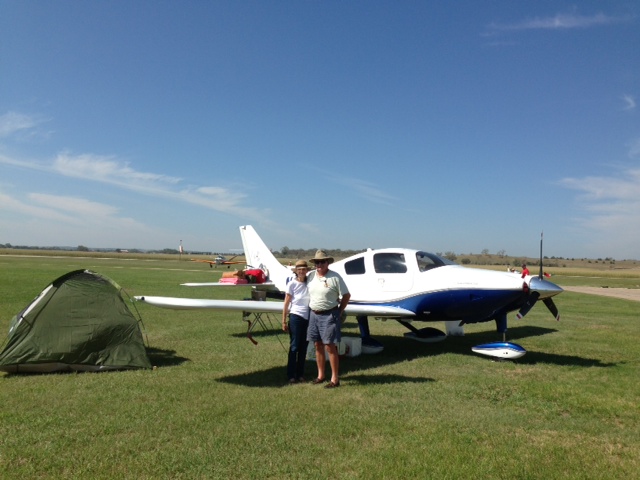
Our neighbors for the night
My husband and I flew to Broken Bow, Nebraska, the afternoon before the eclipse, not wanting to risk unexpected delays the next morning.  We carried a new tent purchased more than a decade ago but never out of its box.  For a bit of nostalgia, I packed an old comforter that I believe was made by my Grandmother Beck.  In my childhood, before central air conditioning, that old comforter was spread on the lawn for weary children who fell asleep to the voices of parents entertaining out-of-doors to escape the stagnant heat of the house.

The morning of the eclipse we awoke in our tent to a gray world shrouded in fog.  I refused to be disheartened, accepting that we might experience the eclipse through a veil.  Broken Bow provided a three-day celebration in town which sounded wonderful, but the hospitality of the Broken Bow Airport kept us happy.  Hamburgers with homemade buns and all the fixins' were served both the evening we arrived and at lunch before the eclipse, and that morning our hosts served pancakes and cracked 120 eggs for scrambled eggs and ham.  By the time we finished breakfast the dark shapes of trees appeared through the fog, and soon patches of blue broke through the sky and disbursed the clouds to whispy fringes.  It was a glorious day to watch an eclipse.

More planes began to arrive, and soon the taxiway was lined with airplanes of all colors and sizes.  As the time neared for the eclipse to begin, people settled into the places they had chosen from which to watch, and one group arranged their lawn chairs in a semi-circle around the wind sock in the middle of the field.  Nearly the last plane to arrive was a large private jet, whose passengers quickly disembarked.  Perhaps 60 planes from nine different states and Canada had chosen Broken Bow as their eclipse-viewing destination, and no one was disappointed.

Planes begin to arrive
Soon the words, "It's starting" were heard.  Although our primary attention was directed skyward, there was also time to study the crowd in between watching the changes creeping across the sun--two young fathers holding their daughters' hands as they walked across the grass, the fathers in shorts and golf shirts but the beautiful little girls in dresses pretty enough for a party; a pair sitting in the shade of the main hangar eating their burgers and ignoring nature's preliminaries, postponing their attention for the total eclipse of the sun; some people retreating to small family groups as others clustered to chat with newly met friends; one man sitting in readiness alone by his plane with his camera outfit.

As the shadow of the moon cut more deeply into the sun, I sought a solitary space between the wing and the tail of our plane.  My husband, an incurably social personality, walked around, sharing the experience with our friends and others we had met since arriving, but always returning to share the excitement with me.  Remembering Annie Dillard's words describing a partial eclipse as being like kissing a man, I kissed my husband as the eclipse began.

I felt the air begin to cool even before I recognized the gradual darkness.  There were no birds at the airport  to cry in bewilderment as Mable Todd had described, nor sensitive flowers to close their petals, but there were automatic runway and taxiway lights that turned on in response to the deepening darkness.  The murmur of the crowd subdued momentarily, but as the sun disappeared  and the total eclipse that Mable Todd described as  an "incomparable corona, a silvery, soft, unearthly light" appeared.

Unlike the "hushed expectancy that seemed to hold its breath" that Mable Todd described, the crowd exploded in clapping and cheers.  It seems that Americans--accustomed to the more participatory crowd responses of sports events and massive concerts--have become conditioned to express their wonder and delight differently.  Noise filled the air.

Home sweet Home at Broken Bow Airport
The eclipse passed too quickly.  The moment when the burst of light escaped the moon's shadow and soared defiantly out of its imprisoned darkness came too soon.  I wanted the magic to last, to capture my emotional awareness of nature's power even longer, but the moon moved on.  I met our friend, standing quietly in the middle of the lawn.  "It really does smell like morning," he said.  I took a deep breath.  This was what I had come to experience--not just the darkness and the light but the subtle changes.  He was right.  The return of sunlight after its brief imprisonment by the moon's shadow really did arrive with the fresh smell of morning.  Sadly, the fragrance was quickly eradicated by the fumes of the late-arriving jet, now just as eager to be on its way as it had been late to arrive.  Its engine roared and the smell of fuel obliterated the lingering awe of the eclipse.

The image of the moon's departing shadow slipping off the sun was as beautiful as its arrival had been, but very few people continued to look skyward.  Their eclipse glasses were tucked into pockets as they hurried toward their planes to line up on the taxiway for departure.  We were among the last planes to leave, but a tiny bite out of the sun still remained as I took my last look before my husband closed the door for our departure.

Photograph of a previous total eclipse
Nature's performance had been perfection, and we had been in a beautiful, hospitable place to watch.  Was it everything I had hoped?  Almost.  I suspect I should have slipped away to one of the lovely hills that formed the backdrop to the airport.  I missed the sort of reverence in which to savor the moments--Isaac Werner's solitude, Annie Dillard's falling through the sky, Emily Dickinson's sense of Awe, Mable Todd's ethereal splendor.

I appreciate that each of us experiences joy differently, and I believe almost everyone around me felt they had experienced more than they could have imagined.  Perhaps I alone wanted to experience the eclipse as something transcendental, something apart from my ordinary existence.  I shared the communal experience of beauty, the excitement, the satisfaction of being present for such a moment, but I missed the deeper feeling of slipping beyond reality for just a magical moment to relish the wonder of this incredible planet we inhabit.  I was too distracted by the reality around me and lacked the concentration to ignore it.  For me, a solitary place to spread our comforter, with only the birds and bugs as a soundtrack to the deepening darkness would have been perfect.    I would have been happy to value the departure of the moon's shadow with as much wonder as we had experienced watching its arrival.

But my way to experience the eclipse is not everyone's preference, nor do I have any reason for disappointment or regret about our beautiful time in Broken Bow.  I hope some of you will take the time to share where you watched the eclipse and the feelings you experienced, whether as a comment to this blog, as a comment on my face book page, or in an e-mail.  You can still enjoy reading the descriptions of Isaac Werner, Emily Dickinson, Annie Dillard, and Mable Loomis Todd by scrolling to last week's blog below, and you can enlarge the images in the blog by clicking on them.


Thursday, August 17, 2017

Isaac Werner's 1889 Solar Eclipse

Path of the Eclipse Isaac Witnessed 
On New Years Day, 1889, a total solar eclipse moved across the United States.  Total loss of direct sunlight occurred in the upper northwest portion of the continental United States, but a partial eclipse was visible across the western states and central Canada, with lesser impact as far away as Hawaii and the rest of the U.S.

Isaac B. Werner described the event in his journal.  Almanacs of that era had forecast the eclipse, but some of his neighbors had not received their 1889 almanacs and were taken by surprise.

Isaac wrote:  "Jan. 1, 1889 @ 14 degrees calm and pleasant by noon quite warm and @ 72 degrees in sun, only few degrees from summer heat.  ...about half past 2 o'clock eclipse commenced ... by 1/2 past 3 Sun about 2/3 hid.  I went up to Beck's after my mail -- Many persons noticed about peculiar Sun shine quite dim for clear day, but did not know of eclipse as but few are provided yet with new almanacs, the latter get short for distribution among drug stores."

On August 21, 2017, Americans will have the opportunity to experience a solar eclipse.  Those watching from Central Kansas, where Isaac had his claims, will share the dimness he experienced.  However, many Americans will experience the awesomeness of a total eclipse.

Path of the August 21, 2017 Eclipse
Isaac's response to the New Year's Day 1889 partial eclipse indicates the noteworthiness of it by the simple fact that he mentioned it in his journal, for it would have been uncharacteristic for Isaac to have elaborated something minor.  However, essayist Annie Dillard could have told Isaac, as she tells the rest of us in her essay Reflection:  Total Eclipse, "A partial eclipse is very interesting.  It bears almost no relation to a total eclipse.  Seeing a partial eclipse bears the same relation to seeing a total eclipse as kissing a man does to marrying him, or as flying in an airplane does to falling out of an airplane."

Poets have tried to describe the experience, as Emily Dickinson did in 1877.  "...Eclipse was all we could see at the Window/And Awe--was all we could feel..."   I searched for the words of other poets, but those I found were lame in comparison to Dillard's essay:

"I saw, early in the morning, the sun diminish against a backdrop of sky.  I saw a circular piece of that sky appear, suddenly detached, blackened, and backlighted; from nowhere it came and overlapped the sun.  It did not look like the moon.  It was enormous and black.  If I had not read that it was the moon, I could have seen the sight a hundred times and never thought of the moon once.  (If, however, I had not read that it was the moon -- if, like most of the world's people throughout time, I had simply glanced up and seen this thing -- then I doubtless would not have speculated much, but would have, like Emperor Lois of Bavaria in 840, simply died of fright on the spot.)"  

Total Solar Eclipse
No wonder countless Americans who could easily view a partial eclipse from their own front yards are instead choosing to travel to locations along the path of the total eclipse as it crosses our continent, for the first time the path will traverse coast to coast in nearly a century.

Mabel Loomis Todd (1856-1932), (the wife of an astronomer and observatory director, who served as his assistant, edited his scientific papers, and shared many of his research trips), published her own account of a total eclipse, describing the early changes in light and the response of birds and animals to the changing scene.  Although her initial descriptions are more academic, the emotional experience of the actual eclipse transforms her language.

"Darker and darker grows the landscape.  ...Then, with frightful velocity, the actual shadow of the Moon is often seen approaching, a tangible darkness advancing almost like a wall, swift as imagination, silent as doom.  The immensity of nature never comes quite so near, as then, and strong must be the nerves not to quiver as this blue-black shadow rushes upon the spectator with incredible speed.  A vast, palpable presence seems overwhelming the world.  The blue sky changes to gray or dull purple, speedily becoming more dusky, and a death-like trance seizes upon everything earthly.  Birds, with terrified cries, fly bewildered for a moment, and then silently seek their night quarters.  Bats emerge stealthily.  Sensitive flowers, the scarlet pimpernel, the African mimosa, close their delicate petals, and a sense of hushed expectancy deepens with the darkness.  ...Often the very air seems to hold its breath for sympathy; at other times a lull suddenly awakens into a strange wind, blowing with unnatural effect.

Then out upon the darkness grewsome [sic] but sublime, flashes the glory of the incomparable corona, a silvery, soft, unearthly light, with radiant streamers, stretching at times millions of uncomprehended miles into space, while the rosy, flaming protuberances skirt the black rim of the Moon in ethereal splendor.  It becomes curiously cold, dew frequently forms, and the chill is perhaps mental as well as physical.

Suddenly, instantaneous as a lightning flash, an arrow of actual sunlight strikes the landscape, and Earth comes to life again, while corona and protuberances melt into the returning brilliance, and occasionally the receding lunar shadow is glimpsed as it flies away with the tremendous speed of its approach."  Quoted from her book, "Total Eclipses of the Sun."  (Consistent with the habits of her time, the author is identified only as "Mrs. Todd," her personal identity subsumed into her husband's name and reputation.)

Partial solar eclipse
On August 21, 2017 the path of the eclipse will give most Americans the opportunity to look to the sky, our safety glasses firmly in place.  From the descriptions of a poet, an essayist, and an  assistant-astrologist, the experience may be not merely interesting but highly emotional.  As Annie Dillard expressed the impact of the solar eclipse on her: "It had been like the death of someone, irrational, that sliding down the mountain pass and into the region of dread.  It was like slipping into fever, or falling down that hole in sleep from which you wake yourself whimpering."  The images we may see on television and in print, taken through a telescope, may be beautiful, but what we may experience by viewing it ourselves cannot, apparently, be translated to photographs.  Now, if only the day will not be overcast!

Remember, you can click on the images to enlarge