Wednesday, April 28, 2021

The History of May Day


Most of us think we know the traditions and history of May Day.  Perhaps we imagine children dressed in spring colors, dancing around the maypole, a tradition we often associate with England.  The maypole is traditional in many countries, however, including occasionally in America.  

For me, May Day means devising some kind of container, whether it is a basket purchased at a store or  a jelly jar wrapped with ribbon or some other container adequate to hold flowers.  Ideally, it means finding flowers of some kind to be picked.  Today, I look out my window and see lilacs in bloom, my early deep purple iris just beginning, and the blooming redbud trees.  Not every year is so generous with available flowers, but silk flowers or weeds from a ditch will do just as well for the fun of May Day.

The best part for me, as a child, was always the delivery--hanging the basket on the front door, ringing the doorbell or knocking loudly, (since we didn't have a bell), and then running to hide somewhere that I could see the 'surprise' on my mother's face when the flowers were discovered.

While I did not make a May Day basket this year, I did fill the house with lilacs and a few early iris.

For many years, I knew nothing of another type of May Day celebration.  In many countries, May 1st is a celebration for the labor movement.  In those  countries, the first of May is a national public holiday called "International Worker's Day" or some similar name.

Our present Labor Day is in September, but the history of our celebration can be traced to Chicago on May 4, 1886 when workers gathered in Haymarket Square to demonstrate for an 8-hour workday and safer working conditions.  According to the Mayor who was in attendance that day, the demonstration was peaceful, but as the speaking ended and the police moved in to breakup the gathering, violence erupted. Tragically, deaths and miscarriages of justice followed.   

The late 1800s were not only the era of the Populist Movement described in my book, Prairie Bachelor,  but also a time of clashes between workers and their employers, including several famous strikes.  Among them were both the Johnson County War in Wyoming, in which small farmer/ranchers confronted the illegally hired private army of the wealthy ranchers of the Wyoming Stock Growers Association, and the Homestead Lockout in which union workers confronted Pinkerton Detectives hired by Andrew Carnegie.  

Another famous strike involved George Pullman.  The Panic of 1893 caused a downturn in his railroad manufacturing plant, famous for its model town, with homes, parks, shops, and a library for his workers.  Pullman responded to the economic downturn by cutting workers' wages; however, he did not reduced the rent workers paid for their houses in the model town.  When a workers' committee went to Pullman to request a rent adjustment consistent with their pay cuts, he refused, and to make matters worse, he fired three of the committee members who had come to make the appeal for the workers.  A strike followed.

Pullman was a powerful man with powerful friends, and using those connections resulted in the President sending Federal troops to break up the strike, despite the Governor's request that the troops be withdrawn.  Without describing the events in detail, the sad result was that the decision to send in federal troops was the first time soldiers fired on and killed American citizens against the wishes of the executive of the state.

May Day in Helsinki, Finland
The Federal Government had not declared a special Workers' Day at that time, although states had begun to declare a Labor Day for workers.  Oregon was first, in 1887, and by 1894 thirty states had declared an official Labor Day.  In a way that must have seemed disrespectful to some, six days after the Pullman Strike ended, President Cleveland and Congress rushed through legislation to establish Labor Day.    However, that law only applied to a holiday for federal workers.  Gradually, Labor Day as we know it was made a statutory holiday.

Returning to the history of May Day, the memory of the original labor effort has not been entirely forgotten.  In addition to other nations recognizing May 1st as their labor celebrations, a few American cities celebrate Loyalty Day, and some bar associations hold Law Day events to celebrate the rule of law.  

Bar Associations declare Law Day
In addition, groups have sometimes referenced May Day's original connection with workers.  May 1, 2012, Occupy Wall Street and labor unions held protests together.  There was also a movement in 2020, during a time when workers felt that management was was not providing basic protection to workers during  Covid-19, workers from such companies as Amazon, Whole Foods, Walmart, FedEx and Target threatened to walk out on their jobs on May Day.

I believe most of us think of Maypoles and baskets of flowers when May 1st arrives, but I hope you have enjoyed reading about other history related to that date. 


Wednesday, April 21, 2021

Poetry and Earth Month in April

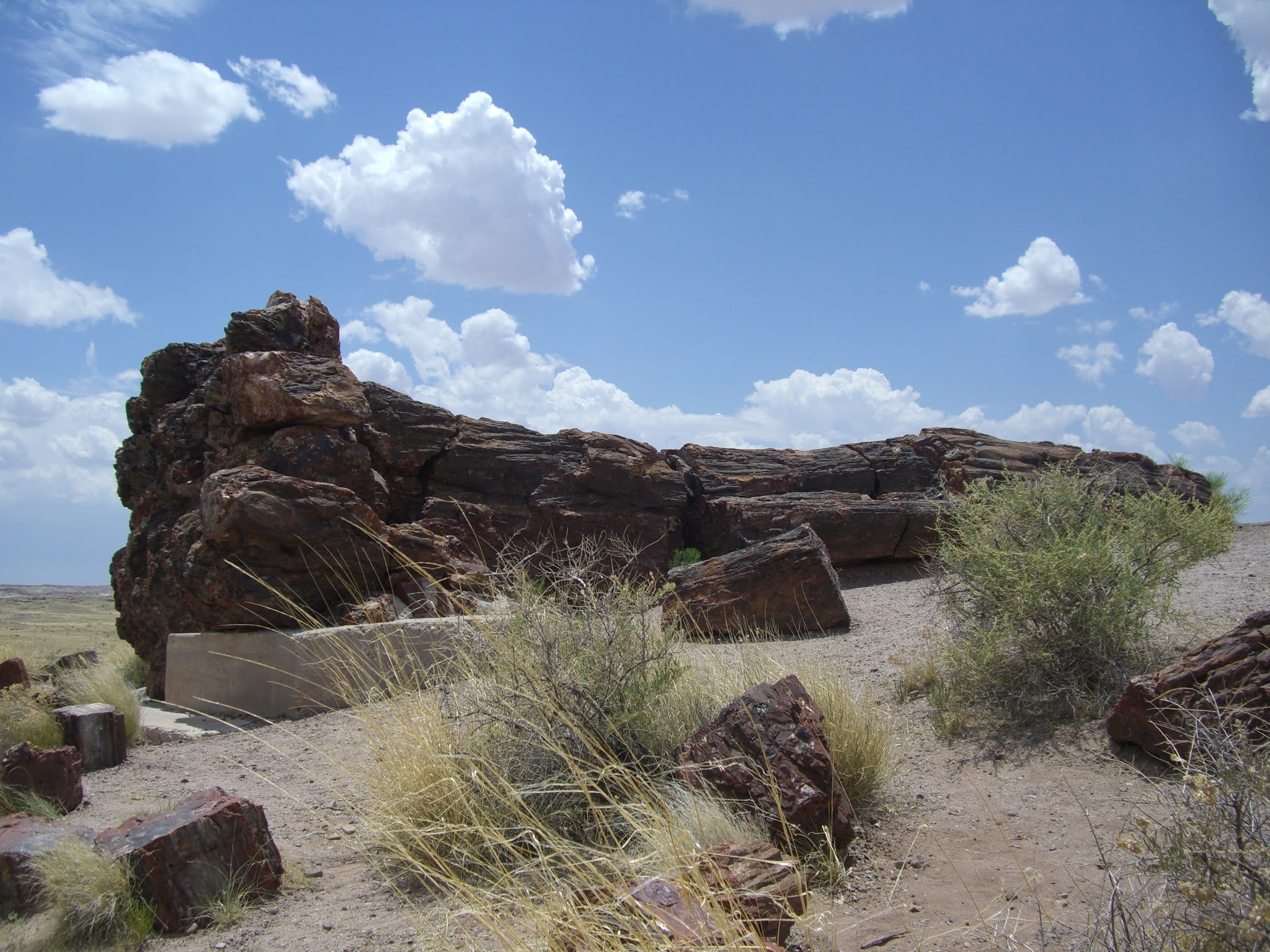
Petrified Forest near Holbrook, AZ; Photo Credit:  Lyn Fenwick

It has been my practice to honor April as Poetry Month at this blog, and I did so again this year.  However, April is also Earth Month.  This week, before April passes by, I am going to combine both Poetry and Earth Month with a reflection on the importance of our responsibility to respect not only the nurturing of our own spirit but also nurturing our planet Earth, ending the blog with a poem by a man who salutes trees.

Our planet is an Oblate Spheroid, or in plain words, a Bulging Sphere.  At the equator, Earth is 24,901 miles around.  It takes 365 1/4 days for earth to make a trip around the Sun, which explains our use of  leap year every 4 years to account for the quarter of a day needed to travel around the sun each year.

Canyon Wall: Photo credit: Lyn Fenwick
Seventy-one percent of the Earth is covered in water, but less than 3% of that water is fresh water.  Add to the limited amount of fresh water the limited acreage on Earth available for crop production of about 11%, with about another twenty percent considered mountainous, having almost no agricultural use and only limited use for grazing.

The oceans that cover so much of our planet influence the land through currents that affect temperatures, precipitation, and various ecosystems.  

Past and present-day Man impacts both water and land.  Arable land is lost each year through desertification and erosion caused by humans on both large and small scale.  Our ancestors contributed to the "Dust Bowl" of the Great Depression, and today the slash-and-burn deforestation of the fertile tropical rainforests  for temporary cultivation are resulting in infertile desert land.

Less dramatic than the massive burning of the Rain Forests but also a danger to our fresh water supply is something known as "freshwater salinization."  How is this happening?  Simple things that we take for granted may silently do harm.  As winter approaches, those responsible for keeping our roads safe acquire a supply of salt to use on the roads to melt ice and make travel safer during winter.  Most of us overlook the fact that the nearly 20 million tons of salt spread on our roads gradually end up in streams, rivers, lakes, and other sources of freshwater around the world.

Farmers are becoming more mindful of not only protecting their soil from harmful chemicals, as well as crops that deplete the soils, as once happened in the South from exclusively growing cotton.  Today's farmers are learning to respect science in protecting the soil in their fields.

Fossils from Texas


The evidence that our planet has not always been what we see out our windows today is all around us, although easy to ignore.  Some years ago, my husband and I toured the petrified forest, and the photographs I took of trees turned to stone, including the image at the top of this blog, are tangible evidence of those changes.  When we lived in Texas, I collected evidence that our back yard had once been the floor of an ocean.  Photo Credit:  Lyn Fenwick


Today, we realize that our precious Earth has been entrusted to us to preserve for future generations.  I do my silly part by transplanting the volunteer seedlings that pop up every year, planting then for future generations to enjoy their shade.  In an early blog, I shared the story of my unearthing the long root of a volunteer red bud from our English ivy bed.  The root was very long, and the hole I dug to plant that root had to be deep.  The rescued seedling, once planted, promptly dropped its leaves.  My husband and the carpenters who were doing construction at our farm teased me about my devoted watering of a dead tree.  As you can see from the photograph below, the transplanted seedling survived and bloomed beautifully this spring.

The memory of my tender care of the little red bud tree may explain my appreciation for the poem, "My beautiful Flowering Trees," by Asha Menon.

 
Photo credit:  Lyn Fenwick

My Beautiful Flowering Trees

One day I shall buy some land
Plant countless seeds
And watch them grow
Into beautiful flowering trees

A cool breeze
Will bring me
Sweet fragrances
From a thousand flowering trees

I shall listen
To the songs
From birds perched
In the tall flowering trees

I shall play
With my children and theirs
In the vast expanse of green
Amongst beautiful flowering trees

One day I shall rest
Passing into oblivion
My ashes scattered
Amidst the beautiful flowering trees

By Asha Menon, Writer and Reviewer of Malayalam literature

Another source for poems reflecting on trees is The Afterlife of Trees, by Kansas poet, Wyatt Townley.  Townley was recognized as our Kansas Poet Laureate, 2009-2013, during which time she traveled the state doing readings of her poems.  I had the pleasure of attending three of those readings locally, in Kinsley, Pratt, and Cunningham.  Her books are available online.


Wednesday, April 14, 2021

Disappearing Traces of the Past Explored in 2021


Photo credit:  L. Fenwick

Photo credit: L. Fenwick
In 2011, one of my earliest posts was called "Disappearing Traces of the Past".  You can read it at https://lynfenwick.blogspot.com/2011/12/disappearing-traces-of-past.html .  I shared photographs of a house I remembered from my own childhood, and I still remembered stopping at the driveway for children to run out to meet the school bus.  Although the house was already deteriorating in 2011, there were still clothes hanging in the closet and a collapsed bed with covers still on it visible through a broken window.  The image above is of that house today.

Each decade brings more abandoned houses that were occupied during my lifetime.  Farms still exist, but it is much different from the farming of my youth.  Hugh equipment can move through a field in just a few hours, doing what would have taken my father a full day or more to cover the same ground.  Consequently, farms are larger, and the number of farmers are fewer.

Photo credit: L. Fenwick
Some of the family farms of my youth still exist, but they are few.  Descendants of those farmers chose different careers away from the land, or gradually they chose to sell the land rather than divide it up among many descendants remaining.  Sometimes the family line came to an end, and the estate was liquidated. 
 
My husband and I moved back to my old family home in our retirement, but we do not farm the land.  Instead, our land is farmed by another farming family.  My brother had already sold the acreage he inherited before his death.

Once the houses pictured in this blog had families living in them, and it is more than likely that the generation that built the houses assumed that their heirs would be farming their land and living in the ancestral home for many generations.  

The house first pictured is in Pratt County, although it is the closest of those pictured to our home.  All of the rest are in Stafford County.  We get our mail in town, and all of the images were taken on our way to get our mail, although we did go out of our way two miles to the east to photograph two of them.  Even so, within just a few miles of our house, all of these family homes have been abandoned.

Photo credit: L. Fenwick
In 1880, about the time Homesteader Isaac Werner staked his claim, the population of Stafford County, where he lived, was 4,755.  Ten years later it had grown to 7,520, and by the turn of the century it was 9,829.  In another ten years it had grown to 12,510.  That year, 1910, was the peak year for Stafford County population.  For three more decades, although the population declined, it remained in the 5 figures.

1950 was the first big drop of 15.9% to 8,816 population, followed in 1960 by the record drop of 20.2% to 5,943.  While the percentage drops were smaller, the decline continued, until the 10.7% drop of 2000 brought the population to 4,437.  The population has continued to decline to the most recent number of 4,178 estimate recorded for 2018.

There are other vacant houses close to our own that I did not photograph, homes that remain quite livable, but to find jobs, residents would probably need to commute to one of the surrounding small towns.  Sometimes people with an urban background who may have dreamed of someday living on a farm buy country places.  While there are successful transitions, there are also disappointments. 
Photo credit: L. Fenwick

That is not new.  In Isaac Werner's time there were families drawn to the prairie by the free land and the idea of owning their own farms.  Many did not stay long enough to mature their claims.  Others stayed only long enough to mature their claim before they sold it and moved away. 

Each generation leaves behind their own traces of the past.


Thursday, April 8, 2021

Learning Ourdoors


Earlier I posted a blog titled "Kids and Nature," inspired by a book by Richard Louv, which you can read at https://blogger.com/blog/post/edit/previous/623125745868183589/9029692448848 .  The title of the book is "Last Child in the Woods, Saving Our Children From Nature-Deficit Disorder."  The book was published in 2005, and it stresses the importance of allowing children to interact with nature.  Louv  was talking about nature in the raw--not the carefully manicured, supervised, sanitized versions of nature more of today's children have access to, if they experience nature any way at all except through windows or on television.  I continue to recommend the book.

In this blog, however, I am going to share what has begun to happen in the era of Covid.  With inadequate ventilation in many schools, and challenges of social distancing a classroom of kids, some schools are using the idea of classes out of doors, called "Out Door Learning."  The necessity brought on by Covid fits perfectly with the existing movement, already happening in some schools, to get students out of doors into a natural environment.


For those of us who grew up a generation or two ago, the idea of needing a "movement" to get children out of doors may seem silly.  After all, many of us needed no movement to get outside to play and explore.  The little girl in the photograph at the start of this blog is me.  My father did not ordinarily raise hogs, so one year when he did, they were a novelty to me, and I loved them.  Mother could hardly keep me away, as is obvious, since I was dressed up to go somewhere when this photograph was taken.

Weather was no reason to stay indoors either, as the above photograph of my cousins makes clear.  All seasons were just adjustments in the temperature, as far as we were concerned, and seasonal clothing to accommodate the temperature was all we needed to head outside.

I may have been getting old enough to rake the leaves when this picture was taken, but I wasn't too old to jump into the middle of the pile I had just raked with our dogs.   And, as the leaves make clear, there were trees at our farm for building tree houses, although that was more an activity my brother enjoyed.

Animals were a part of farm life,  with dogs eager to wander in the fields, chickens to learn where eggs come from, calving to learn about birth, the squirt of milk against a bucket a familiar sound, and if you were lucky, a horse to ride.  Even kids like my husband, living in small towns, had some of those things.

Today, rural areas cover 97% of the nation's land but contain only 19.3% of the population, based on 2016 information.  Adults in rural areas had a median age of 51, making them older than the adults in urban areas with a median age of 45.  By age 51, their farm children are likely young adults and probably gone.  According to an article appearing in the New York Times in 1988, "the nation's farm population is its lowest level since before the Civil War.  From 1981 through 1987, the farm population has lost an average of 2.5% annually.  In the previous decade the annual decline was 2.9."

An interesting article in "The Guardian" in England in 2016 describes the same problem of English children being separated from nature.  "More than 1 in 9 children in England have not set foot in a park, forest, beach, or any other natural environment for at least 12 months," the article reported.  Advocates for getting children outside reported that it was the parents that needed convincing.  "In middle class suburbia, it's the parents--how do you tell parents that the time children play freely outside is as important as their French lesson, their ballet lesson and their Mandarin lesson?" 

Some schools in America were already using nature as a classroom prior to Covid, but the need for social distancing and ventilation issues indoors is encouraging more schools to consider outdoor learning, some for the first time, and others in a more expanded way.  Landscape architects across the nation have volunteered to partner with schools in the planning.

One outdoor learning coordinator explained, "My best pitch for getting outside is that it ignites a curiosity in students that we don't necessarily see when they're confined between four walls of their home or in a classroom."  Another teacher reported, "I would say that being outdoors, my experience is students are naturally alive and awake and curious...Covid has really opened that remembrance that we need to be thinking about the Earth in our academics, too."


Wednesday, March 31, 2021

April's Reminder to Enjoy Poetry

Photo credit:  Lyn Fenwick

 I don't know who is authorized to declare such things as "April is Poetry Month,...,"  but it raises a question that sounds like something Billy Collins might use to start a poem.

"It occurred to me

on a flight from London to Barcelona

that Shakespeare could have written

'This blessed plot, this earth, this realm, this England'

with more authority had he occupied

the window seat next to me

instead of this businessman from Frankfurt."

Excerpt from The Bard in Flight

Robert Frost said, "A poem begins as a lump in the throat, a sense of wrong, a homesickness, a lovesickness."  However, not every poet finds inspiration in the same way.

Photo credit:  Lyn Fenwick, "Day After the 4th of July, Waiting for the Trash Man" 

In 1955, Beat Poet Allen Ginsberg was inspired to write "A Supermarket in California."

"What thoughts I have of you tonight, Walt Whitman, for I walked

down the side streets under the trees with a headache self-conscious

looking at the full moon.

In my hungry fatigue, and shopping for images, I went into the 

neon fruit supermarket, dreaming of your enumerations!"

Ginsberg's inspiration may not have been so different from that of Langston Hughes, who said, "I tried to write poems like the songs they sang on Seventh Street...," the block in Harlem where Hughes lived in NYC.

New Generations

Years ago, my husband and I went to a poetry reading where we heard Maxine Kumin read, and in her book that I bought that day is a poem titled, "For My Great-Grandfather:  A message Long Overdue,"  in which she describes the inspiration for the poem.

"...Great-Grandfather, old blue-eyes fox of foxes,

I have three pages of you.  That is all.

1895.  A three-page letter

from Newport News, Virginia, written

on your bleached-out bills of sale under the stern

heading:  Rosenberg The Tailor, Debtor,

A Full Line of Goods Of All The Latest In

Suiting And Pants.  My mother has just been born.

~   *   ~

You write to thank your daughter for the picture

of that sixth grandchild.  There are six more to come."

When I determined to share the journal of Kansas homesteader Isaac Werner at the center of history of the Populist Movement, it was a poem by Walt Whitman that inspired the structure of my book, "Prairie Bachelor."  Isaac's journal did not inspire me to write a poem, but a poet inspired me to structure the history of the Populist Movement through the eyes of a forgotten Kansas homesteader, and to begin the book with a funeral.

Photo credit:  Lyn Fenwick

Poetry comes in many forms, as the short selections I have chosen for this blog illustrate, and poems touch our lives in many ways.  Not everyone appreciates the same poems, nor must each person experience the same poem in the same way.  In his poem, "Music," Ralph Waldo Emerson finds music
"...not only in the rose."

"It is not only in the bird,

Nor only where the rainbow glows,

Nor in the song of a woman heard,

But in the darkest, meanest things

There alway, alway something sings."

Whatever poetry you enjoy, the annual reminder each April offers the opportunity to pull those neglected poetry books off the bookcase.  A poem might be just what you need during this unnatural season of Covid isolation. 


Wednesday, March 24, 2021

What Songs Can Reveal in Today's World


Reproduction of an old player

After last week's post, I discovered in the NYT's online newspaper an informative article that fits well with last week's blog.  (See credits to authors, producer, and animation at the end of this blog.)  It also analyzes the changes in popular music, but it starts with the 1960s, pointing out the structure of songs:  Verse sets the scene; Pre-chorus builds tension; Chorus reaches climax; and cycle begins again.  As an example, they use "Natural Woman," by Aretha Franklin.

An antique cabinet for record albums


According to their analysis, things began to shift in the 2010s.  Certainly in my blog these changes are apparent, but I did not attempt to analyze or interpret  those changes.  The authors suggest expectable generational change + digitalization + less top-down control of the industry + the new streaming economy.  Think back to last week's more recent songs as containing some of the trends these authors describe:  The traditional musician structure is gone; in its place are word repetition and rhyme, and something they refer to as "the hook" is used to draw listeners back.

Album storage might include a radio show

They also suggest a variety of changes that have impacted music, starting with the electronic ability to make music at home, without expensive studios or agents.  Today musicians are generally paid by how often they are listened to on the current formats, in contrast to musicians of the past being paid on the basis of album sales.  They also mention that songs are generally shorter, with length not tied to what is required for a vinyl recording.

:
Or, the album might hold Columbia or Decca

They close their article with a reminder that before the 1960s the structure of popular songs followed an AABA pattern, citing "Over the Rainbow" as an example.

That reference made me think of those modern day collectors of "Vinyl," who admire the quality and sound of old vinyl records, which sent me in search of the photographs used in this blog.

Every generation has its music.  The images in this blog go back to  my husband and my parents' generation and the reference to modern listeners refers to my nephew's wife, who is collecting vinyl--four generations of music lovers and the music they listened to coming from the 1930s to the 2020s.

Thank you to Nate Sloan and Charlie Harding, co-hosts of the podcast "Switch on the Pop" and co-authors of "Switch on Pop: How Popular Music Works and Why It Matters."  Also, thank you to the New York Times and Nicholas Konrad, producer, and Aaron Byrd, animator, Video by Getty Images (Billie Eilish) who contributed to the March 15, 2021 video that prompted me to supplement last week's blog with comments from the current generation, illustrated with images from my family collections.   

Wednesday, March 17, 2021

What Songs Can Reveal

     Isaac Werner loved music.  Imagine living on a homestead in the late 1800s without a radio or other means of hearing music any way other than live.  What a treat visiting a friend who could play an instrument or going to town to hear a musical performance would be.


    Thinking about that lead me to a reflection on the role of popular songs in our own time and what the hits of each decade can tell about us.  I decided to research the most popular song of the year, beginning in 1950, when "Mona Lisa," sung by Nat King Cole topped the charts, singing "...men have named you, you're so like the lady with the mystic smile.  Is it only 'cause you're lonely they have blamed you, for that Mona Lisa strangeness in your smile?"

    A decade later, in 1960, the theme from a movie topped the list with the romantic lyrics "There's a Summer Place where it may rain or storm, yet I'm safe and warm, for within that summer place your arms reach out to me, and my heart is free from all care..."


    By 1970 the innocence of the past decade was MIA as Viet Nam impacted the nation.  Simon and Garfunkel recorded "Bridge Over Troubled Waters" as their last song in their last album together.  "When you're weary, feeling small, When tears are in your eyes, I'll dry them all.  I'm on your side."

    The world had changed, and so did music by 1980, the top song was written for a movie about a prostitute, "American Gigolo."  Recorded by Blondie, "Call Me" began with the lyrics "Colour me your colour, baby, Colour me your car.  Colour me your color, darling, I know who you are." 

    By 1990 the most popular song reflected life's difficulties but urged the person being addressed in the lyrics to "Hold On."  Wilson Phillips sang, "I know there's pain.  Why do you lock yourself up in these chains?  No one can change your life except for you.  Don't ever let anyone step all over you." 


Women were speaking up by 2000, but as Destiny's Child reveals in "Say My Name," they are still putting up with bad behavior from their man, declaring, "I am dying to believe you," but admitting "Don't believe a word you said," instead recognizing their man had "Got dishonor in your eyes."

    When Kesha sings "TiK ToK" in 2010, she's got more spunk but not much romance.  "Ain't got a care in the world, but got plenty of beer, Ain't got no money in my pocket, but I'm already here, and now the dudes are linin' up 'cause they hear we got swagger, But we kick 'em to the curb unless they look like Mick Jagger."

    The song topping the charts in 2020 has more romance but reflects the social difficulties of the time in "Blinding Lights."  "I look around and Sin City's cold and empty.  No one's around to judge me.  I can't see clearly when you're gone.  ...I'm drowning in the night, Oh, when I'm like this, you're the one I trust."

    When I began the research for this blog, I didn't expect what I might find after the turn of the century when I started listening more to the classical stations and didn't keep up with popular music.  Of course, this survey does not include country-western, and talk radio has increased in popularity,  displacing music stations.  What I discovered in my research is a reflection of change from decade to decade and from generation to generation.

    I will close with the lyrics from one of my favorite songs from the 1975 movie, "The Way We Were."  It is a love story with a tender but sad ending.  I have always liked the way that the song and the movie describe that life doesn't always give us everything we once thought we wanted, but it does give us beautiful memories.  Sometimes, it gives us even more than we could have dreamed.  So, to those who may never have heard these lyrics from 1973 movie with Barbra Streisand and Robert Redford, here is "The Way We Were."

Mem'ries,

Light the corners of my mind.

Misty water-colored memories

Of the way we were.

Scattered pictures,

Of the smiles we left behind

Smiles we gave to one another

For the way we were.

Can it be that life was all so simple then?

Or has time re-written every line?

If we had the chance to do it all again

Tell me, would we?  Could we?

Me'ries, may be beautiful and yet

What's too painful to remember

We simply choose to forget.

So it's the laughter

We will remember...

Whenever we remember...

The way we were...

The way we were...


Wednesday, March 10, 2021

The Larabee Story, an Addendum


San Diego Botanic Garden, Photo credit Brittany C.


The tradition of giving back to their community did not end with the death of Joseph B. Larabee (1833-1913).  In fact, his grandson, Charles Larabee, and his wife, Ruth Robertson Baird, have generously given to the people of San Diego a magnificent Botanic Garden.  Their story will serve as a coda to this series about the Larabee family.  The father of Charles was Frederick Delos Larabee (1868-1920), the son of Joseph Delos and Angeline Larabee, and the middle brother of Nora Larabee.  His parents had left Stafford, although the Larabee businesses established by Charles' grandfather continued to be the family business.

Charles and Ruth Robertson Baird grew up within a block of each other in Kansas City, Missouri.  Her parents were also quite successful, and Ruth graduated from Vassar College in 1926, majoring in Latin.  Charles and Ruth married on June 3, 1926, a few days after her graduation.  They both loved adventure and the out-of-doors, and early in their marriage they sailed round trip from Kansas City to Chicago and back, by navigating the Missouri, Mississippi, and Illinois Rivers.  Ruth taught school, and Charles became co-owner of "The Garden Shop," a 40 acre nursery of trees, evergreens, shrubs, and perennials.  He lectured on gardening and trees, and later gained a reputation as a photographer of the Southwest.

In 1942, Ruth bought 10 acres, with a small cottage, in Encinitas, California, and they left their home in the Midwest to move into the modest ranch in California.  Eventually Ruth named the property "El Rancho San Ysidro de las Flores," and they began collecting plants.  Sadly, they divorced, but Ruth remained on the property.

In 1957, Ruth donated the entire 26.5 acres she then owned to the County of San Diego, to be preserved as a park for public enjoyment.  Despite their divorce, Charles continued to take an interest in Ruth's ranch and garden, sometimes adding plants from his travels to the collection.   

Shadow Mountain


Charles managed the Larabee Family Trust until his death in February of 1968.  His name is inscribed on a crypt in the Larabee Family Mausoleum in Stafford, Kansas; however, his two step children removed his ashes and scattered them in the desert from atop Shadow Mountain, which he loved, along with the ashes of their mother, his second wife.


Ruth continued her charitable giving after leaving California and had eventually returned to Shawnee Mission.  On December 26, 1969, Ruth was staying in the Crown Hotel in Saffron Walden, Essex, England, when a fire broke out and she perished.  Her remains were cremated, and she is buried near her mother and father in Forest Hill Cemetery in Kansas City, Missouri.

(Thank you to "Cultivating Their Place in History:  The Story of Ruth and Charles Larabee,)


Wednesday, March 3, 2021

The Larabee Story, Part 4

Nora E. Larabee Library

     Recently, Larry D. Fenwick spent a pleasant afternoon visiting with Jan McKeel, Librarian of the Nora E. Larabee Library in Stafford, Kansas.  Jan shared with him the Memorial published in the Stafford County Republican, June 16, 1904, gifted to the library by the daughter of Drew Hartnett.  The following text is taken from that Memorial, describing not only Nora, but also reflecting the traditions of that era.  Included are the names of many others in the Stafford community and beyond.


Nora E. Larabee


    With the death of Miss Nora Larabee, which occurred at Albuquerque, New Mexico, last Wednesday night, an heroic fight for life against terrible odds has ended, and Death claims the victory.  For over two years the Larabees have carried on a hard fought contest to battle and withstand that most dread disease, consumption, but their efforts were fruitless, anymore than they can feel that they have done all that human hands could possibly do to win.  Money, time and labor have been of no consequence.  Specialists of world-wide repute have been consulted, traveling indulged in, and for the past year or so the parents have lived in the New Mexico health resort with the hope that its dry climate would prove healing and beneficial.

    For some months past they have realized that they were to lose her, and the many friends in and around Stafford have been sympathetic in their sorrow for the great bereavement that was to befall them, and all calmly awaited the coming of the Grim Reaper.

    She is dead, gone to that bourne from whence no traveler returns, yet not forgotten, nor will she ever be, for in her life among us she has builded a character most beautiful.  Her talents were many and her friends legion, and her early death will leave a place vacant in our community that it will take years to fill...may never be filled.  She has grown to womanhood in our midst, got a goodly portion of her education here, after which she was graduated with high honors from the College of the Sisters of Bethany at Topeka.  While never strong and rugged, like many other girls her age, it was not thought until a few months ago that she was to be cut off so young in life, and it seems a great pity that at just the time when she was blooming into the fullness of accomplished womanhood...all the bright world before her, and just when she might enjoy the many blessings and good things at her command, she must give up all...home, parents, brothers, friends!

Center stained glass image


Yet, maybe 'tis best.  Possibly this world is not so beautiful as it seems.  "Tis but the working out of the promise of God, the inevitable hand of fate that rests o'er the destiny of all mankind.  Nora is in a better home, and we're sure out of the pain and misery of human life.

Forbid, oh God, that it should seem sacrilegious to feel a bit hard towards fate for the striking of such a cruel blow.  Permit us the solace that beyond the broad canopy that o'erspreads this sphere there is a heaven...a place where all may find rest; the rest that comforts and heals the broken body, and that will overshadow the pains and heartaches of this mortal life.

Would to God that the writer were able to find words in which to express his innermost feelings as we pencil these lines, and pay a tribute fitting such a worthy individual, but it is impossible.  We can only think of her as good, noble and true to her friendships, of which she had so many; of the days when with the other boys and girls up at the old school house we were wont to play the innocent games of childhood together; of her growing to woman's estate while we grew to man's' of her onward progress, surmounting every obstacle that presented  itself, and that she has now given up this life when fairly started into it beauties.


Her friends will doubtless feel like us in this matter, and the great God in heaven will pardon us all for thoughts of resentment at such an ending.

The parents and brother, Fred D., arrived with the remains on Saturday morning's Santa Fe train, and were met at the depot by a large concourse of friends.  The Bachelor Girls' Club, of which she was one of the original organizers, was there with a most beautiful floral offering, and accompanied the remains to the family home on Union street north, where they were laid in state to be viewed by the friends.

All afternoon Saturday and up until noon Sunday a steady stream of people wended their way to the home of the Larabees to take the last look at all that was mortal, and tender consolation to the bereaved ones.

The room in which she lay was a veritable flower bank.  Among the offerings was a beautiful flower pillow from brothers Frank and Fred; bouquet, H.L. McCurdy and wife, Stafford; bouquet, H.D. McQuade and wife, Kansas City, Mo.; cross and anchor, Bachelor Girls' Club, Stafford; emblem made in shape of the club pin, Cooking Club, Stafford; two large mantels, Mesdames F.S. and F.D. Larabee, Stafford; crescent, C.A. and F.C. McCord, Stafford; heart, E.N. Maxfield and wife, Stafford; box of flowers, Paul E. Webb, Oklahoma City, Ok.; floral box, Mary A. Negley, Stafford; bouquet, Carrie A. Mack, Macksville; bouquet, Mrs. G.W. Maupin, Stafford; bouquet, the LaRue family, Stafford; besides offerings from Mr. and Mrs. Berger, Mr. and Mrs. Allen, and Mrs. Patten of Albuquerque, and others unmarked from Stafford friends.

Portrait of Nora

    The Rev. William Elwood, a former Congregational minister of Stafford, and a brother-in-law of F.D. Larbee, arrived Saturday night from Anthony, Kansas, and conducted the funeral at three o'clock Sunday afternoon.  He was assisted by the Rev. J.G. Smiley of this city.

    A male quartet of Messrs. Frank Mathias, Leroy Van Lehn, J.D. Rippey of Stafford, and Leonard Sanders of Hutchinson, sang two appropriate selections, and Miss Ida Alford sang "Flee, as a Bird."

    The pallbears, Mesdames Kate Crawford, Rose Van Lehn, Edna Oarey, and Misses Hasse Turner, Callie Vioers, and Gertie Sutton, assisted by the honorary pallbearers, Messrs. Hal Wolf, Wright, LaRue, D. Mershon, A. Hartnett and John Bridwell, preceded by Miss M. LaRue, conveyed the beautiful white casket to the hearse.  They were followed by the remaining members of the Bachelor Club, carrying flowers.

The procession was almost a mile in length, and was another evidence of the high esteem in which the deceased was held by our citizens.

Her girl friends of the clubs had most tastily decorated the grave in green and white that morning.

Nora E. Larabee was born in Ashford, N.Y., September 12th, 1878, died in Albuquerque, N.M., June 8th, 1904, and was buried in the Stafford Cemetery Sunday, June 12th.  With her parents and brothers she came to this city in the Spring of 1886.  

Nora E. Larabee Library


Wednesday, February 24, 2021

The Larabee Story, Part 3


Exterior View of Nora's Window on Library
Photo credit:  Larry D. Fenwick

Having decided to honor their daughter Nora E. Larabee with the construction of a beautiful public library to be gifted to the town, they chose perhaps the leading architect in Kansas at that time to design it.  His name was Charles E. Shepard.  Based in Kansas City, he was an impressive choice.

Shepard chose dark red brick and wood trim fashioned in a Corinthian style for the library.  According to Paul Hawkin and Dixie Osborn, writing in the "Stafford County History, 1870 to 1990," when the library was subsequently expanded, each extension included one of the original windows incorporated into the new additions, decisions that made the renovations nearly unnoticeable.

Stafford Library with addition

The most beautiful detail of the library, however, was the stained-glass window with the portrait of the lovely, young Nora.

Despite their generous motives, the gift of the library to the town of Safford was not immediately accepted.  Although the family businesses had created jobs for Stafford citizens, the mother and daughter had been active in the arts for the town, and the men held city offices, a rift had developed between Joseph Larabee and the editor of the Stafford Carrier, who served on the city council.  He led the council members in a rejection of the gift.

The townspeople responded with a recall election that displaced those council members, and the new members accepted the gift.  Animosities are not unheard of in communities, and the details of the tragic rift between the two men is not known to many today, but for those of us viewing the beautiful library, the rejection of the gift is difficult to understand.  Regardless, the town received a beautiful library, and the family's memorial for their daughter remains in her honor, in her hometown of Stafford, Kansas.  The Nora E. Larabee Memorial Library is listed on the National Register of Historic Places.  Charles E. Shepard also designed the bank building at 100 S. Main in Stafford, and the structure currently houses the Stafford County Museum.

Nora is buried in the family Mausoleum in the cemetery on a hill just outside Stafford. 

Larabee Masoleum, Photo credit:  Larry D. Fenwick


Wednesday, February 17, 2021

The Larabee Story, Part 2


Tuberculosis had no regard for wealth.  It struck the rich and famous, as well as the poor and working classes.  For a time, it was the leading cause of death in America.  From 1880 to 1940, New Mexico attracted "health seekers" with its high elevation and abundant sunshine.  By 1920, people seeking the cure were estimated to represent 10% of the state's population.  Instead of fearing the tubercular sufferers, they were sought with advertising such as Albuquerque's slogan "Heart of the Well Country," Silver City's title "City with the Golden Climate," and Santa Fe calling itself the "Land of Sunshine."  Pamphlets advertised "hotels well-furnished, bright sunny rooms...at very reasonable rates," and for those invalids with less money, a pamphlet suggested an invalid could "pitch his tent or build his cabin where he pleases without fearing a land owner's interference.  Even ranches were suggested, with the caveat that while the outdoors and sunshine were desirable, the rancher might not be welcoming.

The treatment of that time consisted of rest, fresh air, ample good food, and a positive attitude.  If the patient did not improve, the next types of treatments might be far less pleasant.

In the early years, those with tuberculosis were welcomed, but by the early 1900s the attitude had begun to change.  The back page of the Albuquerque Commercial Club pamphlet read:  "Albuquerque does not invite indigent or hopeless cases."

Another group of health seekers had poured into the state.  Discharged soldiers with tuberculosis arrived hoping to find treatment, overwhelming the already stressed population.

The discovery of streptomycin, and eventually other drugs, at last proved effective for treating tuberculosis, but it was too late for Nora E. Larabee, who died in 1904.  Unable to have saved their beloved daughter, the family decided to honor her with a beautiful library donated to their home town, Stafford, Kansas.

(Thank you to Santa Fe Trail Magazine, "The Lungers and Their Legacy," Nancy Owen Lewis.)

Wednesday, February 10, 2021

The Larabee Story, Part 1

The Nora E. Larabee Window

It is always dangerous to make assumptions, and I had mistakenly assumed for years that the beautiful library in Stafford, Kansas was a Carnegie Library.  In fact, it was given to Stafford by a local family in honor of their daughter, who fell victim to tuberculosis.  There is much more to this family's story than can be told in a single blog, but all of it is worth sharing.

Joseph D. Larabee was born in N.Y. in 1832 or 1833, and he was not the typical man seeking a fortune by heading West.  When he brought his family to Stafford in 1886, he had already established a modestly successful career in New York as a cheese buyer.  However, it was in Kansas where his financial success expanded.

In her article published March 26, 2012, Beccy Tanner described Larabee's enterprises, including not only the Larabee Flour Milling Company in Stafford but also land in Western Kansas amounting to thousands of acres, lead mining in southeast Kansas, a charcoal plant in the Ozarks, oil and gas refineries in Kansas and Oklahoma, a cement factory in Mexico, and financing for such operations as a car dealership and a carburetor company. 

At the age of 32, Joseph had married 18-year-old Angeline.  Their first child was Frank, followed by their second son, Frederick.  A third son, Kestor, died before his first birthday.  Their last child was Nora.  It was after her birth that the family came to Stafford, Kansas.

With their financial success and their family complete, it seemed they were fortunate indeed.  However, sickness has no regard for wealth.  The beautiful young Nora contracted tuberculosis.

Thursday, February 4, 2021

The Timeless Storyteller

(c) Jerry Pinkney 

 Those of you who regularly follow my blog know that I love illustrated children's books, and this blog shares a story teller who has retained his popularity for centuries.  "Aesop the fable writer" was mentioned by the Greek historian Herodotus, describing Aesop as a slave living in ancient Greece during the 5th century BC.  Plato wrote that Socrates knew the oral stories of Aesop and that during his time in prison, Socrates converted some of Aesop's fables to verse.

The tradition of using the ancient fables of Aesop as guides for ethical behavior continues even today, and just as Socrates did, modern writers use the themes of Aesop in their own versions of his stories.  The simple lessons are easy for children to grasp; yet, the lessons are equally true for adults.  In fact, the fables were originally told to adults as ethical guides.

Among the illustrated children's books in my collection I have several books of Aesop's fables, and two of my favorites are illustrated by Jerry Pinkney and John Rocco.  Pinkney has used the fables in several books, including one titled "Aesop's Fables" containing 61 of the stories, with many illustrations, including the one pictured in this blog.

(c) John Rocco, Wolf! Wolf!

One of my favorite fables is commonly titled "The Boy Who Cried Wolf," a simple story about a young man sent to watch the sheep and call out a warning if the wolf appeared, to alert the villagers to come drive the wolf away.  His simple responsibility bored him, and he sounded the warning falsely, just to break the monotony, not just once but a second time.  The villagers were disgusted by his false warnings, and when the wolf actually appeared and the boy cried "Wolf!" no one came.  The simple moral to the fable as stated in Pinkney's book:  "No one believes a liar."

John Rocco chose the same fable, but as creative people often do, he added his own twist.  The little boy in his version also falsely cried wolf and lost the trust of the villagers, but in Rocco's tale, the wolf is old and knows that he is not really able to chase down a goat, so he bargains with the boy.  He tells him to select one of the goats and take it to the wolf's garden on the other side of the mountain, and tie it to the fence post.  That way, the boy will regain credibility with the villagers since a goat will be missing, and the wolf will get a goat.  The boy agrees, and he does deliver the unlucky goat, but when the wolf goes out to the garden and sees the goat, he discovers that the goat has eaten all the weeds and the garden looks beautiful.  The goat apologizes, admitting that he is a picky eater and he prefers weeds to vegetables.  He begs the wolf not to eat him, and the Wolf agrees, concluding, "What's one breakfast compared to delicious vegetables for the rest of my days."


I love both books, and both themes are important.  No one should be a liar, but compromise can sometimes work to the advantage of both sides.  The lesson Aesop teaches is that a liar will be found out and disbelieved if he continues to lie, and the assumption is that once discovered, the liar will admit his obvious guilt and stop lying.  Aesop understood that lying is not  insignificant, and most wolfs are not vegetarians.  Much as I love John Rocco's positive outcome, Aesop's simple moral is the better lesson for us to learn.  Beware of a liar, for when you can no longer trust the truth of what the liar says, the result may be your own loss. 

I recommend both Jerry Pinkney's "Aesop's Fables," published 2000, and John Rocco's "Wolf! Wolf!," published 2007.  There are many collections of Aesop's Fables that are wonderful choices for children's libraries.