Showing posts with label Farmers' Alliance. Show all posts

Thursday, February 21, 2019

The Principles of our Ancestors

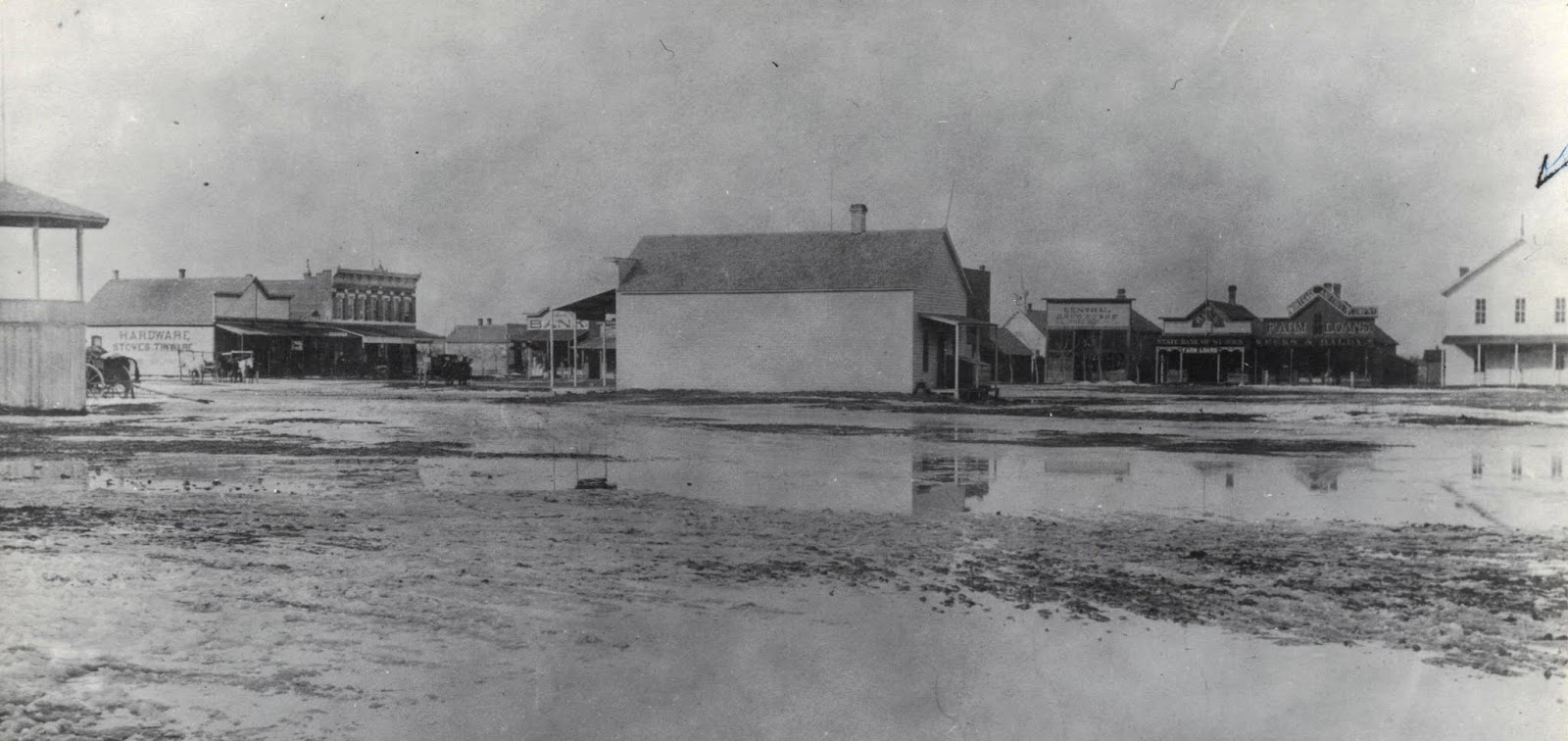
Iuka, Kansas stores
In these times which seem so unsettled, with so many traditions and customs abandoned, I thought it might be interesting to see what our ancestors believed to be important.  The Farmers' Alliance was an organization formed by farmers who came together in hard times to work toward a better life.  They shared ideas about farming methods and crops, and they were troubled by the growing disparity between working people like themselves and the wealthy and powerful few who exerted so much influence in our state and national capitals.  Initially, the Farmers' Alliance was not political, and they welcomed members from all political parties.  What was especially unusual was their inclusion of women, at a time when women did not have the vote.  Yet, women were active in the Farmers' Alliance.  Eventually, the Farmers' Alliance joined with other populist organizations to form a political party, in which women continued to play a part, although they still lacked he vote.

Dugouts and Sod Houses still existed in the late 1800s
What I thought you might enjoy is the Declaration of Principles those farm women and men of the Farmers' Alliance considered important in the late 1800s.

1.  To labor for the education of agricultural classes in the science of economical government, in a strictly nonpartisan spirit.

2.  To develop a better state mentally, morally, socially, and financially.

3.  To create a better understanding for sustaining civil officers maintaining law and order.

4.  Constantly to strive to secure entire harmony and good-will among all mankind and brotherly love among ourselves.

5.  To suppress personal, local, sectional, and national prejudices, all unhealthy rivalry, and all selfish ambition.

Horse Power meant real horses or mules
Later, they added the following:

To exercise charity toward offenders, to construe words and deeds in their most favorable light, granting honesty of purpose and good intensions to others; and to protect the principles of the Alliance unto death.  Its laws are reason and equity, its cardinal doctrines inspire purity of thought and life, and its intensions are "peace on earth and good will toward men."

In 1890, when the Alliance had attained its largest proportions, its voting membership was estimated at 2,500,000.

Although the Farmers' Alliance has disappeared, the wisdom of our ancestors, as expressed in this Declaration of Principles, seems deserving of reflection.  Even if, or maybe because, these Principles won't fit in a tweet, they seemed worth sharing.

Thursday, September 28, 2017

Was Jerry Simpson really sockless?

We Kansans know about Dodge City and the cattle drives.  We know about homesteaders, and some of us are descended from those courageous settlers.  We know about the cowboys and Indians, even if much of what we think we know comes from the movies.  But how much do we know about the late 1800s, when the progressive movement swept across the heartland.

I have shared in this blog that after the Civil War many Union soldiers came to Kansas to claim a homestead, and the legacy of those men who fought in Lincoln's army in defense of the Union partially explains why Kansas remains such a dependable Republican state.  But what is less known about Kansas history is the importance of Kansas during the populist movement.  Because Isaac B. Werner kept his journal during this period of Kansas history, I have learned a great deal.

Many of the leaders of that movement were Kansans, and several lived in or visited the communities in our region.  The Kansan I am going to share with you this week lived in Barber County, and he was a very colorful fellow.  Some even thought he might have been President had he not been born in Canada, although he came to America with his parents when he was six.  During the Civil War he served with the Illinois Volunteer Infantry, and after moving to Indiana he signed on as a deckhand on a Great Lakes steamship and rose to the position of Captain.  It was after his marriage in 1870 that he and his wife came to Kansas, eventually settling in Barber County on a ranch.  The deadly winter of 1884 killed his entire herd, and he first dipped his toe into politics, serving as sheriff in Medicine Lodge.

Like many populists, Simpson first joined the Greenback Party, then Union Labor, then through activity in the Farmers' Alliance he found his way to the People's Party.  His career as a member of the U.S. House of Representatives from Kansas included service from March of 1891 to March of 1895, and after a two year interruption, from March of 1897 to March of 1899.  He liked to portray himself as a country bumpkin, catching political opponents off guard because they had underestimated his intelligent ability.

When his service in elective office ended, he and his wife moved to New Mexico, but when he suffered a brain aneurysm he asked his wife to return to Kansas, realizing he didn't have much more time and wishing to die in Kansas.  He died in 1905 and is buried in Maple Grove Cemetery in Wichita.

But, the question asked in the title of this blog is whether he was really sockless, so I will answer that question, although the explanations for how he got the name "Sockless Jerry Simpson" vary.  Some say that Jerry mocked his well-to-do political opponent by describing his feet as 'encased in fine silk hosiery,' to which the man fired back, silk socks were better than wearing none at all.  Instead of taking offense, Jerry used the name to contrast his down-home common sense and honesty with his opponent's fancy talk and empty promises.

Another version has Jerry giving himself the name by directly pointing out that his opponent wore silk socks while he didn't wear any.  A third version claims that a newsman accused Jerry of wearing no socks and Jerry didn't deny the charge, turning the remark on his opponent by referring to his silk hose.

Exactly how he got the nickname may be uncertain, but the fact that he used it to appeal to his audiences of debt-burdened farmers to establish their common economic struggles is clearly agreed.  As a candidate, he was a good story teller with a ready wit, and if he played up his rural background by sometimes whittling in the doorways of Congress, opponents were foolish if they assumed this canny, well-read Kansan was the fool.

The answer to the title's question is "probably not," but if having you think he was sockless helped him win your vote or pass a populist bill in congress,  he didn't care a bit if you called him "Sockless Jerry."   

Thursday, May 7, 2015

Cemetery Iris

Isaac's stone in Neelands
The day that I first found Isaac Werner's grave in Neeland's Cemetery there were iris planted at the base of the stone.  Sometime later the iris tubers were removed.  (See "Finding Isaac's Grave," 1-13-2012 in the blog archives.)  We had a monument company correct the sinking and aligning of the stone and its separate levels, so the tubers may have been removed in that process.  Also, the cemetery board did a wonderful job of installing new fencing and grooming the grounds, and the old tubers may have been removed during that renovation.  I do wish I had been present when the tubers were removed, for I would have rescued the old iris roots and planted them at the farm as a remembrance of Isaac.

Photo by Lyn Fenwick
Iris were a popular flower to plant around grave stones in old cemeteries, primarily because they survive without watering and send up their delicate blooms each spring without any gardener's attention.  The primary threat to the continued blooming of iris is blowing dirt, which gradually covers the tubers.  Blowing sandy loam soil is an ever-present condition in the area where Isaac claimed his homestead!  The tubers are not killed, however, and removing the soil or digging up the tuber and replanting it with the roots and bottom half of the tuber placed in the soil and the top of the tuber exposed will nearly always bring the iris back to bloom.

Photo by Lyn Fenwick
I am a lazy gardener, so these undemanding flowers suit my personality perfectly.  Parts of the country, where winter arrives later and spring arrives earlier, allow re-blooming iris to produce flowers in both spring and fall.  That is when I fell in love with iris.  My mother loved her iris, but their short blooming period did not satisfy me.  Enjoying their flowers in both spring and fall won me over, and I began my collection.  Unfortunately, the tubers I dug from my collection to plant at the farm bloom only in the spring, although they are re-blooming varieties and have thrived with only the opportunity to bloom once a year.  I love them anyway.  Perhaps spring seems to arrive move quickly the older I get.  I am sharing photographs of some of my iris currently in bloom.

Photo by Lyn Fenwick
I wonder what color the iris on Isaac's grave were.  Most of all, I wonder who planted the iris around the base of his stone.  My great grandparents, George and Theresa Hall, were friends, and they were caregivers of him in their home for a short period during his final illness.  Perhaps Theresa and her daughters planted the iris.  Or, perhaps it was his neighbor, Isabel Ross, whom he always called Mrs. Ross, a divorced lady who claimed her homestead as a single woman.  His journal gave no hint of a romance, but his many kindnesses to her and her children may have caused her to feel a fondness for her bachelor neighbor.  Maybe the ladies who were members of the Farmers' Alliance, in which Isaac played such an active role, planted the iris, or mothers of the school children who appreciated Isaac's constant efforts to keep the school house in good repair.  Whoever planted the iris, it makes me feel glad that someone cared enough to decorate Isaac's grave.


Thursday, July 24, 2014

Do You Like Isaac?

Isaac loved Shakespeare
There are a few writers' blogs that I follow occasionally, and one of them is "Live, Write, Thrive."  Recently a post there was titled, "Make Me Like Your Protagonist or I'll Stop Reading."  The advice was directed more toward novels, but I had fun applying some of the advice to my history of Isaac and the Populist Movement.

First, the suggestion was that the character has to grow and change, perhaps learn a life lesson by the end of the book, a technique sometimes called a Character Arc.  I'm going to give Isaac points for his constant belief in the importance of learning.  While he did most of his learning from books, he also learned how to work within his community, directing his attention toward helping others as much as he sought to help himself.  At the end of his life, the lesson that he learned was that even an independent, solitary man must sometimes accept help from others.
Catalpa blooms like Isaac's

Second, the character must have a clear goal.  Double points to Isaac on that one.  His personal goal was to make a success of his farm, and he created a farm described as one of the best in the community.  His social goal was to work with his community through the Farmer's Alliance and the People's Party to make better lives for working people, and while he and the People's Party declined at about the same time, they left accomplished goals behind.

Isaac's friend "Doc" Dix
Third, don't make me wait to like your character.  That's a little tricky, since I start the book with Isaac's funeral.  Yet, the friends gathered at his grave are those who cared about him, who knew the good things he had done for the community, and who would miss him and his thoughtfulness.  Readers won't meet Isaac until the next chapter, but they will get to know him in the Preface through the eyes of his friends.
Isaac's Gravestone

Last, make your character sympathetic by showing his passion, needs, and vulnerabilities.  None of you has read the manuscript, but as you follow this blog, I have showed many sides of Isaac, and I hope by now you are invested in his life and find him a sympathetic man.  You cannot answer whether I have done a good job in the manuscript of meeting these suggestions for developing the main character, but from reading the blog, I hope you can answer the question at the top of the blog!  Do You Like Isaac?

Isaac was not a character that I created in a novel.  He was a real man, with his talents and his flaws, his intellect and his idiosyncrasies.  But, in the end, I've enjoyed spending the last few years in his company.  I definitely like Isaac and I hope you do too!

Thursday, November 14, 2013

Isaac's Efforts to Extend a Helping Hand

Political Cartoon from the County Capital


The hardships of the late 1800s in agricultural regions are difficult for today's Americans to imagine.  Farmers were grinding up the grain they had put aside for the next planting season's seed, mixing it with water to feed their starving children.  Isaac Werner wrote to the presidents of the surrounding Farmers' Alliances, urging that funds be collected from members to provide assistance to their most desperate neighbors, but nearly everyone was struggling just to care for their own families and to survive long enough to raise the next year's crops.  There were few places to turn for help, although counties did have limited funds for the most desperate.  (Click on cartoon to enlarge.)
 
Groups of these desperate men organized marches, headed for Washington, D.C. to ask for help, but many of these marches failed because the participants were too weak to walk the distance and too lacking in funds to provide food for the walkers.  A wealthy man named Jacob Coxey subsidized a march, which he called the Army of the Commonweal in Christ but which newspapers generally referred to as Coxey's Army.  Because of his financial ability to provide food and organization, Coxey and a portion of his men reached the nation's capital to ask for jobs.  They were desperately poor, not lazy beggars asking for a handout.  However, they were barred from entering the capital and Coxey and another man were arrested for walking on the grass, their pleas for work essentially ignored.
 
Shovel handle
Today, most Americans take for granted the social safety nets funded by the government.  We cannot imagine a time when a young married couple would have committed suicide as she was in labor with their first child, slashing their own throats because they were starving and felt they had no place to turn.  Yet, this story was reported in the County Capital to which Isaac subscribed.  Many of our current social programs now offering the assistance this young couple did not have are rooted in the political goals of the People's Party of the 1890s.
 
During another economic period of unemployment and widespread hardship in America, President Franklin Delano Roosevelt issued an order which led to the creation of the Works Progress Administration, later called the Works Projects Administration.  He entrusted its specific shaping to his close adviser, Harry Hopkins, and it is considered the most ambitious undertaking of the New Deal.
 
Old WPA shovel
Recently my husband and I were cleaning out our garage, and I took the responsibility of going through my father's old tools, cleaning them and oiling the dry wooden handles and rusty metal blades.  As I applied oil to one especially dry shovel handle, I noticed something carved into the wood.  My father often marked his tools, so as not to get them mixed up when he was working with  neighbors.  I assumed that the initials were his, until I realized that the letters were actually WPA.  When I finished with the handle and began working on the metal part of the shovel, I discovered WPA engraved into the corner of the blade. 
 
Between 1935 and 1943 the WPA provided employment for millions, paying wages consistent with the region in which the jobs were offered.  Hours were limited, and workers did not get rich--but they survived.  In addition, things like roads, government buildings, conservation projects, and public health projects benefitted citizens.  In the arts, musicians, actors, artists, and writers found work through the WPA.
 
Bottom right corner of blade see WPA
It was the approach of W.W. II and the need for employees in the war effort that diminished the need for the WPA, and Congress ended the Administration in 1943.  While it helped many Americans, it was subjected to some of the same criticisms heard today regarding our present forms of government assistance.  False and exaggerated reports were circulated about the excessive waste, and one congressman called the WPA a "seedbed for communists."  Complaints were made about politics having more to do with the distribution of projects and funding allotments than the needs of citizens in those regions.  And, just as today, needy workers were often viewed as being in their situation because they were lazy.  Even Harper Lee's novel To Kill a Mockingbird reflects that sort of criticism when a local loafer is described as "the only person fired from the WPA for laziness."
 
Close-up of engraved WPA
I do not know how the WPA shovel came to be among my father's tools.  In 1935 my father would have been twenty years old, and I do know that tree belts to control wind erosion of the loose sandy loam soil were planted in our area, including one just north of my family's hereditary home.  Could that have been a WPA project?  Whether my father or anyone else in his family worked for the WPA or whether the shovel I discovered ended up in his possession in some other way, I do not know.
 
What I do know is that farmers of Isaac's time who couldn't feed their families wanted work, not handouts, and the political goals of the People's Party included government work programs in their political platforms.  Many progressive programs that have been implemented over the years have their inceptions in these People's Party ideas.  Recently, jobs to improve America's aging infrastructure were suggested to help climb out of the recession at the close of the Bush administration and to improve the current economy.  What I also know is that most living Americans cannot imagine the degree of desperation that past generations suffered, without any place to turn for help.
 
Holding that old WPA shovel in my hands reminded me of all of that!

Tuesday, November 5, 2013

Songs for Farmers' Gatherings

In an era lacking radio, television, CDs and internet, people still enjoyed music.  Many towns formed bands  (See "Music on the Prairie, 1/24/13), and apparently the St. John Town Band was regarded as one of the best in the area.  At least two of Isaac Werner's neighbors gave singing lessons during the winter when people were not busy in their fields.  Isaac described in his journal how much he enjoyed evenings spent with friends who played musical instruments or gatherings that included singing.
 
It was only natural that when farmers came together in organizations like the Farmers' Alliance, which Isaac joined as an active member, music was a part of their meetings.  Recently I discovered a song book from one of these organizations, specifically "The Farmers' Union Hymnal, A Collection of Songs for Farmers' Union Gatherings, Picnics, Social Entertainments, Etc., Etc." with songs written by a man from Sunset, Texas, with publishers in Dalton, Georgia and Dallas, Texas.  The "Union Hymn" opens the book, declaring "In council there is wisdom, In union there is strength..." and the second verse describes the conditions that have given rise to the need for farmers to unite.  "Now this is our condition, Tho' shameful tale to tell; The speculator prices the things we have to sell, And when we want to purchase, our purchases come high, For speculation prices the things we have to buy."
 
Many farmers, like Isaac Werner, had borrowed money to buy implements for working their claims and horses, mules, or oxen to pull the implements.  When the prices for the crops they had counted on to repay the loans fell, they were barely able to make payments of interest, without reducing the principle, month after month--even year after year.  It is not surprising that the second song in the book includes the farmer's hope to "make enough to pay the mortgage off," looking forward to the day "whey that mortgage all is paid" and he can dress his wife "like a queen."
 
These farmers' organizations were formed to improve farming methods, confront the power of speculators and monopolists, and help each other through hard times.  As tough as times were, farmers still joined in singing "I like to live upon the farm, and breathe the country air; Far from the city's dust and harm, life seems more sweet and fair.  Around me shines the glowing sun, the rains come down in time, and every day there's something done to earn an honest dime."  (Lyrics from "Farm Life")  Unfortunately, in addition to the hardship of debts, farmers also faced drought, when rains did not come down in time. 
 
 
In the late 1800s there were many different farmers' organizations that came together to form the People's Party.  The two predecessors in Isaac's community were the Farmers' Alliance and Union Labor, but in the South a similar organization had been called the Wheel.  Perhaps this had been in the composer's and lyricist's mind when he wrote "Put Your Shoulder to the Wheel."
 
Many of the farmers' rallies were held out of doors.  In Isaac's community, Neelands Grove was a popular place, and families would arrive with blankets to spread on the ground for picnic lunches, where speakers would deliver inspirational, instructive, or political speeches.  Often there were foot races, wooden dance floors, and sometimes amusement rides of that period--primarily swings.  And usually there was singing, with lyrics of encouragement.  "It is well to work and 'tis well to play when our round of toil is done; then with strength renewed we to tasks return, and life's pleasures are won."  (Lyrics from "Picnic Song")
 
These farmers were confident that their strength lay in their superior numbers, especially when their organizations became politically active.  They could barely feed their families and were lucky if they could avoid foreclosure on their land, produce, livestock, and equipment.  They certainly lacked the financial resources to confront the wealth and power of men of the Gilded Age.  On the other hand, they greatly outnumbered these steel and railroad tycoons, Wall Street speculators, and monopolists.  Farmers, miners, and laborers believed they could succeed through their votes, if only they worked together.  The lyrics from "Help!" in the image below represent a summary of the abuses they perceived and their method for overcoming them.  (You can click on the image to enlarge for reading.) 
 
Their plan could only succeed if great numbers of men joined their movement, and the songs often reflect their effort to recruit members.  "The horny handed sons of toil their greeting would extend; We welcome you, dear friends, today, in song our voices blend...Let the music ring!  We, the Farmer's Union, bid you welcome here..."  (Lyrics from "Welcome")  Their optimistic conviction that their movement would prevail is expressed in the final song in the book.  "On the records of our country there shall shine a glowing page; It will be the Farmers' Union of this grand, progressive age.  Come and join the Farmers' Union and its many merits plead; Come and join the Farmers' Union, Union gives the strength we need."  (Lyrics from "Join the Union")
 
The People's Party had some political success in the 1890s, and members were pulled from both the major political parties, although primarily from the Democrats in Isaac's community.  Although the People's Party faded, many of their progressive goals were gradually adopted by the mainstream politicians and remain entrenched in present-day laws.


Thursday, January 24, 2013

Music on the Prairie

St. John Band
Isaac Werner loved music.  When he was a young druggist in Rossville, Illinois, the only day of the week that his store was closed was Sunday.  His younger cousin, Ezra Werner, had come to Rossville following Isaac's arrival, bringing with him an accordion.  During the week on winter evenings, Isaac loved to sit by the fire and listen to Ezra play the accordion, but what he especially enjoyed were outdoor concerts.  Isaac, Ezra, and another friend named Frederick often enjoyed their Sundays with a walk to a shady grove to sit on a log or a soft patch of grass to be entertained by Ezra.  When the birds joined in with their singing, Isaac was convinced that no concert hall in the city could have provided finer music.
 
When he came to Kansas, Isaac treasured opportunities to hear music.  A few evenings he enjoyed visiting the Eggleston family, who had brought musical instruments with them when they homesteaded.  There were also some fine singers in Isaac's community, and in the Clear Creek community, William Wilson was known for his beautiful singing voice.  In fact, Wilson offered a singing school during the winter evenings when he was not busy in the fields.
 
Isaac described an evening at the Emerson School House when Wilson and some other men visited a Farmers' Alliance meeting.  The Albano membership attendance was small that night, so the meeting was quickly adjourned, and the men enjoyed singing until midnight.
 
About his own musical talent Isaac never commented, although his personal library included a book on organ stops.
 
       St. John Town Square with Band Shell at far left
The reputation of the St. John Town Band was so impressive that they were often called upon to play in other towns.  When the Pratt County People's Party held it first political rally parading down Main Street, it was the St. John band that furnished the music for the parade.  The band was often asked to play for political events, organizers knowing that the band would draw a larger crowd.
 
So highly regarded were these musicians that a band shelter was built in the St. John Square, although the rest of the town square was nothing more than a muddy eyesore in wet weather and a source of dust blowing through the town when the season was dry.  (The first photograph of the St. John Band was taken in front of the City Stable, where Isaac often slept  with his horses when he needed to stay in St. John overnight.  The second photograph shows the band shell at the far left with the rain soaked bare town square in the foreground.  Remember, the photographs can be viewed larger by clicking on them.)
 
The opportunity to enjoy music with friends was one of Isaac's greatest pleasures!  Those of us living in a time when music is available in our homes, our cars, and while we go for a jog, as well as the many places where we can enjoy live performances, need to be reminded what a special treat hearing music was for those living in earlier times. 


Thursday, August 9, 2012

Naron--an early settler, a town, and a cemetery


Near Isaac's homestead were two country cemeteries in use in the years before his death.  The nearest one was the Naron Cemetery in Pratt County, about two miles southwest.  The community of Naron took its name from an early settler, and the cluster of buildings included a store, a school, and a church.  In 1914 the town of Byers was founded about half a mile to the south of Naron, and the businesses in the old community literally picked up and moved to the new town.  The old Naron Cemetery continued to be used by the neighborhood, for it sits on a hill about a quarter of a mile northwest of Byers.

My aunt, Wilma Carr Beck, wrote a history of Byers, 1914-1964, in which she describes the celebration day of the new town, using information found in the Pratt Union newspaper.  The death of Naron and its rebirth as the new town of Byers was the result of the decision by the Anthony & Northern Railroad to locate its tracks where they did.  Byers was built along the north side of the tracks and was given the name of the railroad company president, O. P. Byers.  Relying on the promise of the railroad that the tracks would arrive in Byers on October 15, 1914, the town scheduled its celebration for that date.  The tracks did not actually arrive until later, but two political candidates did--the Honorable J. S. Simmons and Senator Jewett Shouse, and the town celebration became a sort of political rally.  There was also a balloon ascension and a barbeque dinner, and the citizens felt that their town was off to a strong start. 

As for the town of Naron that Isaac had known, Byers drew what was left of it like a magnet.  Many houses were moved, but the certain end to Naron was when W. F. Brown moved his store into Byers in March of 1915.  He carried a complete line of dry goods and groceries, and his slogan expressed his disappointment for the demise of Naron, as well as his commitment to Byers.  "We never came here and we don't intend to go away!" the slogan declared.  Using the pen name of 'Old Fisher Brown,' he wrote for the Pratt Union newspaper, and about the time of his commercial move to Byers, he wrote, "Old Naron was almost gone, but not forgotten."  Today, most of the people who remembered the old town of Naron are gone, taking their memories with them.  Even the town of Byers has nearly disappeared but for a few houses and one thriving business.


Isaac did not live to see the founding of Byers, but he certainly knew the settlement of Naron, often mentioning trips to the Naron Store, Farmers' Alliance meetings in the Naron school house, wagons parked around the Naron Church, and funerals held at the Naron Cemetery.  Naron was about a mile and a half south of Isaac's homestead, and the cemetery was about a half mile southwest of the town, so both were an easy trip for Isaac, even before he owned a horse.  Although Isaac chose to be buried in the Neelands Cemetery to the north of his claim, several of his friends and neighbors are buried in the Naron Cemetery, including:  Frank Curtis, whose life Isaac may have saved when he was only a teenager by suggesting changes in the boy's diet after the doctor had told his mother there was no hope; Charles Shattuc, who farmed some of Isaac's land as Isaac's health began to decline; William F. Brown, with whom Isaac shared an interest in books and ancient history, as well as progressive politics; Gus Gereke, who was a nearby neighbor and someone who joined with Isaac and others in planting a cooperative field of potatoes; and neighbors James Lattimore and Wesley Logan, whom Isaac hired to harvest a crop.  A visit to the Naron Cemetery cannot help but evoke sadness to see the several gravestones of infants and young children of Isaac's friends, their lives cut short by the hard times Isaac's Journal describes so vividly.


Reminder:  By moving your cursor over the images or clicking on them, you can enlarge the images to view them better.

Thursday, March 29, 2012

Isaac's Victorian Court House

The early Stafford County Court House was in a wooden structure, but as the town of St. John grew, some of the town leaders believed a more distinguished building was appropriate. As is often true in political decisions, the location of the court house was a subject of dispute, some believing it should be built in the town square while others preferred to preserve that public space for a park. As is even more often true in political decisions, the expense of building the court house created further arguments.

At last, a group of prominent citizens decided to use private funds to erect a brick building of which the town could be proud, and since they were bearing the expense, they chose the location--the corner just to the southeast of the park. They selected brick rather than wood, not only to make it more elegant but also to reduce the risk of fire destroying the building and all the important records kept inside.

The story is told that one of the County Comissioners refused to accept the gift of the building. Somehow he was tricked into coming to the new structure to sign a document, and this act of business was deemed to show acceptance of the building, waiving his objections.

The citizens of the county decided that it was irresponsible not to reimburse those people who had spent their own money to build such a fine county building, so bonds were voted. Later, someone discovered a state law prohibiting voting bonds to repay private individuals for something already given to the county. The local newspapers followed the dilemma of whether the county had a moral obligation to repay the private donors, regardless of the legal prohibition concerning bonds, with arguments from both sides published.

Despite the controversies of its construction, the Victorian court house was enjoyed by the community from the time of its construction in about 1886 until September of 1925, when a petition signed by more than one-fourth of the taxpayers of the county asked the county commissioners to levy a tax to raise funds for a new court house. Within three years enough money had been raised to begin.

The elegant Victorian court house that Isaac Werner visited for business, lectures, and meetings was not replaced because people had tired of its style. Rather, the Board of County Commissioners' minutes of February 1, 1928, describe the conditions of the forty-year-old structure: "...the walls of which are what is commonly known as soft brick...are now cracked and the key stones in some of the arches of the doors and windows have loosened...and the walls of said building are spreading apart and have spread apart to the extent that the county has found it necessary to support the same by rods and other devises, and the plastering on said Court House is in bad condition and in many places has broken loose and fallen and much of the plastering is now loose and in danger of falling and injuring persons within said building, and the roof...is shingle and old and dilapidated and the said building needs a new roof." The minutes continue to describe a gaping crack running completely from top to bottom and from east to west, as well as fire risks and other dangers.

For all those reasons it was decided to demolish the grand old structure, to salvage any materials that might be used in the new building and store them on county-owned lots elsewhere in the city until they were reinstalled in the new building, and to rent space in The Delker Building in which to conduct county business while the new court house was being built. During the previous year, three architectural firms had been interviewed--Rutledge & Hurtz, Mann & Co., and Hulse & Co.--with Mann & Co. of Hutchinson chosen to draw the plans and supervise the construction of the new court house. With everything in place, the work proceeded quickly, and the new court house was dedicated in 1929.

Isaac claimed his homestead and timber claim in 1878, before St. John was much more than an idea in the minds of a group of early settlers and four years before St. John was chosen as the county seat in the election of April 14, 1882. In his early years as a homesteader, Isaac lacked a horse, and trips to town were made on foot. The map of Stafford County shows the location of St. John near the middle of the county and Isaac's homestead and timber claim in the southwest part of the county, adjacent to the Stafford-Pratt County line. The dotted line from Isaac's homestead to St. John shows the approximate route Isaac would have walked, sixteen miles according to Isaac's Journal. By the time the Victorian court house was built, Isaac had finally acquired a horse, and he traveled to the court house frequently for personal business. When he became active in the Farmers' Alliance, the Stafford County Agricultural Association, and the People's Party, he made many visits to the brick court house for meetings and conversations with political allies. Like Isaac himself, the existence of the elegant court house has faded from the minds of most Stafford County residents. Isaac, his friends, and the rich history of their times are worthy of being remembered, and I am enjoying making those introductions to those of you reading my blog.

(Remember, you can click on the images to enlarge them.)

Thursday, November 24, 2011

Politics Hardly Seem to Change

It is disappointing how unaware most of us are of the past, and although I consider myself a history buff, Isaac's Journal led me to more discoveries about the history of my own community, state, and nation than I can count. One of the intriguing discoveries involves the political history of our country in the later quarter of the 1800s, for there are so many similarities to today. As examples: there was a grassroots movement challenging the two established parties, and willing to work within one of the major parties to defeat the other; there were women who became political celebrities, known for their ability to generate great enthusiasm for candidates and issues through their impassioned speeches; and, there was popular opposition among the laboring classes against the power and greed of Wall Street, corporations, and the wealthy.

Isaac's personal experiences as a homesteader on the Kansas prairie first made me want to tell his story, but as I read further in his journal, I realized he had experienced and described a significant period in history that is nearly forgotten. As he struggled to create a successful and beautiful farm, coped with falling prices and rising interest, and raised crops that now barely covered taxes and interest on his loans, he personified the economic crisis of other farmers and laborers in America at that time. When he joined the Farmers' Alliance, he was only one of many farmers, factory workers, and other laborers who saw themselves as the producers of wealth that was going into the pockets of bankers, speculators, monopolists, and corporate and Wall Street tycoons while many of the working classes were literally starving. The wealth of the nation was being disproportionately distributed, and technology was displacing workers in ways they struggled to combat, giving rise to public demonstrations and political activity. When newspapers owned or influenced by the wealthy published biased "news," laborers established newspapers of their own. Does any of this sound familiar to what we see on television, the newspapers, and on the internet today? I certainly thought so.

These two political cartoons appeared in Isaac's local newspaper, the County Capital in the 1890s, and both address issues still being argued in media today. Carl Sagan believed, "You have to know the past to understand the present." I agree with Sagan. It is essential that history is taught in our schools, and remembered and referenced accurately by adults, if we are to progress. Yet, George Bernard Shaw reminded us: "If history repeats itself, and the unexpected always happens, how incapable must Man be of learning from experience." Forgotten history, or history intentionally distorted, cannot pass the wisdom learned by one generation to generations in the future. Instead, we are condemned to repeat the inevitable struggles without the benefits of knowing history's lessons.

I hope that by telling Isaac's story, I can bring alive the times in which he lived, and in that way offer a context for history's lessons that will make them relevant today. As David McCullough has said, "No harm's done to history by making it something someone would want to read."

(If you enjoy this post, please remember to add your comments and click on +1 so that I will know what posts you would enjoy more of in the future.)