Showing posts with label encouraging reading. Show all posts

Wednesday, November 6, 2024

What Happened?


 Do you remember these Library Cards?  I often buy old books, and this particular former library book looked like new.  When I opened it I understood why.  Apparently, it had never been checked out.  How sad.  The book was published by the Kansas State Historical Society, and Miss Louise Barry's thick book of a decade of research, with the author's goal to document a record of known activity in the pre-Kansas region from the appearance of the first Europeans in the mid-1500s to 1854, is not for everyone.  

It includes the early history of the displacement of  Indigenous  people, and of the surveyors running lines to determine reservation boundaries for of promises such as the following example in 1828; It guaranteed eleven millions of acres of land and a perpetual outlet to the west, a permanent home...which shall, under the most solemn guarantee of the United States, be and remain theirs forever--a home that shall never, in all future time, be embarrassed by having extended around it the line, or placed over it the jurisdiction of a territory or state, nor be pressed upon by the extension, in any way, of any of the limits of any existing territory or state...

 Of course, we now know that the promise, with all of its grand words, did not last.  The book is a valuable record, but not intended for most readers.  I do hope it can still be found in libraries for scholarly researchers, and I will try to get my copy to such a place.  

However, my blog was inspired by reading about a college student seeking help from a college counselor.  She had been a good student in high school, but she was struggling with the reading assignments she was being given in college.  The counselor asked whether there had been reading assignments given to her in high school, and she acknowledged that there had been.  However, she said that her high school assignments had only been a few pages.  She was overwhelmed by being asked to read an entire book.  That was just too much for her! 

I assume it was a novel or a biography that she was assigned to read over a period of a few days.  How sad it is that she had never been guided into the pleasure of vicariously traveling to a new place and immersing herself into the life of a fictional person or reading the Diary of Anne Frank to better understand war and hate, or reading about an actress or an athlete or a scientist that encouraged her to pursue a dream of her own.  

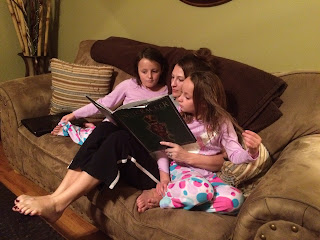
The joy of reading is best acquired by being read to by parents and seeing them read books of their own.  Children learn by watching, and if they see parents and older siblings reading, it is more likely that they will want to learn to read too.  Reading not only shares stories, it introduces children to the lives of children who are different, it allows them to travel to faraway places, it allows then to experience sad events so that if sadness really comes into their lives they can better understand how to face it.  Studies also show that meeting all kinds of people in books makes children   more empathetic.  

How sad that the college girl that sought help from the counselor had not been exposed to books from childhood.  Having scary fairy tales read to a child sitting safely in a parent's lap is the best way to confront evil witches for the first time.  Feeling sad for Black Beauty with its eventual reunion is a gentler way to prepare for the inevitable death of a pet.  Children who read, whether fiction or biography, benefit from experiencing what it was like to live in the 1800s, or in a different country, or to be of a different ethnicity, or even to experiencing the death of a fictional friend.  Learning these things vicariously, they are better prepared for actual events in their lives.  Think of all the things that coed had missed by restricting her experiences to her own immediate life or perhaps the few pages of her prior limited reading assignments.  How much empathy for those different from herself can she feel, if she had never cried while reading a book about someone different?  How can she ever learn from history if she only reads text books, which is much different from reading historic fiction and becoming fictional friends with a Jewish girl in Germany at the start of W.W. II, if she overlooked reading the Diary of Anne Frank?

To Librarians making room on the shelves for new books, why not guide young readers to classic books that their parents and grandparents read and loved years ago.  And parents, please read to your children, even when you may think they are too young to understand.  Read fairy tales, and buy them books of their own.  

I have been in waiting rooms and have seen parents give their small children their phones to play with.  I would much rather plant the seed for reading in a child's hands than the seed for living online.    Help them fall in love with reading when it still seems exciting to master that skill.

I don't expect many people to go in search of the book I introduced at the beginning of this blog, but I do hope I can plant a seed or two that encourages a few to read to babies very early, to buy them books of their own, to let them see you reading while they are young enough to emulate you.  And, get them a library card of their own early!  Our community has so many wonderful Libraries! 

A  P.S. to Librarians:  Please keep children's classics on the shelves.  Classics do not grow old.  The Illustrators from the 1980s and 1990s and a few more years are fantastic.  Please keep them on the shelves where kids (and parents) can find them.


Wednesday, January 26, 2022

So Many Choices, Where Do I Start? New Year's Reading Resolution 3

Photo Credits:  Lyn Fenwick
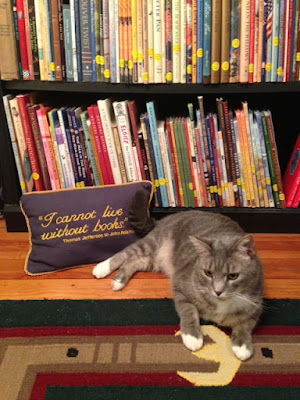
Like Thomas Jefferson, "I cannot live without my books."  My New Year's Resolution should be--and is to some extent--"I resolve to read books in my library that I have not made time to read."  Some of you know that I collect illustrated children's books, and I have read most of those.  There are still a few classic books in that collection that I have not read.  Reading those classics is at the top of my list.  I love history, and I have particularly collected books by and about American presidents.  For some surprising reason, I am also interested in W.W. I, and there are a few books of that category that I have not read.  My New Year's Resolution is to spend more time reading and less time wasted, and even if I keep that resolution, I am sure I will have unread books as 2022 ends.


When I made my Millenium List, I still believed that if I carefully selected a book as worthy of reading, I should finish it.  I no longer adhere to that creed.  Life is too short to read every great book, and it is not my responsibility to every author to finish their book!  However, it is my responsibility to search out wonderful books and try to read as many of them as I can.

A good place to start is with book lists prepared by serious readers, book sellers, publishers, and friends whose reading acumen you respect.  The internet has many book lists that are easily available.  For example, Amazon has a list titled "100 Books to Read in a Lifetime" complied by their editors.  Of course, they would like for you to buy those books from Amazon, but there is no requirement that you do.  They also have lists for specific types of books, such as Childrens, Mysteries, Biographies & Memoirs, and more.

If you prefer novels, "Time" has a list prepared by Critics Lev Grossman and Richard Lacayo with what they consider the 100 best English-language novels published since 1923.  They list the books alphabetically by title, rather than ranking them from best to "barely made it on the list."  Modern Library has a list titled 100 Best Novels, which is a 'ranking' list.  Good Reads is another source with more current and popular rankings.


Obviously, I lean heavily on the classics that have retained their popularity longer than a few years, but there are wonderful books being published all the time.  I also tend to read all the books written by my favorite authors, once I become a fan.  It is no secret that I have been a Willa Cather fan since I sneaked a book out of a box of books my brother brought home from college when I was eight.  It was "My Antonia," and I also favor "O Pioneers," and "One of Ours," although they are not necessarily the ones critics rank highest.  I also like Barbara Kingsolver, and I have read all of her books. The first months of Covid I decided to read all of the "Harry Potter" books chronologically.  That was great fun.

Whether you join a Book Club, decide to read Children's Classics to your children, select a particular historic period or a favorite author to read everything that author has written, I hope you consider making your New Year's Resolution for 2022 a commitment a read more books.  I'd love to hear from you to learn what you are reading!  I am just finishing "If, The Untold Story of Kipling's American Years," so I think I will take a second look at my beautiful copy of "The Jungle Book," illustrated and signed by Robert Ingpen, and another publication of that book illustrated by Don Daily.

Next week I will share a memory of my favorite author.   


Thursday, January 20, 2022

Why Should I Read? New Year's Resolution Part 2


Remember when reading was fun!  Your New Year's Resolution should be about rediscovering the fun of reading.  And, there is no reason why your reading resolution could not be a family project.  Reading with children reinforces the idea that reading is fun and important.

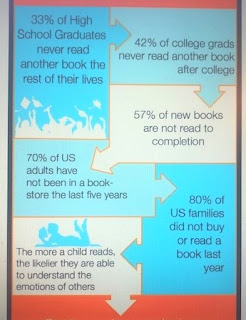
33% of H.S. Graduates never read another book the rest of their lives.

However, assuming your resolution to read more books is going to be solitary reading, there are many good reasons for you to make a New Year's reading pledge.  I will share just a few of those reasons.

42% of college grads never read another book after college.

Last week's blog described two friends who read to relax at bedtime in one case and to just pass the time without any particular reason in another case.  There is nothing wrong with reading to reduce stress.  Personally, even if I am reading to relax, I still prefer to read something of value to me, so  I keep a book of poetry beside my bed which serves that purpose well.  The rhythm of poetry and the shorter length, which makes it easier to find a stopping place, are both reasons why poetry is especially restful and relaxing.  Often the substance of the poems offer content for reflection as I fall asleep.  In a similar category, reading can be inspiring, whether read at bedtime or any other time.  Reading about the achievements or courage or good deeds of others can be an inspirational reason for reading.

The more a child reads, the better they are able to understand the emotions of others.


Photo Credit:  Lyn Fenwick

Three hundred years ago, Joseph Addison described another important reason for reading:  "Reading is to the mind what exercise is to the body."  Studies have shown that reading really does increase the blood flow and improves connectivity in the brain.  It is not just what you learn by reading but also an actual physical impact.

80% of U.S. families did not buy or read a book last year.

Obviously, reading can provide information that can alter your thinking.  Right now, with health issues limiting travel, we can still learn about other people and other places through books.  Books can even take us back in history.  Mark Twain wrote that history may not repeat itself, but it does rhyme.  Instead of every generation needing to learn hard lessons for themselves, reading can spare the mistakes and build on the achievements.

70% of U.S. families have not been inside a bookstore in the past 5 years.

Children are not alone in benefitting from reading books that challenge their imaginations.  Fiction authors of the 1800s are believed to have inspired and challenged inventors and scientists who read their books and made fantasy into reality.  How many young boys credit reading a book about an athlete as what made them believe they too could run faster, jump higher, or enter a sport that they believed had been closed to them because of a disability or their color or financial limits.  How many people have built something or written something or baked something or explored something because they were inspired by a book they read, and age need not be a barrier to readers inspired by a book. 

I do not know the source of the statistics I quoted.  Frankly, I hope they are wrong, because I cannot imagine not wanting to continue reading for a lifetime.  But, I do know that other sources support the severe reduction in reading, and I know too many bookstores closed because people stopped buying books.

Whether you read to relax, to be inspired, to be educated, to learn, to improve something about yourself, to gain confidence--and I am not referring to "self-help" books but rather well written books that appeal to you for many reasons, I hope you believe that reading is worth making time to read.


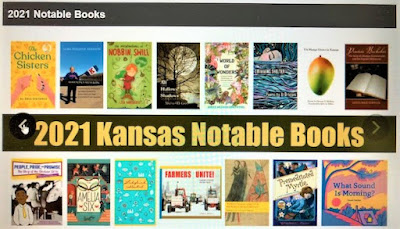
Thank you to Kansas for recognizing Kansas authors & books about Kansas.

And thank you to Libraries and librarians for all they do to encourage reading!


Thursday, May 11, 2017

What and How We Read

Steinbeck Home and Restaurant
Recently a friend we met on the John Steinbeck Retreat forwarded news that Steinbeck's childhood home, which had been operated as a lunch-time restaurant by volunteers (with a professional chef and helper in the kitchen) was closing because of inadequate funds to sustain its operation.   The day our group ate there, all of the tables were filled; however, that included 24 of us.  My husband and I ate there when we visited Steinbeck Country several years ago.  It is a wonderful part of the Steinbeck experience, and it would be a shame for it to close.

Mural across from Steinbeck Center
I suppose I am not a typical reader.  I have mentioned my Millennium Reading List, which I compiled at the turn of the century, consulting the lists of great books several publications printed at that time, supplemented with titles from other sources.  My intention to select 100 Great Books quickly expanded beyond the 1900s and grew to more that twice the intended number, and it continues to grow faster than I can keep up, encompassing both fiction and nonfiction.  My attitude is that life is too short to read everything, so why waste time reading junk!

Not all my favorite authors are dead.  I have a shelf of David McCullough histories, and I am a fan of Barbara Kingsolver.  I do read Best Sellers, but usually months after they were on the Best Seller lists, and only if reviewers (professional and friends) that I respect have recommended them.  It sometimes seems that each book I read leads me to more--by the same author, on the same subject, or to learn more about the history of the period described in the book.

Steinbeck Center
Those of you who regularly follow this blog know that I love Willa Cather, and now you know that John Steinbeck is one of my favorites.  I am a great believer in the importance of a literate citizenry necessary to support a great country.  I have shared a favorite quote from Einstein:  "If you want intelligent children, read them fairy tales.  If you want more intelligent children, read them more fairy tales."  Several of my past blogs have dealt with encouraging the habit of reading in our children.  Most adults who are regular readers of books learned that habit as children.

I fear that reading is a habit on the decline.  Even in her home state of Nebraska, the great Willa Cather is no longer on the required reading list of public high schools.  Harper Lee's "To Kill a Mockingbird" is still read in many schools, but it is often relegated to younger readers who may not fully appreciate it.  Too few readers get past Steinbeck's "Grapes of Wrath," a great book but not the only one worth reading.  Despite the huge popularity of "Downton Abbey" on PBS, few readers explore the great English novels written in the 1800s, of which my favorite, "Pride and Prejudice," is only one.

Enjoying access to archived material
But I will continue to be a cheerleader for reading, and sharing time with others who love to read is a special treat for me.  The photographs in this week's blog were taken when our retreat group visited Salinas, California, Steinbeck's childhood home.  We toured the Steinbeck Center and enjoyed a special opportunity to view items from the museum archives not usually seen by visitors.  We had lunch in Steinbeck's childhood home, and we ended our day with a visit to the graves of Steinbeck and other family members.

My favorite Steinbeck book is "East of Eden," a challenging book that I first read about fifteen years ago.  I will close by sharing a conversation from that novel between Samuel Hamilton, who visited his younger friend Adam, to help select a name for the twin boys whose mother had deserted them soon after they were born. In his grief at having been abandoned by his wife, Adam neglected his sons, imposing fears about their mother's evil having been inherited by the boys.  Samuel tells him:  "I don't very much believe in blood.  I think when a man finds good or bad in his children he is seeing only what he planted in them after they cleared the womb."  Adam:  "You can't make a race horse of a pig."  Samuel:  "No, but you can make a very fast pig."    

Graves of Samuel & other family members
Just as Samuel believed in bringing out the best that was possible in Adam's sons, I admit that I believe that reading quality literature and learning from reading history can bring out the best in all of us.  I would love it if you took the time to share the titles of your favorite books with me.  The long-time readers of this blog will remember what a popular series of blogs resulted from your sharing of favorite childhood books, so sharing titles of favorite books you have read as adults should be fun too. 

It was Isaac Werner's love for books, and his amazing personal library, that drew me to him, after all!


(Remember, you can click on images to enlarge.)

Thursday, December 8, 2016

Literacy Then & Now

Journeys Through Bookland
Isaac Beckley Werner loved his books.  One of the most popular blog post series that I have done is the request for readers of the blog to share their favorite childhood books.  Recently I finished a book by British writer, Neil Gaiman titled "The View from the Cheap Seats."  This week's blog post has grown out of a lecture Gaiman gave to a British organization created to encourage literacy in children.  The lecture is titled, "Why Our Future Depends on Libraries, Reading and Daydreaming," and I hope the many of you who shared your favorite books and who have told me that the blogs about books and libraries are among your favorites will particularly enjoy this post and will share it with teachers, librarians, and readers who might also enjoy the wisdom of Neil Gaiman.

I have often regretted that I was not guided to some of the children's classics when I was growing up, nor encouraged to explore the stories inside the covers of "Journeys Through Bookland" on the family bookcase.  However, Gaiman would not have agreed with me about the need for guidance.  "They [children] can find the stories they need to, and they bring themselves to stories," he believes.  "Well-meaning adults can easily destroy a child's love of reading:  stop them reading what they enjoy, or give them worthy-but-dull books that you like,  ...You'll wind up with a generation convinced that reading is uncool and, worse, unpleasant."

Gentleman Don
One of the books that I found for myself belonged to my older brother, a gift to him from our Great Aunt Anna Marie that was already seriously old-fashioned when he received it.  Yet, I loved it so much that long after I was grown I inquired to see if my brother still had the copy I had read.  Apparently he no longer knew its whereabouts, so I found a copy online and bought it.  When I reread it as an adult, it had lost its magic, but I still love the memory of reading that special book.  Gaiman would understand my feelings, for he writes:  "A hackneyed, worn-out idea isn't hackneyed and worn out to someone encountering it for the first time.  You don't discourage children from reading because you feel they are reading the wrong thing.  Fiction you do not like is the gateway drug to other books you may prefer them to read."  Certainly I would not hand Gentleman Don to a young girl today, expecting her to fall in love with it as I did, but perhaps it was a "gateway" for me to tackle other 'grown-up' books with thick pages about other times in history.

There is a huge difference between imposing what a child should read and guiding children to things they might otherwise miss, and Gaiman emphasizes the importance of librarians in today's world of overwhelming information.  "For all of human history, we have lived in a time of information scarcity, and having the needed information was always important, and always worth something.  ...Information was a valuable thing..."  Today, however, "we've moved from an information-scarce economy to one driven by an information glut."  The role of librarians has become increasingly important, as is the support for libraries.

Neil Gaiman, photo credit: 
Gaiman writes:  "Literacy is more important than ever it was, in this world of text and e-mail, a world of written information.  We need to read and write, we need global citizens who can read comfortably, comprehend what they are reading, understand nuance, and make themselves understood."  Gaiman sees libraries as "the gates to the future."  

Relying on media and technology to produce these global citizens of tomorrow is not going to work.  Gaiman distinguishes the experience of watching TV or film with reading prose fiction.  "When you watch TV or see a film, you are looking at things happening to other people."  In contrast, when you read prose fiction "...you, and you alone, using your imagination, create a world, and people it and look out through other eyes.  You get to feel things, visit places and worlds you would never otherwise know.  You learn that everyone else out there is a me, as well.  You're being someone else, and when you return to our own world, you're going to be slightly changed."

Because our children have mastered hooking up satellite TV, texting, tweeting, navigating Windows 10, googling, and all the other things adults struggle to learn, we tend to see them as smarter than older folks.  Yet, by knowing how to find answers our children are not learning how to reason through ideas to discover answers for themselves.  Gaimin writes, "...our children and our grandchildren are less literate and less numerate than we are.  They are less able to navigate the world, to understand it to solve problems.  They can be more easily lied to and misled, will be less able to change the world in which they find themselves, be less employable."  It is primarily for this reason that Gaimin sees the need for libraries and reading.

"Books are the way that the dead communicate with us.  The way that we learn lessons from those who are no longer with us, the way that humanity has built on itself, progressed, made knowledge incremental rather than something that has to be relearned, over and over."

Lyn searching through County Capital newspapers
Using my own experience as an example, I recall the hours I spent in the Stafford County History & Genealogy Museum turning the brittle, yellowed pages of old newspapers, thinking I was looking for some specific information but finding instead many other things that enriched my understanding of the period.  I did not just learn the single specific thing which had brought me to the museum.  I learned many things I didn't realize that I needed to know.

Using a key word to access information from a phone or a computer is handy, but it does not enrich our understanding, deepen our empathy, develop our reasoning skills in the same way that reading does.  

I will conclude this post by hinting about next week's blog, still inspired by Neil Gaiman's book, The View From the Cheap Seats.  He writes:  "[W]e have responsibilities to the future.  Responsibilities and obligations to children, to the adults those children will become, to the world they will find themselves inhabiting."  Next week's blog will share some of those responsibilities he suggests!

(If you enjoyed this post, you may want to go back through the archives to read other posts about books and reading.)