Showing posts with label cottonwood trees. Show all posts

Wednesday, January 25, 2017

Kansas Ice Storm

Our Red Bud Tree
The weekend of January 13-14 we had a wonderful trip planned to see the showing of Home on the Range, a newly released docudrama about our Kansas treasure near Smith Center--the cabin where the lyrics to our state song were written.  Instead, the Smith Center Premier was postponed one week by the ice storm that hit Western Kansas.  We did attend the premier the following weekend, and next week's blog will share that wonderful weekend, but this week is devoted to our epic Kansas ice storm and reflections on nature's hardships for our early settlers.

At the front corner of our home is a red bud tree that has been there as long as I can remember.  As is their nature, this red bud has continuously recreated itself by sending up new trunks as its elders die.  It survived through more than a quarter century when the old house was vacant.  But, the ice storm was a fierce opponent in comparison to drought and neglect.  We may try to shape up what is left of the tree, but it really suffered.  (See "Emulating Isaac," 8-14-2014 in the blog archives, about transplanting seedlings, including a red bed seedling.)

Our ancient cottonwood
The blog I posted about cottonwood trees has been one of readers' favorites, many of you sending comments admitting how you love these old trees.  Isaac B. Werner wrote in his journal exactly how he started his cottonwood trees from 15" cuttings, which from his arrival in 1878 to 1885 had resulted in 3,400 trees on his 320 acres, with plans that year to add 2,000 more cuttings.  (See "Cottonwood Trees, posted 12-2-2011, to read my original post.)  Since publishing that post, many of the giant cottonwoods in our area have died, their silver trunks lying on the ground like fallen soldiers, and many more are likely to have fallen victim to the recent ice storm.

We have very few left on our home place, and this old beauty lost most of her limbs, what remains looking more like a giant slingshot than the arching shade tree that it was before the storm.!

In 1944, my parents returned to the farm following my grandfather's stroke, and they planted three rows of elm trees south of the house to block the hot, south winds.  They probably chose elms because they are fast growing, but they are also susceptible to broken branches in Kansas winds, and very susceptible to ice damage.

My parents planted the elm tree rows too close together and they tended to reach for the sky in an ongoing competition with their neighbors for canopy space.  The result was tall, naked trunks and crowded crowns.  The ice collected on the upper branches and the weight brought them down, leaving trees that look more like poles than shade trees.
Limbs litter the ground

Elm trees are trashy by nature, and a stroll across the yard nearly always involves picking up fallen branches along the way.  However, the litter on the ground after the ice storm was monumental.  I dragged branches into piles that my husband could pick up with the front-end loader of the tractor, trip after trip (both for me dragging the limbs and for him carrying them away.)  We had hired professional tree trimmers last summer to help clean up our trees, and we were so pleased with how they looked.  Not so much right now!

Limbs covering the garden


Some of you will remember my blog about our vegetable garden in the old chicken house foundation.  Since posting that blog, we have moved the vegetable garden to a sunnier location, but the foundation continues to hold my herb and flower garden.  In the photograph at right you can see part of the foundation, as well as the orange water hydrant, and somewhere beneath that litter are my herbs and perennials.  It was one of the first areas I cleared.

As I worked, I thought of the early settlers, using manpower and horses, mules, and oxen to remove the dense prairie sod to clear fields.  I recalled Isaac's pride as he watched his cottonwood cuttings take root and grow, representing countless hours bent over sticking the cuttings in the ground, followed by constant weeding sand burrs and stickers, as well as sunflowers competing for the water he hand carried to the young trees.  I remembered his labor hand picking potato bugs off his plants and his joy when his carefully tended peaches were in season.

Elm trees stripped of limbs
Perhaps thinking of Isaac and my ancestors as they worked this prairie soil is some explanation for why I grieved for the loss of favorite trees that we had loved, but I also felt a kinship with the land.  I know that many of these trees will never be beautiful, but they will struggle to survive.  They will send out new branches in the spring, and already branches bent by the weight of the ice have arched upward determinedly, looking better than I had dared to hope they would.  Many of them can't be saved, but next spring the seeds they released in the summer will sprout.

Mother Nature gave us an ice storm, but she followed it with calm, sunny days and milder temperatures than are usual for January.  It was actually pleasant when I was working.  It's looking better now--but I was very grateful to see David Wood and his crew arrive to help us pick up the debris we hadn't reached.  Thank you so much, guys!  We are on the waiting list for the crew that worked at the farm this summer with their tall-armed buckets, this visit needed to reach the limbs hanging overhead dangerously.  Mother Nature will surely send winds to bring down some of them, but we are among the lucky ones who suffered no damage to buildings from falling limbs--thanks to the tree trimming last summer.

Next week I will begin sharing our wonderful visit to Smith Center for the premier of a movie you will want to see and more about the history of our state song!


Thursday, July 2, 2015

Cottonwood Forest

The old cottonwood trees are dying
Isaac B Werner had catalpa trees (See "Isaac's Catalpa Trees," 5-30-2012 in the blog archives), Osage orange trees (See "Planting Osage Orange Trees," 3-15-2012), and maples, but the greatest number of trees were cottonwood trees that he planted with cuttings (See "Isaac Plants Cottonwood Trees," 12-2-2011).  Cottonwood trees were abundant in Isaac's community, but today the old favorites are dying.  I love cottonwood trees--the sounds of rustling taffeta as the breeze ruffles their leaves, the golden leaves against the bright blue of an autumn sky.  And, unlike most people, I also love the springtime snow fall of the cottonwood seeds drifting gently by.  Of course, that cottony fluff also clogs air conditioner compressors and collects in messy drifts to gather dust.  For me, the magic of the falling cotton is worth the resulting nuisance.

Cottonwood seeds on ground
Seeds still on branch
As our cottonwood trees at the farm age and fall to the ground (See "Threats to Timber Claims," 2-19-2015), we miss having them and have wanted to replant some.  However, all that we could find available from commercial tree nurseries were "cottonless" cottonwoods.  I considered the idea of trying to grow cottonwood trees from cuttings like Isaac did, but any tender cuttings on our old trees were too high for me to reach.

Our 'forest' of cottonwood seedlings
Spring of 2015 provided many successive days of rain at about the time the cottonwood seeds were falling, and it was the perfect environment for the seeds to collect along the edges of standing water, germinate, and produce seedlings. 

I noticed some little seedlings along the edges of the standing water, but never having noticed cottonwood seedlings before, I wasn't sure what the seedlings were.  I left them to grow so I could get a better look at their leaves.  For a time I was the only one who thought they were cottonwood seedlings, and even I wasn't sure.  Eventually the leaves began to take the recognizable shape and I was no longer the butt of jokes.  We had a wealth of seedlings from which to transplant potential trees.


I have now lifted a dozen of the seedlings into pots to see if 
Cottonwood seedlings in pots
they can survive being transplanted.  If they thrive, we will find a place for them, and the farm will once again have young cottonwood trees growing.  I'm sure most of our friends think we are a little crazy, planting what many have come to consider a trash tree, and what is worse, choosing trees that will produce the nuisance of cotton every spring.  But, judging from the number of followers of my blog who have expressed their affection for cottonwood trees, at least some of you will understand and will be cheering for our success in propagating these trees so popular with the early settlers of the prairie!

Thursday, March 19, 2015

The Changing Landscape

Isaac's Pinnacle Hill
There was high ground on Isaac's homestead claim that he called "pinnacle hill."  Several years on the 4th of July, Isaac climbed his pinnacle hill to view the fireworks from towns as far away as Macksville, St. John, Iuka, and Stafford.

The photograph at right was taken of me standing on what I believe to be what is left of Isaac's pinnacle hill.  According to the current land owner, this was once the highest point on that quarter section of land, but over the years its elevation has been reduced, perhaps by as much as 40 feet.

It cannot be assumed that just because the land someone owned in the 1880s is still under cultivation, and has not been covered by buildings or roads, that it is still the same as it was more than a century ago.  The photograph at left shows the southeast corner of Isaac's homestead.  An older elevation can still be seen, but dirt removal has cut away around that elevation.  I avoid describing the higher elevation in the photograph as "original," since it is adjacent to the road and power line posts have been set, both of which might have altered the original terrain.


The photograph at right was taken from Isaac's pinnacle hill looking toward the north, and what is now an open field was in the late 1800s Isaac's timber claim.  His journal records how he planted thousands of trees from cuttings and seeds, growing not only cottonwoods but also catalpa, Osage orange, and maple trees.  (See "Isaac's Catalpa Trees," 5-30-2012; "Planting Osage orange Trees," 3-15-2012; and "Isaac Plants Cottonwood Trees," 12-2-2011, in the Blog Archives.

Generations come and go, and not even the land remains the same.  Very little undisturbed prairie remains in the community where Isaac homesteaded, and many acres are under circle irrigation.  The flat prairie land has been leveled even further, and the trees planted by homesteaders, and more planted in the "Dirty 30s" to reduce soil erosion, have died or been removed to enlarge the acreage devoted to crops.

Once Isaac knew the land so well that he could set out across the prairie on foot to walk to St. John.  Many of the landmarks he must have relied upon to find his way have changed.  I wonder if he would recognize his own claims today.

Thursday, February 19, 2015

Threats to Timber Claims

A fallen Cottonwood tree
It was not that trees could not grow on the prairie.  Rather, it was that the prairie fires that swept across the plains burned whatever seedlings managed to root in the prairie soil before they could mature.  Once settlers arrived, they protected the trees by plowing fire guards around their trees and crops, which reduced the risk.  When fire was seen on the horizon, neighbors rushed to help however they could.  If they had horses, they plowed fire breaks, and those neighbors without horses and implements battled the creep of fire in the matted prairie grass with blankets or the coats off their backs, if that was all they had to slow the fire. (See "Prairie Fires," 11-21-2013 in the blog archives.)

Cottonwood Leaf Beetle
However, it wasn't just prairie fires that were a threat to Isaac Werner's trees. Cottonwood trees attracted two particular pests.  Cottonwood Leaf Beetles cause damage two ways.  The adults eat the leaves, but they also lay their yellow, oval-shaped eggs on the undersides of the leaves, and when the larvae hatch they feed on the leaves.  The risk of these feeding beetles and their larvae is unlikely to kill the tree, but severe infestation can cause defoliation.  

Isaac wrote in his journal that something was eating the leaves of his cottonwood trees, and it worried him.  However, he made no later mention of severe damage to the trees.  Today there are chemical controls available; however, natural enemies of the beetles may be the best protection, and chemicals could kill these predators.  Stink bugs, assassin bugs, ants, wasps, spiders, lacewings, lady bugs, and parasitic tachinid flies are natural enemies of the cottonwood leaf beetle.
Cottonwood Borer

Another cottonwood pest is the Cottonwood Borer, which also uses the cottonwood tree as its host both as an adult and as larvae.  The adults chew the leaves, stems, and new twigs, but unlike the beetles, the borers chew small pits near the base of the trees in which to lay their eggs.  The larvae burrow into the tree, first feeding on the roots and then burrowing through the heartwood near ground level.  As adults, perhaps 2 years later, they chew their way out of the tree and then dig up to ground level.  If the larvae are numerous they can weaken a young tree and cause it to fall in high winds.  As for the adults, their chewing on tender twigs can cause malformation of new branches.  The harm to more mature trees is unlikely to be significant, but since Isaac was growing young cottonwoods from rooting cuttings, his trees may have suffered some damage.  (See "Isaac Plants Cottonwood Trees," 12-2-2011 in the blog archives.)

Cottonwood rotted in the center
However, it was neither the beetle nor the borer that felled the old cottonwood tree pictured at the top of this blog.  Rather, it was rot.  Common rot which starts at the base of the tree and gradually rots the inner core of the tree is perhaps the most common cause of mature trees falling.  The photograph at left is the same tree pictured at the beginning of this blog, and you can see how rot has eaten the center of the tree away.

One day last summer we watched a raccoon climb quickly up an old silver maple tree in our front yard and disappear.  As we continued to watch, the raccoon popped its head out of what from the ground had appeared to be the flat base where a large limb had been sawn off.  Only when the raccoon peeked out of the cavity did we realize that the removal of the large limb had cause the trunk below to rot.  It made a nice nest for the raccoon, but the trunk has been weakened and we do not know how deeply the cavity extends downward.  Our mature row of silver maples may suffer the same fate as the rotted cottonwood. 

(Photo credits to to Whitney Cranshaw for the beetle and Jim Mason for the borer.)

Thursday, May 16, 2013

Walking in Isaac's Steps

Pond from which I began my walk
Last spring one of the writers' websites I visit challenged readers to an Immersion Writing Contest, described as using a "participatory experience to write about yourself completing a reenactment."  I decided it would be fun to reenact Isaac's footsteps as he walked from his homestead to the home of Doc Dix, where the Emerson Post Office was maintained. 
 
Isaac's homestead was located in the southwest quarter of section 33, and as nearly as I can locate his house, it was near the center of the quarter.  Doc Dix owned the north half of section 31, his timber claim being in the east quarter and his homestead in the west quarter.  When I was a child, my father spoke of "the old Dix's place" as we drove past what appeared to be the remains of a home site located along the north side between the two Dix's claims.  The distance from the center of Isaac's homestead claim to the point on the north side between Doc Dix's two claims would have been about two miles.  I did not carry a camera during my reenactment, so the photographs accompaning this blog were taken in 2013; however, the description of my walk is my experience from 2012.
 
My husband dropped me off at the retention pond in the northeast corner of Isaac's homestead.  (Isaac makes no mention of any permanent pond on his claims, although he does mention ponds after rainfalls.)  My husband paused by the pond with me long enough to flip a turtle struggling on its back at the edge of the pond before leaving me to begin my reenactment of Isaac's walk to get his mail.  As I lingered to watch the wild ducks that Isaac had loved, a splash caught my attention too late to see its cause.  Soon, a bug-eyed frog surfaced to stare at me--the apparent cause of the splash.  A few of his buddies gradually emerged in the pond, reminding me of the "frog choruses" Isaac described in his journal.
 
Racoon tracks
As I turned to begin my walk, the smell of crushed rye along the path my husband had driven filled the air, alive with tiny yellow and white butterflies performing their aerial dance over growing wheat on one side and alfalfa on the other.  Bird songs from the trees near the pond were replaced by the buzz of insects, and  I wondered what birds serenaded Isaac on the treeless prairie before the cottonwoods, catalpa, and peach trees he planted began to grow.  Studying the raccoon tracks beside my own foot prints, I nearly missed the moment I had come to find, the feeling of Isaac tapping me on the shoulder to say, "Look around.  See why you are here."
 
I stood between Isaac's homestead and timber claims and slowly turned in a circle to see the land around me.  How proud Isaac must have felt to be master of the 360 acres he had claimed.  I saw the land through Isaac's eyes and understood his pride.
 
The 1/2 section line
But, I was on my way to Doc Dix's soddie after the mail, and I could not linger.  Soon I reached the black top road and left Isaac's land.  A farmer's daughter born and bred, I refused to cut across a neighboring field and trample knee-high wheat, although Isaac probably walked the diagonal route.  Instead, I walked the half-section line between two fields, straddling a wheat row to avoid bending the slender green stalks, perhaps not so different from walking across the tall prairie grass.  Midway across the field, the noise of a pickup on the backtop road behind me sounded alien, out of place, so immersed was I in Isaac's walk.  A large, deep badger hole beside my path made me hope my reenactment would not awaken the fierce nocturnal animal. 
 
Neglected tree row
 
I passed a mudhole, dried down to the mossy bottom and pocked-marked with deer tracks, while at my feet little red pyramids of anthills dotted the ground.  I paused to listen to the rustling sound of the wind as it ruffled the wheat that surrounded me. 
 
As I neared the center of the section, a tree belt planted in the 'Dirty Thirties,' decades after Isaac's death, obstructed my path.  The wind made a different sound--stronger and full of mystery, and dying branches bent to the ground, a tangled barricade.  The interruption broke the spell of my reenactment and chased Isaac from my imagination. 
 
My walk continued, but the destination changed toward my family home located in the south half of the section in which the Dix family had once resided to the north.  The changed world of abandoned claims, blacktop roads, irrigated fields, and neglected trees brought me back to the present, but for a while I had walked in Isaac's steps.
 
(Remember, you can enlarge the photographs by clicking on them.)


Friday, December 30, 2011

Year's End

So much of 2011 has been spent with Isaac--first, completing the transcription of his journal after eleven months of looking over his shoulder at what he wrote every day from a distance of more than a century; second, reading old newspapers until I sometimes knew more about the people and events of Isaac's place and time than current goings-on in my own world; third, researching Isaac's neighbors until I knew the names of their children and their final resting places; fourth, discovering significant history about my home state and the nation that I had never learned; fifth, feeling that I was finally ready to begin writing Isaac's story; and sixth, introducing Isaac on the internet with my blog as I shared my adventures in researching and writing the book about Isaac B. Werner. [I Love History, 10/17/2011]

Before beginning this post, I went back to Isaac's entries on December 31st for each year of his journal, [Finding Isaac's Journal, 10/23/2011] thinking I would include his words about the closing of the year. In fact, those entries were no different from what he wrote every day of the year--weather, work to be done, his health--just another day. Apparently Isaac would have agreed with NYT journalist and author Hal Borland (1900-1978) who wrote: "Year's end is neither an end or a beginning but a going on, with all the wisdom that experience can instill in us."

Rather than sharing Isaac's words about the closing of the year, I decided to share some of the comments followers of this blog have sent to me. At first, most of the e-mails I received were encouragement or brief expressions of delight with Isaac. "I love this stuff--here's to Isaac and his loquaciousness." M.C. Many of you described how you were connecting with things mentioned in the posts. "You write so well it feels lyrical. I savored every word. I stopped at the word commode--my grandmother used that term, and it came to life..." A.M. [Small Town Museums--Lucille M. Hall Museum, 10/29/2011]

I had no idea so many people loved cottonwood trees until I began receiving messages about that post. Among those who wrote: "I loved your piece on the cottonwoods and on the land. It's sad that once everything is bulldozed and leveled how hollow it all seems, and how much history and how many life stories are lost." J.Y. "How I loved to listen to the leaves when visiting the farm on vacation. I loved the belt lines of trees and was so disappointed to see so many dying when we went to the reunion. Hasn't history shown the need for those tree belts? The trees and their music are so soothing, as well as beautiful." N.H. "When my first husband and I built a home north of Slater, Missouri, I pulled up a cottonwood tree growing on the banks of the Mississippi River and replanted it in the yard so I could hear the clacking of the leaves. I loved it." L.K. I was naturally flattered when someone admired how I described the dying trees: "I enjoyed the cottonwood blog. I especially liked 'Today, many tree rows look like graveyards, the trunks of fallen trees bleaching white in the sun as aging neighbors await their turn to fall.' I know exactly what you are describing, and I cannot think of a better way to have done so." D.B. [Isaac Plants Cottonwood Trees, 12/2/2011]

When I mentioned in the post about Isaac's childhood in Wernersville, PA that his teacher, Francis Trout Hoover, had written a novel with characters and plot loosely based on Isaac's hometown, one of you who lives in that area told me that "Hoover wrote that book so close to the truth, that people in Berks County were angry and embarrassed, and they didn't want their 'history' getting out..." K.R. [Isaac's Birth & Childhood, 11/4/2011]

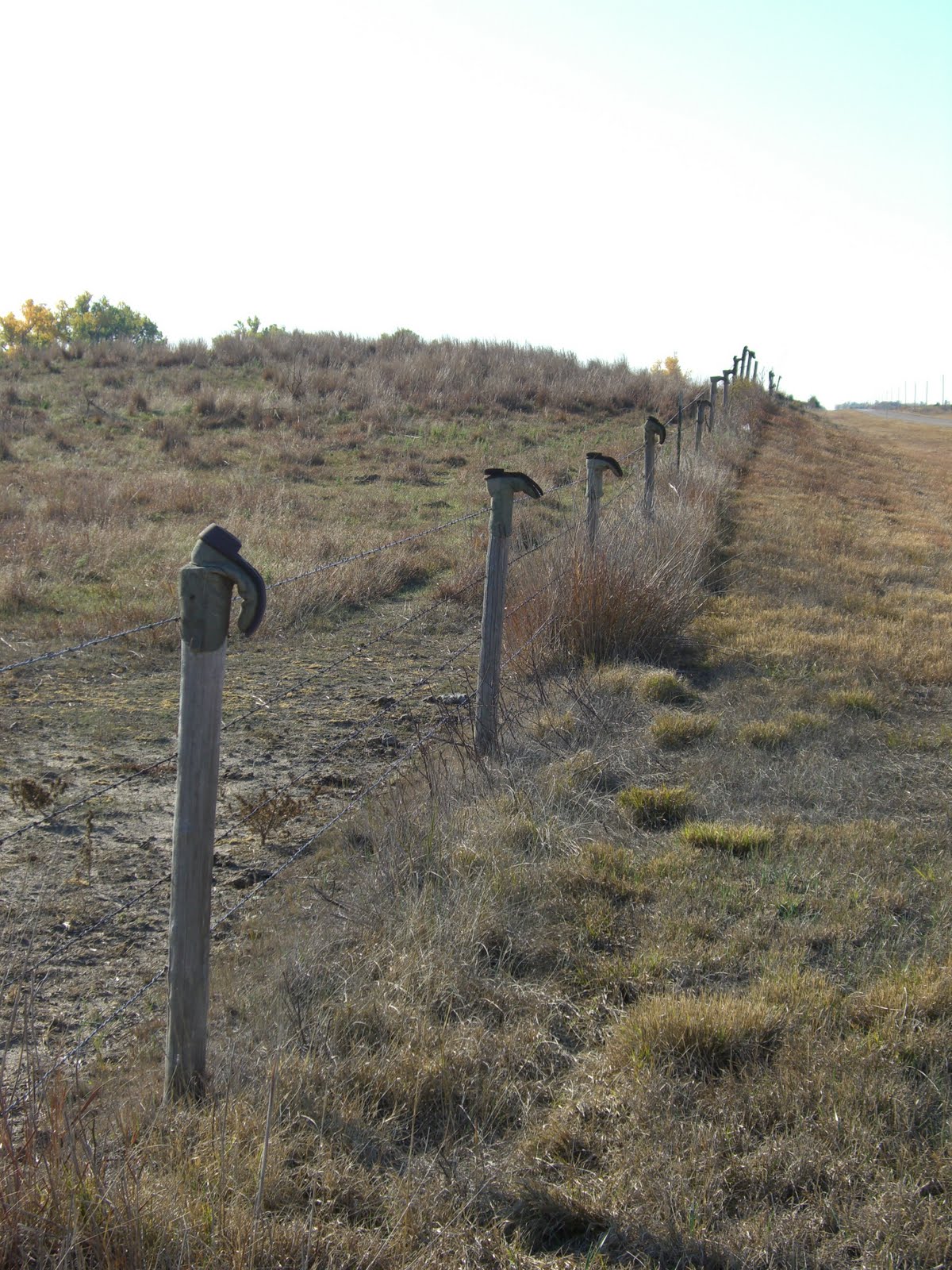
The tornado post, with a picture that included old boots on fence posts, drew this response: "The story was told that when a cowboy died his boots went up on the fence posts." A.M. [Isaac Sees 1st Tornado, 12/9/2011]

As more of you began to check the boxes at the ends of each post to let me know which ones you found particularly interesting and what you wanted to read more of, I was glad that so many of you enjoyed the political cartoons. Kansas was the center of the Farmers' Alliance and the political party that grew out of grass roots organizations formed by farmers and other laborers. Much of Isaac's Journal includes his political experiences and opinions. It is remarkable how many parallels there are between politics in the 1890s and today. [Politics Hardly Seem to Change, 11/24/2011]

When I mentioned some of my favorite illustrators of children's books in the post about Isaac and L. Frank Baum, I was delighted to receive e-mails from two of those illustrators. Michael Hague wrote, "I think it is important for the kids to value their creativity and imaginations and have people around them who are active in the arts and embrace it as an important part of their lives." Pop-up engineer and artist Robert Sabuda's animated tornado in his Oz book certainly drew excited Ohs and Ahs from the children. Sabuda wrote to me, "I love to see everyone enjoy my books. It makes the hard work worthwhile." [Isaac & the Wizard of Oz, 12/15/2011]

No post generated more enthusiasm among those of you who follow my blog than the one about disappearing traces of the past, and part of that was the impact of the photographs. "...so poignant and haunting. Those images and emotions speak to me as no other. I've always been that way, finding interest and increased curiosity toward the lonely, the forgotten, the lost." T.K.B. "Of the hundreds of reasons that houses might be left as you portrayed that house, surely one of them is that people live their lives until the end, but they don't 'finish' them as one might finish a skein of knitting." S.S. "I, like you, remember my grandfather farming and how all the homes have disappeared." J.R. "Just finished your latest blog. It makes me sad to confront what I already know about the familiar things we grew up with." A.B.C. "The older I get the more I miss what I had when I was a kid. That is life for most folks, I guess." R.B. [Disappearing Traces of the Past, 12/23/2011]

The encouragement and support that so many people, friends and strangers, have extended to me since I began this blog three months ago matter very much on a personal level, but I am especially pleased that what I am doing touches the feelings of many of you. Writing the blog has made me observe things that in my hurry to tend to business I was overlooking. It has enriched every day for me to practice the habit of seeing and reflecting, and I hope some of that has been transmitted to all of you.

Yesterday as my husband and I drove a road we've traveled hundreds of times, I saw an old house in a grove of dying cottonwood trees, and I had to have a photograph of it to share with all of you who loved the posts about cottonwoods and disappearing traces of the past. My husband, who generously tolerates my affection for another man--Isaac, of course--patiently turned around and went back so I could photograph the old house.

Thanks to all of you who are following my blog and who communicate with your checks in the boxes, clicks on +1, e-mails, and face-to-face encouragement. The comments at the end of posts are wonderful, and if you haven't been opening those, you might enjoy going back to read them, or adding comments of your own. Of all the wonderful responses people have shared with me, this simple statement sums up very well what I am trying to accomplish: "I feel like I knew Isaac!" D.K. I hope you will enjoy the future posts and will spread the word so more people can get to know Isaac too!!

Since Isaac did not provide me with a New Year's message to share, I will pass along the words of Benjamin Franklin: "Be always at war with your vices, at peace with your neighbors, and let each new year find you a better man."

Friday, December 2, 2011

Isaac Plants Cottonwood Trees

Cowboy poet Larry McWhorter had a business building pipe and cable fencing in Texas, and his business card read "Fiddlestrings." He prided himself on building sturdy and beautiful fences with taut cable--like a well-tuned fiddle. Because he took such pride in his work, he took his time about it. That also allowed him to write poems in his head as he worked, and he didn't mind a bit of conversation when I stopped by. One hot day he noticed a little volunteer cottonwood tree growing on our property, and he walked over to remove a few leaves and slip them around the inner hatband of his cowboy hat. He laughed at my perplexed expression, saying, "That's an old cowboy trick to help keep a fella' cool when he's workin' in the sun."

I don't know if Isaac knew that trick or not, but he definitely knew how to grow cottonwood trees from cuttings. He explained the procedure he had perfected, writing on April 22, 1885: "...cottonwoods quite leaved [sic] out too much so to make reliable cuttings...I lately making my cuttings 15 inches long, 3 to stick out & 12 in ground, to better withstand droughty spells, and surer to grow." Isaac arrived to stake a homestead and a timber claim in 1878, when there were no trees on the prairie. On March 1, 1885, he wrote in his journal: "During middle of day counted the trees on my homestead alive & thrifty...on Homestead & Timber claim...total 3400 growing trees."

Among the trees on the prairie, the cottonwood towers above most of the others. The spade- or heart-shaped leaves have a smooth, shiny texture, and when the trees are stirred by a breeze, the leaves make a rustling noise like a lady's taffeta petticoats or that gentle sound of light rainfall on the roof. The shiny surfaces catch the light and reflect the movement of each leaf, a shimmering gold when the leaves turn in the autumn.

Cottonwood trees are fast growing--seven feet or more per year, and long-living--up to one hundred years, and they tolerate drought better than most trees. Naturally, they were a popular tree with the early settlers. During the dust bowl years in the "dirty thirties" cottonwood trees were usually included among the other varieties of trees planted in rows as windbreaks to help control soil erosion. These strong, healthy giants are the trees of my childhood memories, their cottony seeds drifting down in late spring, their sturdy limbs great for climbing and building tree houses in summer, and their bright yellow leaves for raking into piles, jumping into, and raking again in autumn.

Today, many tree rows look like graveyards, the trunks of fallen trees bleaching white in the sun as aging neighbors await their turn to fall. Many old shelterbelts have been bulldozed to make more room for farming; others have been destroyed by tornadoes and ice storms; and even more are succumbing to old age, as few of today's farmers plant trees as Isaac and his neighbors did.

The actress Kim Novak wrote: "...when you touch these trees, you have such a sense of the passage of time, of history. It's like you're touching the essence, the very substance of life." I understand her feelings of connection with ancient trees, knowing that ancestors enjoyed standing in their shade. Perhaps that is why I find it so sad to watch the gradual disappearance of the prairie cottonwoods.

While their numbers may be declining and their vigor nearing an end, those that remain lift their golden crowns into the clear blue of the autumn sky with the same regal beauty that Isaac must have admired over a century ago.

(Please continue to let me know what you enjoy with your comments, clicking on +1, and checking boxes.)

Friday, November 11, 2011

I can see Isaac's farm from my house

When I began transcribing Isaac's Journal, I did not know where his homestead and timber claim were located. Eventually, he included the legal description, identifying his land as being in Clear Creek Township. Since that is the township to the west of my childhood home, I was pleased to discover he had lived so near. Later, I learned that his home was even nearer, for the original Clear Creek Township had been divided in half, the west half retaining the name but the east half being given the new name of Albano Township. Isaac lived one mile straight east of my childhood home!


Standing at my front door, I can see the trees that are currently on what were Isaac's homestead and timber claim. While these trees may not be old cottonwoods that he planted, they are quite likely to have grown from seeds dropped by trees Isaac started from cuttings on the treeless prairie that existed when he arrived. The sunrise photograph, taken from my front yard, shows Isaac's trees to the right of the rising sun, bathed in a purple morning haze at the edge of the horizon. The mid-day photograph, also taken from my front yard, shows the same row of trees, located on the east edge of Isaac's old timber claim.


In 1878 when Isaac arrived, there were no trees on the prairie. A "timber claim" did not designate land covered with trees but rather land that could be claimed by planting ten acres of prairie in trees and keeping them alive for eight years in order to claim the title. If drought did not kill them, weeds did not choke them, pests did not destroy them, and prairie fires did not burn them during the required eight years, the settler could acquire 160 acres. As Willa Cather wrote about the hardy trees that managed to survive on the prairie, "I like trees because they seem more resigned to the way they have to live than other things do." In addition to acquiring land as a timber claim, 160 acres could also be claimed as a homestead by building some sort of dwelling, living in it for five years, and improving the land by gradually breaking the thick prairie sod and planting crops or grazing livestock on the prairie grass.

The land was divided into square mile sections which contained 640 acres. These squares were then divided into four smaller squares, each containing 160 acres and being one-fourth of a square-mile section, or a quarter-section of land. These were identified by the compass direction they occupied in the full section. Isaac's homestead was in the southwest quarter of the section; his timber claim was in the northwest quarter of the section. Other homesteaders claimed the quarters in the eastern half of that section.

Today there are roads around most square-mile sections, and fences or changes in the crop from one farmer's field to another's usually make it apparent where one quarter section of ground ends and another begins. In Isaac's day, there were not so many roads, although farmers did mow along the edges of their property for two reasons: to make travel easier and to create fire guards to slow prairie fires.

If you could have viewed Isaac's farm from the air in 1888, you would have seen neat tree rows around 30 and 40 acre fields and carefully maintained fire guards mowed or plowed around his property line. The view from the air is very different today, and I will share it with you in next week's blog.