Wednesday, March 30, 2022

Pratt County 4-H Clubs of 1962


 The Pratt Pride magazine of 1962 devoted a large article to the role of 4-H Clubs in Pratt County, consisting at that time of 356 young members among 12 organized clubs throughout the county, with 96 adults involved in leadership posts.

The first 4-H memberships in Pratt County, organized in 1927, by 1962 had involved 6,331 boys and girls, although technically the early clubs were called "Project Clubs."  Those organizations became 4-H Clubs in 1931.  Each community could decide the projects their club would offer.  While rural clubs might focus on livestock and poultry, clubs with more urban members might focus on other projects.  In either case, the rules required that the young members do most of the project work themselves and keep their own records.

Listed in the article were agricultural and home economics, junior leadership, bees, rabbits, tractor maintenance, home grounds beautification, soil conservation, and wood working.  Also mentioned were developing personal confidence by participation in demonstrations, project talks, and skits.

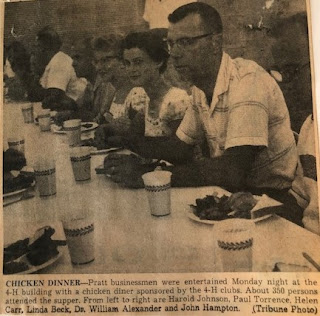
The clipping at the beginning of this post appeared in the "Pratt Tribune" showing the chicken dinner hosted by the 4-H clubs for Pratt Businessmen.  Notice the reference to "business men," although there must have been several business women in Pratt at that time.

I did not have livestock.  My projects were cooking, sewing, and home improvement.  I do recall giving a demonstration describing how to select items for a first aid kit, which I carefully packed into a tin lunch pail.  I also remember the emphasis on learning how to conduct a meeting with the proper motions, seconds, and voting.  As an adult sitting through a few meetings, I sometimes wished those adults conducting the meeting had benefitted from the same 4-H training I had received.

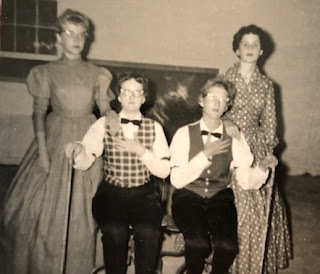
Our club particularly enjoyed music, whether it was square dancing or singing.  The quartette pictured at right consisted of four Byers classmates--Helen, Judy, Cheryl, and Lynda.  Our serious pose was intended to depict a Barbershop Quartette.

I also remember the dances at the fairgrounds, with 4-H members from all the clubs in the county attending.  I think we learned the bunny hop and the schottsche, as well as various square dances, but whatever the dances were, we had fun.

This past Christmas we were surprised by a knock on our door one evening for the delivery of a Christmas ornament decorated by the local 4-H club.  The traditions live on!
  

Wednesday, March 23, 2022

Pratt, Kansas has Always Supported It's Libraries


Pratt, Kansas has supported its libraries from early years, getting its start in 1909 when the Coterie Club, a local study group, offered its library to the city, offering its 1,700 books to the city in exchange for a commitment from the city to keep the library open daily, provide a free public reading room, and include free reading for the county as well as the city.  The offer was accepted and in May of 1910, on September 14, the new Public Library in the ground floor of the Court House opened.

By 1961 the library collection had expanded to 153,214 books, pictures, clippings, classical records, and films.  There were 403 adult and 330 children new borrowers registered, as well as 160 new rural patrons, part of the 6,027 total registered borrowers.  Of the 36,000 books available for loan, about one-third were loaned each month.  Librarian Miss Johnson indicated that local patrons read about an average of 12 books per year from the library. 

One of those rural patrons may have been me.  Until my grandmother's death when I was five, we tended to shop in St. John, where she lived, but after her death, we shopped in Pratt most Saturdays, and I was a regular at the library. 

The city provided $10,000, and county provided $7,000, and gifts to the Library added another $308.70.  Also included in their budget were fines ($1,011.25), fees ($64.) and  charges for lost books ($33.85.)  The Library Board Members were:  Mrs. Paul Tupper, John H. Calbeck, Eldon Green, Miss Johnson, Dr. Julia Barbee, Miss Flavel Barner, Mrs. Don Brown, John Megaffin, and Jess Kennedy.

(I cannot help but notice as I share this information that many of the ladies are identified by only their last names, or if married, only by their husband's given name instead of their own.  That practice drives people trying to search their families' genealogy on the maternal side crazy, but it was very common even into the later decades of the 1900s!)

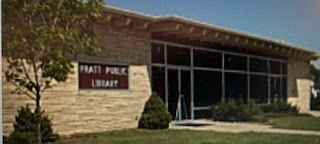
Today we have the beautiful library pictured at the top of this blog, recently renovated, and located next to the Vernon Filley Art Museum, making joint efforts to celebrate the arts possible!  

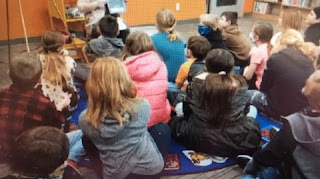
Kids at the Pratt Library
The Mission Statement of the Library states:  "The Mission of the Pratt Public Library is to foster lifelong learning by providing materials and services which will serve the educational, cultural, professional, and recreational needs of the community."

For more than a century, Pratt, Kansas has recognized the importance of supporting the cultural needs of the community.  The Library continues to perform its role in that commitment. 


Wednesday, March 16, 2022

The Larned Opera House and the Ghosts of Past Performers


Close-up of the Larned Opera House
Photo Credit:  Larry Fenwick

As the razing of the 1886 Opera House commenced its final performance, the stage became an outdoor theater for the first time, a gaping hole in the center of the wall where the stage had been.  On the west side of the stage, old posters advertised the entertainments of the past, and my imagination focused on the image of the Victorian actress with her pompadour hairstyle.  Was the ghost of the actress hiding somewhere inside the undemolished part of the opera house, or had she moved on with the rest of the cast as the train carried cast, costumes, and sets to their next performance somewhere down the line?  The sight of the demolished Opera House could not help but stir my imagination.

While I do not know the name of the girl with the pompadour hairstyle, nor the name of the play in which she may have performed, I do know, thanks to the advertisement for The Great Train Robbery at left, that the now famous movie did play in the Larned Opera House.

That movie has become legendary, claiming many titles, some of which it does not deserve, such as the claim that it was "the first western" and even the "first story film," neither of which is accurate.  However, The Great Train Robbery was a   wildly popular movie.  It was not a movie as we think of movies today.  As the Larned ad states, "new pictures" and "new illustrated songs" have been added, and this was possible because the pictures themselves did not move.  The story line and the music tell the story, with fixed images appearing one after another on the screen.

The iconic image from this movie is of actor Justice D. Barnes pointing his gun directly at the camera and firing.  The frightening impact on the audience was the sense that a man had suddenly appeared and shot them!  Interestingly, the theater had the option of using the picture of Barnes firing into the crowd at the start of the firm or at the end.  Either way, apparently it created a sensation with audiences! 

Although the pictures were still, some were hand colored, for example with puffes of smoke.  While we have become jaded by the amazing special effects in today's movies, for those early theater goers, the sound and the surprise were enough to frighten them.

BANG!


The next time you approach the corner of 4th Street and Broadway the Opera House will no longer be standing, and perhaps even the pile of rubble will have been taken away.  Yet, there will still be a few people who remember the old Opera House, maybe even a few who remember it before its sad decline.  Gradually most of the old opera houses have disappeared.  Even many of the movie theaters that followed them are disappearing.  Yet once, the Larned Opera House was the Price of Larned!


P.S.  I have blogged about other Kansas Opera Houses.  You may want to do a search to discover those previous blogs.


Wednesday, March 9, 2022

Final Performance--The Larned Opera House

Photo Credit:  Great Bend News


Even after the once famed Larned Opera House was no longer used, it displayed remnants of the architectural details from its 1886 origins, when four Larned men decided to construct a lasting entertainment venue for their community.  Once the decision to build was made, they did not scrimp on making it magnificent, with large cathedral windows, ornate parapet along the roof edge, with corbelled corners.  The second-floor interior contained a semi-circular auditorium, divided into orchestral, dress circle, parquet and balcony seats.  There were four private seats on each side of the stage, and cherry-wood trim emphasized the painted scenery.  The stage was described as "the largest in Kansas," and the entire building was lit by gas-light.

Sadly, by 2022 the elegant Victorian structure had deteriorated to the point that it was dangerous.  The City Council was compelled to do something, but not everyone agreed just what that should be.  To give the citizens an opportunity to express their views, a poll was taken:  20.83% wanted the building repaired at the cost of the owners; 39.58% wanted the building razed at the cost of the owners; 18.75% wanted the building repaired at the expense of the city; and 20.83% wanted it demolished at the cost of the city.  If it were destroyed, nearly 3/4th wanted no compensation for the various owners, some of which had active businesses in the lower floor, but 26.53% believed owners should be compensated.  Obviously, there was no single majority among the Larned citizens about how to proceed.   

Yet, a decision needed to be made.  The decision was made to raze the once grand old building, which had become so unsafe that even the inspectors were reluctant to move through the entire building, described as being "in emanate danger of collapse."  One tenant had made repairs to his portion of the property, but he agreed to "do what's best for the community." 

Photo credit:  Larry Fenwick


As we entered Larned from the south, we were taken by surprise, not having been aware of the decision to raze the old opera house.  Although I was never inside the Opera House, even I could imagine the history--the remaining soldiers from the old fort riding into town for some entertainment, the early homesteaders dressing up for a special occasion at the theater, the performers arriving by train with their costumes and props to get ready for their performance.

Isaac Werner occasionally traveled to Larned, and in his journal he mentioned the novelty of arriving under lighted streets.  He also mentioned one trip to Larned to sell trees from his farm and discovering that the Governor was speaking that evening.  He had written in his journal that he wanted to stay to hear the Governor but felt it was necessary to start toward home before dark, getting a bit closer so that the remainder of the journey could be shortened for the following day.  But, surely Isaac would have admired the beautiful exterior, and perhaps he had even slipped inside to view the interior.  

If only those old bricks could have called out the names of performers and sweethearts and politicians who had frequented the Opera House as the bricks tumbled to the ground.  What stories they might have told.   

More about the Larned Opera House next week.


Wednesday, March 2, 2022

Getting the News

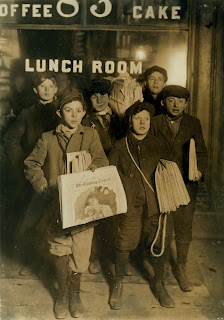
Early Newsboys selling papers
 
In Isaac Werner's day Newspapers were extremely important.  In cities there were morning and evening editions, with special editions if something important happened.  For those who did not live in cities, like Isaac, their local weekly newspaper brought not only local news but also stories rewritten from the city newspapers.

A century later, with radio and television, we were able to get our news more quickly, but local newspapers remained important.  My family subscribed to four different newspapers at least some of the time while I was at home--Pratt, St. John, Hutchinson, and the weekly Macksville paper.

At the close of the day, the family watched the CBS station hosted by Walter Cronkite, who was such a familiar and trusted newsman that he acquired the nickname of 'Uncle Walter.'

Times have obviously changed, and today newspaper are struggling.  Those changes have brought us immediate access online, as well as television news.  But, one of those changes is the blurring between newscasters and commentators.

To understand the difference between those two roles let me first share the Journalist's Code of Ethics.

1.  I shall scrupulously report and interpret the news, taking care not to suppress essential facts nor to distort the truth by omission or improper emphasis.  I recognize the duty to air the other side and the duty to correct substantive errors promptly.

2.  I shall not violate confidential information on material given me in the exercise of my calling.

3.  I shall resort only to fair and honest methods in my effort to obtain news, photographs and/or documents, and shall properly identify myself as a representative of the press when obtaining any personal interview intended for publication.

4.  I shall refrain from writing reports which will adversely affect a private reputation unless the public interests justify it.  At the same time, I shall write vigorously for public access to information as provided for in the constitution.

5.  I shall not let personal motives or interests influence me in the performance of my duties; nor shall I accept or offer any present, gift or other consideration of a nature which may cast doubt on my professional integrity.

6.  I shall not commit an act of plagiarism.

7.  I shall not in any manner ridicule, cast aspersions on or degrade any person by reason of sex, creed, religious belief, political conviction, cultural and ethnic origin.

8.  I shall presume persons accused of crime of being innocent until proven otherwise.  I shall exercise caution in publishing names of minors, and women involved in criminal cases so that they may not unjustly lose their standing in society.

9.  I shall not take unfair advantage of a fellow journalist.

10.  I shall accept only such tasks as are compatible with the integrity of my profession, invoking the 'conscience clause' when duties imposed on me conflict with the voice of my conscience.

11.  I shall comport myself in public or while performing my duties as journalist in such manner as to maintain the dignity of my profession.  When in doubt, decency should be my watchword.

Without commenting on my observations of how well today's journalists are adhering to their Code of Conduct, I will only say that we have come a long way from 'Uncle Walter,' but it is significant that the ideals of the Journalists' code remain.

What has crowded into "news" is commentary rather than journalism.  There are many problems as a result, and at the top of the list is that many people do not recognize the difference. To balance this consideration of journalism and commentary I would like to be able to include the Commentators' Code of ethics.  Unfortunately, I have not found any such Code for Commentators.  That in itself says a lot.

Newspapers have long had Opinion Columns, clearly identified as such.  Perhaps a good place to start considering how commentators became so prevalent is with the coverage of the O.J. Simpson trial.  Many people followed that closely, and commentators were used to help explain legal rules of evidence.  Since then, the use of Commentators has only grown.

In today's competitive world of news reporting, often reporters and journalists are dealing with incoming news in real time.  They are trying to report the news when they lack the needed expertise on the subjects.  In the past they would have been expected to research what they needed to know, but real time reporting does allow time for research.  To help with that problem, experts are often sitting beside them to offer such explanations as historic comparisons, related political issues, laws, previous court rulings, and countless other matters.  Who are these "experts" and what is the extent of their expertise?  Most of the time, we do not know.

There is a huge difference between a Commentator with a knowledge of the topic under discussion vs. a Commentator lacking adequate knowledge of the topic or spouting his or her opinion rather than sharing informed knowledge to help journalists and viewers better understand the issues being reported.  Even a knowledgeable commentator must be aware of speaking beyond his or her expertise or wandering off into opinion. 

If journalists have chosen to be guided by a Code of Ethics, shouldn't those Commentators who are  willing to present themselves as experts in their fields also be willing to accept a Code of Ethics for Commentators?

 Here are some suggestions to consider:

1.  Lawyers are familiar with the duty to avoid a conflict of interest.  Should a commentator consider whether he or she can avoid a conflict of interest regarding the subject or the person involved, and either recuse themselves or at least disclose the potential conflict.

2.  If a commentator has gained his or her expertise through the person about whom the topic concerns, how should that impact any confidentiality the person may have expected?

3.  If a commentator puts him or herself out there as an expert, shouldn't the training, experience, education, or whatever is regarded as creating expertise be disclosed.

Americans value freedom of speech, and it is a right to be protected.  However, some commentators take that freedom as the right to express their opinions about whatever they choose, and they occupy settings that give the impression of expertise they may not have.

The importance of Americans being well informed in our complicated world is obvious.  Reflecting on ways to protect our access to information without exposing us to misinformation in disguise is a challenging issue but remains one worth trying to protect. 

There could be no better example of the importance of journalism than events happening right now throughout the world.  Yet, when I began drafting this blog, there was no invasion of Ukraine.  The reality is that the need for journalists is always essential, and the importance of accurate reporting and commentary never disappears! 


Wednesday, February 23, 2022

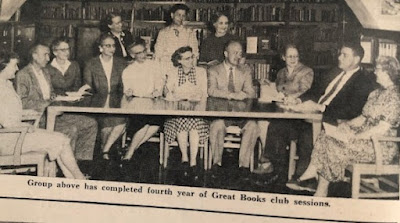
1962 Pratt Great Books Club was Serious!


 My encouragement to set a reading goal for yourself for 2022 was pretty simple compared to this serious Pratt group from 1962!  The group began four years earlier, yet as they gathered in the Pratt Library in the Fall of 1962 they were still enthusiastic about their self-education course sponsored by the Great Books Foundation.  The course was free, and the approach was not to discuss the books themselves at their meetings but rather to let a different reader lead the discussions focused on problems raised by the participating members.

The group met twice a month, pursuing a program intended to last 10 years.  Although the Great Books Foundation did train leaders and would supply informational materials, the group itself selected the books they wanted to read.  

As this Pratt group began their fourth year, these are the books they had selected:  "Ancient Medicine," Hippocrates;  "Republic," Plato; "Confessions," St. Augustine; "Novum Organum," Bacon; "Metaphysies," Aristotle; "Philosophical Dictionary," Voltaire; and "The Brothers Karamazo," Dostoyevsky.

Their 10-Year Study of Great Books was obviously serious business!  Interestingly, Isaac Werner, my Prairie Bachelor, had some of those books in his library. 

The newspaper article closes with the explanation that the fifth year class had already completed the above listed books and would be reading their own selections, with the following authors:  Plato; Aristotle; St. Francis; Dante; Tocqueville; and Melville.

Perhaps some of the people in the photograph can be identified, but I am certainly impressed by the aspirations of those Pratt readers of 1962!


Wednesday, February 16, 2022

Nellie Bly's Famous Story


Perhaps the most famous female journalist of the late 1800s was Nellie Bly, not because of her successful Trip About the World, described in last week's blog, but rather because of her courage in exposing the disgraceful treatment of women in a "Lunatic Asylum."  After some initial success as a journalist, Nellie wanted to work in the city where a journalist could become famous.  She headed to New York, but she struggled, trying to find a newspaper that would give her a chance. She had an idea, and she took it to perhaps the most powerful newspaper editor in America, Joseph Pulitzer of the "New York World."  Nellie proposed going undercover to be admitted to the Women's Lunatic Asylum on Blackwell's Island.  Recognizing what a story that would be, Pulitzer agreed.


First Nellie had to feign insanity in order to be admitted to the Asylum as a patient.  Using a mirror, she practiced deranged expressions.  Once she felt able to play the role, she checked into a working class boarding house, waiting until bedtime to start her act.  Having convinced the other boarders that she was crazy, Nellie faced her next test when they called the police, and her act was again successful.  Her next challenge was convincing a judge, who then ordered her to be examined by several doctors.  Once the doctors had pronounced Nellie insane, she was committed to the Asylum.

Charles Dickens had visited in the 1840s, and he described the conditions.  "...everyone had a lounging, listless, madhouse air, which was very painful.  The moping idiot, cowering down with long disheveled hair; the gibbering maniac, with his hideous laugh and pointed finger; the vacant eye, the fierce wild face, the gloomy picking of the hands and lips, and munching of the nails:  there they were all, without disguise, in naked ugliness and horror."

Yet, when Nellie Bly was admitted, she said, "From the moment I entered the insane ward on the Island, I made no attempt to keep up the assumed role of insanity.  I talked and acted just as I do in ordinary life.  Yet, strange to say, the more sanely I talked and acted, the crazier I was thought to be by all..."  She described rotted food, cruel attendants, and cramped and diseased conditions, and she believed there were patients with whom she talked that were as sane as she was.  Sadly, it was a time when an inconvenient wife or a dependent elderly person that had become a nuisance to the caregiver might be delivered to the Asylum.

Nellie Bly wrote:  "What, excepting torture, would produce insanity quicker than this treatment?"  She described, "...take a perfectly sane and healthy woman, shut her up and make her sit from 6 a.m. until 9 p.m. on straight-back benches, do not allow her to talk or move during these hours, give her no reading material and let her know nothing of the world or its doings, give her bad food and harsh treatment, and see how long it will take to make her insane."

With the help of Pulitzer, Nellie was released after 10 days, and her newspaper expose, later published as the book, "Ten Days in a Mad-House," led to a grand jury investigation and increased financial budgeting.  While her expose did gain fame for Nellie Bly, it also brought attention and changes to the abuses at the Asylum on Blackwell's Island. 
   

Wednesday, February 9, 2022

Around the World Many Times

1873 1st Vernes book


 In 1872, French author Jules Verne published "Around the World in Eighty Days," creating the memorable character Fhileas Fogg, an Englishman who makes a wager that he can go around the world in 80 days, with his French valet Passepartout.  The book has inspired many adaptations, among them the 1965 movie starring David Niven as Fogg, the Disney movie with Steve Coogan as Fogg, and the current Masterpiece serial, with David Tennant, among many other versions.

Jules Verne


However, the inspiration for Verne's book may not have come from simply his imagination.  An Italian traveler named Ciovanni Francesco Gemell Careri wrote a book in 1699 titled "Voyage Around the World."   In 1871 the Union Pacific Railroad Company published a description of routes, times, and distances describing a trip around the globe in 77 days and 21 hours.  In 1869 the periodical 'Le Tour du monde' published a short piece titled "Around the World in Eighty Days," but even that referenced the Nouvelles Annales written by Conrad Malte-Brun, who died in 1826, and his son, who died in 1889.

Verne's book has challenged many people to pick up the gauntlet.  In 1928, a 15-year-old boy, sponsored
by a Danish newspaper, made his own race, which was published in a book titled "A Boy Scout Around the World.  A sailing competition now awards the Jules Verne Trophy to the boat that sails around the world without stopping and with no outside assistance in the shortest time.  In 2009, 12 celebrities formed a relay to raise money for the charity, Children in Need.  These are only a few examples of challenges inspired by Verne's book.


However, I am going to share the race of a specific woman named Nellie Bly.  Actually, her given name was Elizabeth Jane Cochran, but the first newspaper editor to hire her named her Nellie Bly.  Aspiring to succeed in the big city of New York, Nellie proposed to Joseph Pulitzer in 1887 to replicate Verne's 80-day race around the world.  Her trip of 24,899 miles used steamships, railroads, and the White Star liner, "Oceanic," dressing for her adventure in a single dress, an overcoat, several changes of underwear, carrying a travel bag for toiletries, and with a hidden bag tied around her neck containing bank notes and gold.  She completed the race in 72 days, 6 hours, 11 minutes, and 14 seconds!

Next week's blog will share an even more dramatic challenge accomplished by the courageous Nellie Bly.        


Wednesday, February 2, 2022

Most Readers Have Favorite Authors, #4


It isn't easy to select a favorite author or a favorite book, but I do have a favorite.  I have written about Harper Lee before.  "To Kill a Mockingbird" is often spoken of as a book for young readers.  Yes, teachers often include it for their junior high students, but more accurately it is a book for all readers, in my opinion.  

The New York Times chose to celebrate its 125th Year of the Times Book Review's existence by asking readers to nominate their favorite book.  "To Kill a Mockingbird" by Harper Lee was chosen as the Best Book of the Past 125 Years.  I am thrilled.  I have recommended that book to so many people, and I particularly urge anyone considering law school to read it before they begin and read it after they are licensed to practice.  If they still think it is a youth book, they probably should read it a third time.

In an essay, NYT editor Molly Young began with these words, "When you revisit in adulthood a book that you last read in childhood, you will likely experience two broad categories of observation:  'Oh yeah, I remember this part,' and 'Whoa, I never noticed that part.'"  Her wonderful essay continued with sharing the things she missed and why it was worth revisiting.  She describes what impressed her most:  "...which is how keenly Lee recreates the comforts, miseries and banalities of people gathered intimately in one little space."

In the announcement of the selection, the New York Times explained the process for the selection.  More than 1,300 books were nominated.  Of that number, 65% were nominated by only one person.  Of those nominating a book, only 31% of them saw their book included in the list of 25 finalists.

Another interesting discovery is that certain authors were particularly popular.  Three authors had seven of their books nominated.  Those authors are John Steinbeck, Ernest Hemingway, and William Faulkner.  Another group of three had five of their books nominated.  Those three authors are James Baldwin, Margaret Atwood, and Virginia Wolf.  They also mentioned Joan Didion, who recently passed away, who had four of her books nominated.  Of course, I would like to have seen Willa Cather among those authors named for having several books nominated.

If some of you are still making your New Year's Resolution reading list, you might consider these authors and the idea of reading several of a single author's books.


Or, you might consider the top five books nominated in the NYT Anniversary vote,  listed from 1-5 are:  Harper Lee, "To Kill a Mockingbird," J.R.R. Tolkien, "Fellowship of the Ring," George Orwell, "1984," Gabriel Garcia Marquez, "One Hundred Years of Solitude," and Toni Morrison, "Beloved."

Some of my favorites included among the other finalists are:  "All the Light We Cannot See," by Anthony Doerr, "Lonesome Dove," by Larry McMurtry, "The Grapes of Rath," by Steinbeck, "Charlotte's Web," by E.B. White, and "Harry Potter and the Sorcerer's Stone" by Rowllng.  There are a few more that I liked at the time I read them but can no longer remember why, and one I tried my best to read and finally gave up.

The link to the NYT article, including the essay by Molly Young referenced in this blog, is https://www.nytimes.com/interactive/2021/12/28/books/best-book-winners.html 


Wednesday, January 26, 2022

So Many Choices, Where Do I Start? New Year's Reading Resolution 3

Photo Credits:  Lyn Fenwick
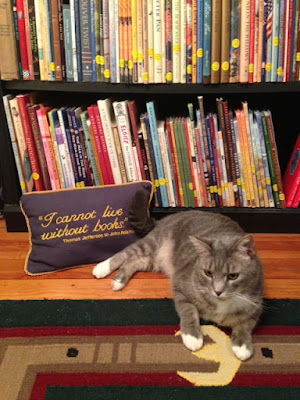
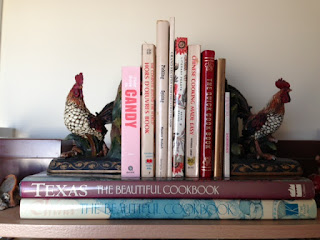
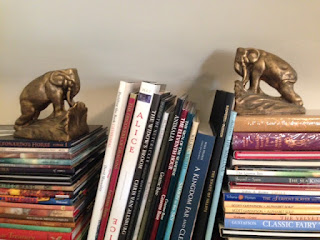
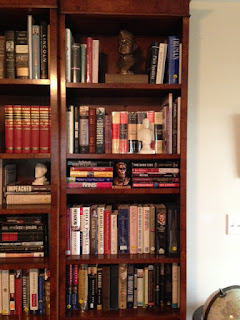
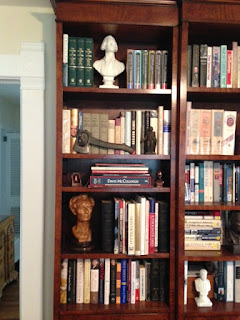
Like Thomas Jefferson, "I cannot live without my books."  My New Year's Resolution should be--and is to some extent--"I resolve to read books in my library that I have not made time to read."  Some of you know that I collect illustrated children's books, and I have read most of those.  There are still a few classic books in that collection that I have not read.  Reading those classics is at the top of my list.  I love history, and I have particularly collected books by and about American presidents.  For some surprising reason, I am also interested in W.W. I, and there are a few books of that category that I have not read.  My New Year's Resolution is to spend more time reading and less time wasted, and even if I keep that resolution, I am sure I will have unread books as 2022 ends.


When I made my Millenium List, I still believed that if I carefully selected a book as worthy of reading, I should finish it.  I no longer adhere to that creed.  Life is too short to read every great book, and it is not my responsibility to every author to finish their book!  However, it is my responsibility to search out wonderful books and try to read as many of them as I can.

A good place to start is with book lists prepared by serious readers, book sellers, publishers, and friends whose reading acumen you respect.  The internet has many book lists that are easily available.  For example, Amazon has a list titled "100 Books to Read in a Lifetime" complied by their editors.  Of course, they would like for you to buy those books from Amazon, but there is no requirement that you do.  They also have lists for specific types of books, such as Childrens, Mysteries, Biographies & Memoirs, and more.

If you prefer novels, "Time" has a list prepared by Critics Lev Grossman and Richard Lacayo with what they consider the 100 best English-language novels published since 1923.  They list the books alphabetically by title, rather than ranking them from best to "barely made it on the list."  Modern Library has a list titled 100 Best Novels, which is a 'ranking' list.  Good Reads is another source with more current and popular rankings.


Obviously, I lean heavily on the classics that have retained their popularity longer than a few years, but there are wonderful books being published all the time.  I also tend to read all the books written by my favorite authors, once I become a fan.  It is no secret that I have been a Willa Cather fan since I sneaked a book out of a box of books my brother brought home from college when I was eight.  It was "My Antonia," and I also favor "O Pioneers," and "One of Ours," although they are not necessarily the ones critics rank highest.  I also like Barbara Kingsolver, and I have read all of her books. The first months of Covid I decided to read all of the "Harry Potter" books chronologically.  That was great fun.

Whether you join a Book Club, decide to read Children's Classics to your children, select a particular historic period or a favorite author to read everything that author has written, I hope you consider making your New Year's Resolution for 2022 a commitment a read more books.  I'd love to hear from you to learn what you are reading!  I am just finishing "If, The Untold Story of Kipling's American Years," so I think I will take a second look at my beautiful copy of "The Jungle Book," illustrated and signed by Robert Ingpen, and another publication of that book illustrated by Don Daily.

Next week I will share a memory of my favorite author.   


Thursday, January 20, 2022

Why Should I Read? New Year's Resolution Part 2


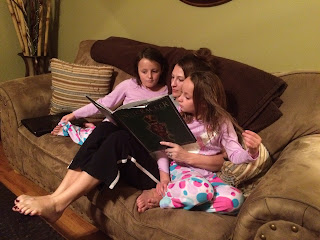
Remember when reading was fun!  Your New Year's Resolution should be about rediscovering the fun of reading.  And, there is no reason why your reading resolution could not be a family project.  Reading with children reinforces the idea that reading is fun and important.

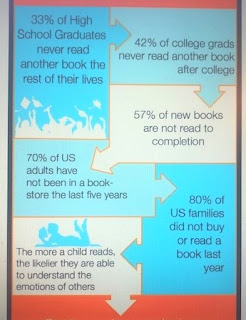
33% of H.S. Graduates never read another book the rest of their lives.

However, assuming your resolution to read more books is going to be solitary reading, there are many good reasons for you to make a New Year's reading pledge.  I will share just a few of those reasons.

42% of college grads never read another book after college.

Last week's blog described two friends who read to relax at bedtime in one case and to just pass the time without any particular reason in another case.  There is nothing wrong with reading to reduce stress.  Personally, even if I am reading to relax, I still prefer to read something of value to me, so  I keep a book of poetry beside my bed which serves that purpose well.  The rhythm of poetry and the shorter length, which makes it easier to find a stopping place, are both reasons why poetry is especially restful and relaxing.  Often the substance of the poems offer content for reflection as I fall asleep.  In a similar category, reading can be inspiring, whether read at bedtime or any other time.  Reading about the achievements or courage or good deeds of others can be an inspirational reason for reading.

The more a child reads, the better they are able to understand the emotions of others.


Photo Credit:  Lyn Fenwick

Three hundred years ago, Joseph Addison described another important reason for reading:  "Reading is to the mind what exercise is to the body."  Studies have shown that reading really does increase the blood flow and improves connectivity in the brain.  It is not just what you learn by reading but also an actual physical impact.

80% of U.S. families did not buy or read a book last year.

Obviously, reading can provide information that can alter your thinking.  Right now, with health issues limiting travel, we can still learn about other people and other places through books.  Books can even take us back in history.  Mark Twain wrote that history may not repeat itself, but it does rhyme.  Instead of every generation needing to learn hard lessons for themselves, reading can spare the mistakes and build on the achievements.

70% of U.S. families have not been inside a bookstore in the past 5 years.

Children are not alone in benefitting from reading books that challenge their imaginations.  Fiction authors of the 1800s are believed to have inspired and challenged inventors and scientists who read their books and made fantasy into reality.  How many young boys credit reading a book about an athlete as what made them believe they too could run faster, jump higher, or enter a sport that they believed had been closed to them because of a disability or their color or financial limits.  How many people have built something or written something or baked something or explored something because they were inspired by a book they read, and age need not be a barrier to readers inspired by a book. 

I do not know the source of the statistics I quoted.  Frankly, I hope they are wrong, because I cannot imagine not wanting to continue reading for a lifetime.  But, I do know that other sources support the severe reduction in reading, and I know too many bookstores closed because people stopped buying books.

Whether you read to relax, to be inspired, to be educated, to learn, to improve something about yourself, to gain confidence--and I am not referring to "self-help" books but rather well written books that appeal to you for many reasons, I hope you believe that reading is worth making time to read.


Thank you to Kansas for recognizing Kansas authors & books about Kansas.

And thank you to Libraries and librarians for all they do to encourage reading!


Wednesday, January 12, 2022

Not Too Late for a Resolution

New Year's is past, but it is not too late for a resolution.  It probably will not surprise you that I am about to suggest that you resolve to set a reading goal.  In the past I have written about my Millennium Reading List.  I chose 100 great books published between 1900 and 1999 to read.  Have I read all of the books on my list?  No.  Is that a bad thing?  No, because the list became the source for discovering more and more books I wanted to read.  

The original list was intended to be fiction, but often fiction made me curious about the time period in which the novel was set, and I discovered history books I would not have otherwise read.  Then the history books led me to biographies.  I also discovered authors I admired, and in addition to reading a single book by that author, I sought other books that particular author had written.

The point is that by making a list of books to read it is likely that you will discover more and more books to enjoy reading.  At least, that is my experience.  

I have also written about the decline in reading.  From my perspective, that is a serious matter.  I know that many people now "read" audio books, especially if they have long commutes to work, or their jobs involve repetitive labor that allows listening to a book without hindering their work.  Audio books have their place, but the reader's interpretation inevitably alters the content with every decision about where to place emphasis, the tone of voice to be used to describe characters, or the character's voice used in dialogue.  All of those things and more can alter a listener's response to the book.  Listening to a book is not the same as reading a book, but it is better than not reading at all.

I am a slow reader.  A friend told me that she set her goal for the number of books she wants to read in a year at 50 books.  I could never accomplish that!  If you make a Resolution, do not set yourself up for failure by demanding more of yourself than is reasonable.

First, consider the kind of books you want to read.  For me, fiction is much quicker to read than nonfiction.  A friend of mine loved reading Romance Novels.  I asked her why she enjoyed them, and she said because they are all alike.  For her, they were just a way to relax and escape into an imaginary world.  Those are not really the kind of books for which you need a New Year's Resolution or a book list.  Another friend told me she reads to relax at bedtime.  She might not select books that stimulated her mind with new ideas for her bedtime reading.

If you decide you want to make a reading list of books, here is my advice:  Don't set yourself up for failure by making an impossibly long list or selecting especially long books.  To start, set a reasonable goal, maybe one book a month, or ten books for 2022.  If there is a particular book you know you want to read, start reading it now.  

If you don't have a particular book in mind, visit your local library and ask the librarian for a suggestion.  Before you go, decide the type of book you want to read--fiction or nonfiction, history or biography, a classic you remember from high school or college that you want to read again with a more mature perspective, a book by a particular author you have liked in the past or that you have heard about.  If you have a particular type of book in mind, the librarian will be better able to direct you to something you will enjoy, or at least to direct you to the shelf when those books are housed. If you are fortunate enough to live in a town with a bookstore, ask a knowledgeable clerk for suggestions, but be prepared with the same thought about the type of book you are interested in reading in order to give the clerk some guidance.

Finally, read the first two pages before you buy or check the book out.  Don't force yourself to start off your New Year's Resolution with a book that feels like an assignment.  If you want to be generous to the author, read five pages before you decide, but don't begin your Resolution with a book you are not enjoying.  Maybe later you will want to give a challenging book another chance, but at least start off the year's reading with a book that interests you from the early pages!

Good Luck!  I'll see you next week with some fresh ideas for why we should Resolve to Read!! 
     

Tuesday, January 4, 2022

She Didn't Marry a Farmer

Continuing last week's blog that shared 3 generations of women who married a famer and concluded with a husband who married a farmer's daughter, I will remind all of us that while it may be true that young women today may be choosing farming for themselves, they are far from the first Female Farmers!

The Homestead Act of 1862 identified "heads of households" as the family member allowed to stake a homestead claim.  Since husbands were always the ones considered as the head of the family, married women could not stake a claim unless they could prove that their husband did not provide support for them in any way.  That was often difficult, since even the worst of husbands usually managed to bring home some bit of revenue occasionally.  

The picture above right compares the roots of prairie grass that the homesteaders had to break through to plow their fields for crops to the shallow roots of cultivated grass.  Breaking the native prairie sod was no easy task for male or female farmers!

Single persons, male or female, could stake a claim to prove up, as could widows and divorced women.  Adjacent to Isaac Werner's timber claim were two such women.  Persis Vosburg lived across the road to the west of Isaac's timber claim.  She had never married, but she had her own home and staked the quarter section on which it set.  Her widowed brother's claim was just to the north of hers.  She helped take care of his motherless children and he helped with some of her farm work in exchange.  A neighbor, coveting her land, raised a complaint that she was not complying with the requirements of a homesteader.  Isaac spoke up for her, saying that if two brothers had claims side-by-side and shared work, no one would object.  The fact that the work she did for her brother involved childcare should be treated no differently than the case of two brothers sharing work.  Persis was allowed to prove up her claim.

Just to the east of Isaac's timber claim was a divorced woman with children who had staked a claim.  No one seemed to object to Isabel Ross staking her claim, since it was obvious that she was supporting herself and her children.  Isaac often did simple kindnesses for her, including hiring Isabel and her children occasionally to help with his potato crops. 

Homesteading Chrisman Sisters

Perhaps the most famous female homesteaders are the four Chrisman sisters, Hattie, Lizzie, Lutie, and Ruth, who all staked claims in Custer County, Nebraska in1886.  They were not alone.  Historians today have estimated that about 20% of the homesteaders in Nebraska, Kansas, Colorado, Wyoming, Montana, North & South Dakota, Utah, and Idaho were single women.  Not every person staking a claim managed to endure the hardships of survival or the loneliness and hard work, and many claims were abandoned.  However, the success rate for proving up their claim was higher among women than men.

These brave, resourceful, stubborn women homesteaders were generations ahead of the Pioneer ad that inspired last week's blog, which is continued this week.  In the book "Letters of a Woman Homesteader," a widow with a young daughter decided to stake a claim.  Her Pastor advised her to "get a position as a housekeeper for some rancher who would advise [her] about land and water rights."  As you might guess, the widow and the rancher didn't quite stay single for five years, but she maintained her own land and he continued paying his bride the housekeeper wages he had paid before their marriage, so that she had her own money for maintaining her claim.  The government accepted the arrangement and awarded her the land at the end of the required 5 years.  Isaac Werner's neighbor ladies Persis and Isabel had no such romantic entanglements and proved up their claims 'by the book.'  Perhaps for some of these ladies, a man may have come along after her hard work of proving up a claim and asked for the lady's hand in marriage.  I'm not sure whether these ladies would have accepted a marriage proposal after proving they could manage on their own, especially since the laws of their time would have taken away some of their rights if they married!

But, like the woman in the Pioneer ad that inspired the two blogs starting last week and concluding this week, perhaps some of those homesteading women could eventually say "Her husband married a farmer." 


Wednesday, December 29, 2021

Married to a Farmer


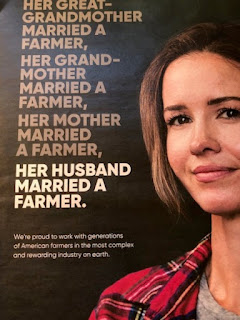
In gratitude to the many people who follow this blog, I have shared history and other topics weekly for nearly 550 blogs.  It will probably not surprise you that I am constantly on the lookout for interesting subjects, but so is my husband.  Recently he handed me a page torn from a magazine, with an ad from Pioneer.  The text read:  Her great grandmother married a farmer,  Her grandmother married a farmer;  Her mother married a farmer,   Her Husband Married A Farmer.  Beneath that was this sentence:  "We're proud to work with generations of American farmers in the most complex and rewarding industry on earth."

"Do you think you can make a blog out of that?" my husband asked.  "Probably," I replied.  Actually, it was easy!  Thank you to Pioneer for the idea.  They inspired me with the quote from the upper corner of the ad pictured at the top of this blog, which reads:  "We're proud to work with generations of American farmers in the most complex and rewarding industry on earth." 

My Great Grandmother


Living in the farmhouse of a 4th generation family farm, all I needed to do was consider my own ancestry.  My great grandmother, Susan Beck, was a pretty young teacher when an older fellow, who had put marriage aside to help support his parents before serving 3 years in the Union army and working for a while after returning from the war, spotted the young teacher and asked her to marry him.  By the time he went to Kansas to stake both a homestead and a timber claim, they had two young children, which Susan brought with her by train to join her husband.  When a stroke disabled her husband, Susan stepped forward, taught school, helped neighbor ladies with medical needs, and bought a quarter-section of land with her son.  Her role in their marriage went beyond being "a farmer's wife."

My grandmother raised a family of seven.  The house we now live in had no electricity nor running water inside the house, but the pump on the enclosed corner of the porch provided the water she needed to fill the tank in the iron stove every morning to keep warm water available through the day--once she got a fire going in the stove first thing in the morning!  I don't know how much was delegated to her children and a full time hired man, but although she never managed to learn how to drive a car, she was said to be able to harness a horse to a wagon as fast as any man.

My mother was the 3rd generation, and while her role was more domestic, no one should minimize the importance of her summers of canning what was raised in the garden, providing shelves in the basement filled with enough canned tomatoes, green beans, and cucumbers, as well as jars and jars of sand hill plumb jelly to last until the next summer's garden.    

And finally, the 4th generation comes down to me.  I have done some gardening since we moved to the farm, but not every year.  I do make enough sand hill plum jelly to last through the year, if late frosts don't ruin the harvest.  I can't really claim to be a farmer, but I certainly can claim to be a Farmer's Daughter.

More history about female farmers next week!


Wednesday, December 22, 2021

Keeping Holiday Traditions During Covid

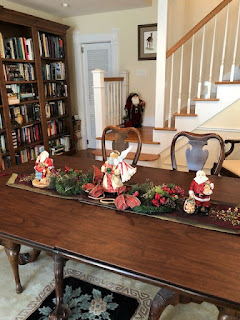
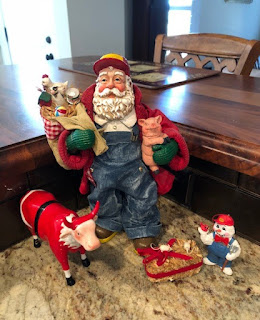
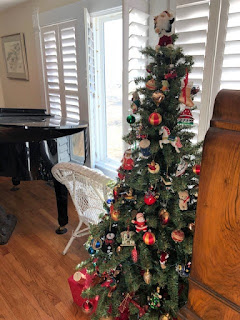
The day after Thanksgiving I began packing away the turkeys and the pilgrims for another year and bringing out Santa and the Angels.  Covid cases had been lessening, and I hoped maybe we could share the holidays with friends in our home this year.  Unfortunately, between the new varient, more people traveling at Thanksgiving, cold weather bringing people together inside, and other reasons, we will probably not be inviting guests again this year.


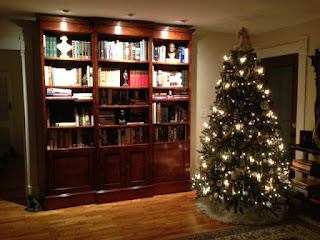
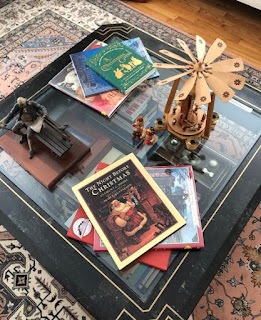
Nevertheless, the calendar says it is Christmas, and even though Mother Nature delivered the worst wind we have ever seen at the farm instead of snow, we are doing our best to maintain the Christmas spirit with decorations in every room.

It took us a while for just the two of us to finish off the Thanksgiving turkey, so we aren't doing turkey again for Christmas, although that was the family tradition in this house when I was a child because our crowded holiday tables contained so many guests that there were few leftovers.  We finally have managed to collect all of the ingredients we need for our recipes, although the now familiar challenge of not always finding ingredients on the shelves meant it required shopping early and visiting more than one store.  

I confess, over the years I acquired far too many Christmas decorations.  When we lived in cities, I did my holiday decoration buying the day after Christmas, when prices were drastically reduced and beautiful marked down treasures were far too tempting to resist.  That is why we always have at least two trees.

This year that required some negotiating with our cat Emerson.  We try to keep him off the furniture, without complete success I must admit, although we have negotiated a few rules.  This summer we brought in a wicker porch chair during a rainstorm, and Emerson laid claim to it for himself.  When we were putting the lawn furniture away for winter, it occurred to us that we might just leave the wicker chair in the house for him.  We even put it at a window so he could see out to the south.  That worked well to keep him off the other furniture at south windows.


The problem is that the south window where the second Christmas tree is usually placed is where Emerson's chair sits.  The negotiations were challenging, and the results are not entirely satisfactory for either us or Emerson, but he does have his chair and we do have a tree in the south window.  And best of all, it still keeps him off the other furniture.

Happy Holidays to everyone!  Stay safe and healthy, and perhaps our visits for the holidays in 2022 will not have to be virtual.


Wednesday, December 15, 2021

Old Enough for Remakes


 Isaac Werner had a wonderful way with words, and among his clever expressions is one that I particularly like.  Isaac had made the effort to go to St. John to hear Mary Elizabeth Lease speak on a nasty winter night that necessitated his wearing layers of clothing and a veil over his face to avoid frost bite.  He found her program "splendid from beginning to end," but he was unwilling to face the freezing temperatures to travel to his farm when her program ended.  Instead, he chose to spend the night with a former country neighbor who had moved into town.  I describe that evening in Prairie Bachelor.  

From Prairie Bachelor:  "Unwilling to face the cold in darkness, he spent the night with W.C. Betzer, a former country neighbor who had moved into St. John when he reached his sixties.  His wife Julia left the two men talking politics until after one o'clock.  Despite Isaac's eagerness to start home early the next morning, his host was still talking." From Isaac's Journal: "Finally got away from old Betzer,' Isaac wrote in his journal. '...his only fault, he needs a Westinghouse Air Brake to stop him from talking when he gets started.'"

I love Isaac's description of needing "a Westinghouse Air Brake."  Most of us have been trapped in a conversation when we were in a hurry but couldn't seem to get away from our friend in the middle of a story.  We might even have been able to identify with Betzer's wife Julia, who slipped away and left Isaac alone to listen to her longwinded husband.  

Unknown May-Dec. Couple
Those of you who follow this blog, or who have read Prairie Bachelor already know that I researched Isaac's neighbors and acquaintances as part of authenticating the story of 'Isaac Werner and the Populist Movement.'  That included William and Julia Betzer.  I found them in the 1880 Census as husband and wife, living in Clear Creek Township, William age 53 and Julia age 30.  Also in the household was William's son Frank, aged 20.  In short, husband and wife were 23 years apart in age, and Julia was closer in age to her stepson than to her husband.  In the 1885 Kansas census they had a 6-year-old son, Franklin, who must have been born soon after the 1880 Census, and Frank was still living with them.  By 1900 Julia was widowed.  Isaac's overnight stay with them was in 1889, so although there was no 1890 census to consult, we know that in February of 1889 William was still living.

It was not unusual for older men to marry much younger women.  Joseph A. Cooper, a highly respected member of the community who had served in both the Mexican American War and had advanced to the rank of a Union breveted Major General at the close of the Civil War, had married his wife Mary Jane when he was 52 and she was 22.  My own Great-grandfather Beck, who also fought for the Union in the Civil War was 19 years older than my Great-grandmother.  Even Isaac made a tentative attempt at courtship of the younger Prohibition speaker, Blanche Hazelett. 

Sometimes these younger brides were widows, although I don't have reason to know that about the three women mentioned in this blog.  In other cases, these older men have achieved some financial stability that younger suitors might not have had.  Because of the Civil War, many of these men were older when they married because their lives had been interrupted by service to their country.  Whatever the reason, it was not unusual for these May-December Weddings to happen, or as my title for this blog reads, parties to the marriage were often 'Old Enough for Remakes.'

That brings me to my own surprising recognition that I am 'old enough for remakes!'  Granted, I was young when "West Side Story" was released in 1961, but I certainly saw it at the time of its release, staring Natalie Wood as Maria, Richard Beymer as Tony, Russ Tamblyn as Riff, and Rita Moreno as Anita.  I also remember the handsome George Chakiris as Bernardo, the leader of the "Sharks."  A bit of trivia for those of us who saw the original movie: among those considered for the role of Tony were   Warren Beatty, Burt Reynolds, Richard Chamberlain, and Robert Redford.  Even Elvis Presley was considered, but his manager Colonel Tom Parker turned it down.

I confess, when I learned that "West Side Story," directed by Steven Spielberg, was being remade, it came as a shock to see that I am old enough for remakes of one of my favorite films!  I grew up in an era of blond female movie stars, so brunette Natalie Wood was my favorite movie star.  Everyone behind the scenes in the making of that movie was a giant of my youth--Leonard Bernstein's music, Stephen Sondheim's lyrics, Jerome Robbins choreography--these were the giants of my time.  Yet, so is Steven Spielberg.

The pre-release reviews were great.  I was pleased that the casting now includes more accurate ethnic casting and less tan grease paint.  Spielberg has expressed his respect for the original film, and Rita Moreno is the executive producer on the new movie and a major character, switching from the young girlfriend of Bernardo to the role of Valentina, a gender and ethnic change to play the soda shop owner   in the new film.  Given all of those things, I could hardly wait to see Spielberg's "West Side Story."  

I must admit, like those Civil War Soldiers who accepted the fact that although they had postponed marriage to serve their country, they were not too old to make a delayed life with a young wife and children born when they were in their senior years--Old Enough for Remakes--I too have accepted the fact that I am old enough for remakes, and Larry and I went to see Spielberg's West Side Story.  It was fabulous!!!

As the last credits rolled, my husband leaned over and whispered, "What did you think?"  I replied, "I never thought I would say this, but it's better than the original!"

Go see it--whether you are young or old enough for remakes.  The overhead view of the demolition of old New York to make way for Lincoln Center will pull you into the movie and never let go.  For a moment you may not like Ansel Elgort who plays Tony, but only for a moment.  He is fabulous.  He owns the movie.  Adding Rita Moreno as Doc's widow running the soda-shop is brilliant.  The dancing is better integrated to fit the plot.  For those of you old enough for remakes like me, take Kleenex!  I'm not sure if Spielberg made me cry, or if some of those tears were for the real people who made the original movie, but I certainly shed enough tears at the end of the movie for both. 
      

Wednesday, December 8, 2021

Kansas Political Roots


My Great-grandfather was a Union Soldier, and he served for 3 years.  For the rest of his life, he voted republican, as many Union Soldiers did, for the republican party was the Party of Lincoln, and having served him for those three years as a soldier, it was because of Lincoln that he continued to serve his party.

He passed that tradition down to his son, my Grand-father, who did not serve in the army but who did serve in the Kansas House of Representatives as a republican.

Continuing the family political tradition, my father was also a republican, serving as a County Republican Chairman, and like his ancestors, voting republican.  Although my mother's family voted democrat, Mother accepted the Beck tradition of voting republication when she married my father.

Kansas was populated after the Civil War by many men who had served the Union during the war, taking advantage of a year's credit for each year of service for the Union toward the 5 years required to mature a homestead claim.  Like my Great-grandfather, many, if not most, of those men voted for the rest of their lives for the party of Lincoln, as did their descendants, down to the present time.

I do not know the ancestry of Bob Dole or whether he had ancestors that served in the Civil War.  What I do know is he bravely served his country in W. W. II and that he carried the physical consequences of that service for the rest of his life without bitterness, and with the desire of continuing service for his country.  That service was done as a Republican--in the House, in the Senate, as a Vice-presidential nominee, and as the Republican candidate for President.  His sense of duty to American Soldiers never waned, nor did his loyalty to Lincoln's Party.  In fact, many of his sayings share a strong resemblance to Lincoln's quotes.

Me with Elizabeth & Senator Dole; photo credit: Larry Fenwick


In honor of the passing of Senator Dole, I would like to share some of those similar quotes.

Dole:  "You don't go out and hurt somebody's feelings, we have opponents and not enemies in this business."
Lincoln:  "Do I not destroy my enemies when I make them my friends?"

Dole:  "Those who cultivate moral confusion for profit should understand this:  we will name their names and shame them as they deserve to be shamed."
Lincoln:  "You can fool some of the people all of the time, and all of the people some of the time, but you can not fool all of the people all of the time."

Dole:  "I think voters believe that when you become president of the United States, you have a higher obligation and a higher standard than anybody in the world, ...and if you violate that standard, they're going to remember it on election day."
Lincoln:  "Character is like a tree and reputation its shadow.  The shadow is what we think it is and the tree is the real thing."

Dole:  "Something is wrong with America.  I wonder sometimes what people are thinking about or if they are thinking at all."
Lincoln:  "America will never be destroyed from the outside.  If we falter and lose our freedoms, it will be because we destroyed ourselves."

Although Senator Dole's sharp tongue and absolute commitment to the Republican Party sometimes led to criticism, this quote from Dole at the 1996 Republican Convention left no question about the Party in which he believed.

"The Republican Party is broad and inclusive.  It represents many streams of opinion and many points of view.  But if there's anyone who has mistakenly attached themselves to our party in the belief that we are not open to citizens of every race and religion, then let me remind you, tonight this hall belongs to the Party of Lincoln.  And the exits, which are clearly marked, are for you to walk out of as I stand this ground without compromise."